Nerd-Night
Nerd Night: Hardware, Hobbies, and Delightfully Questionable Engineering Decisions
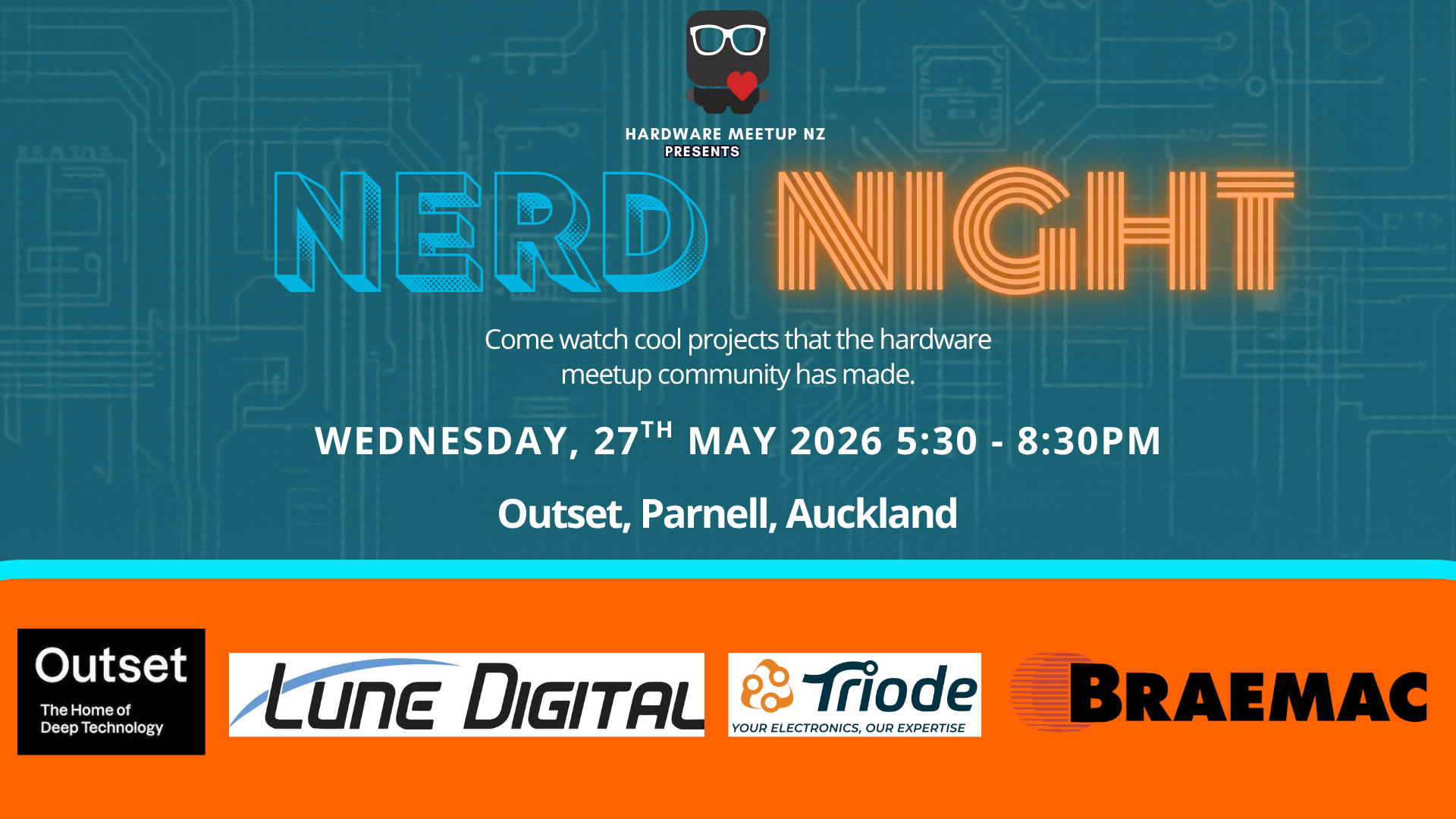
If there’s one event that perfectly captures the spirit of the Hardware Meetup New Zealand community, it’s Nerd Night.
Unlike our usual format of invited industry speakers, Nerd Night hands the microphone to the community. The result is an evening of curiosity, creativity, experimentation, and occasionally solving problems that absolutely nobody asked to be solved.
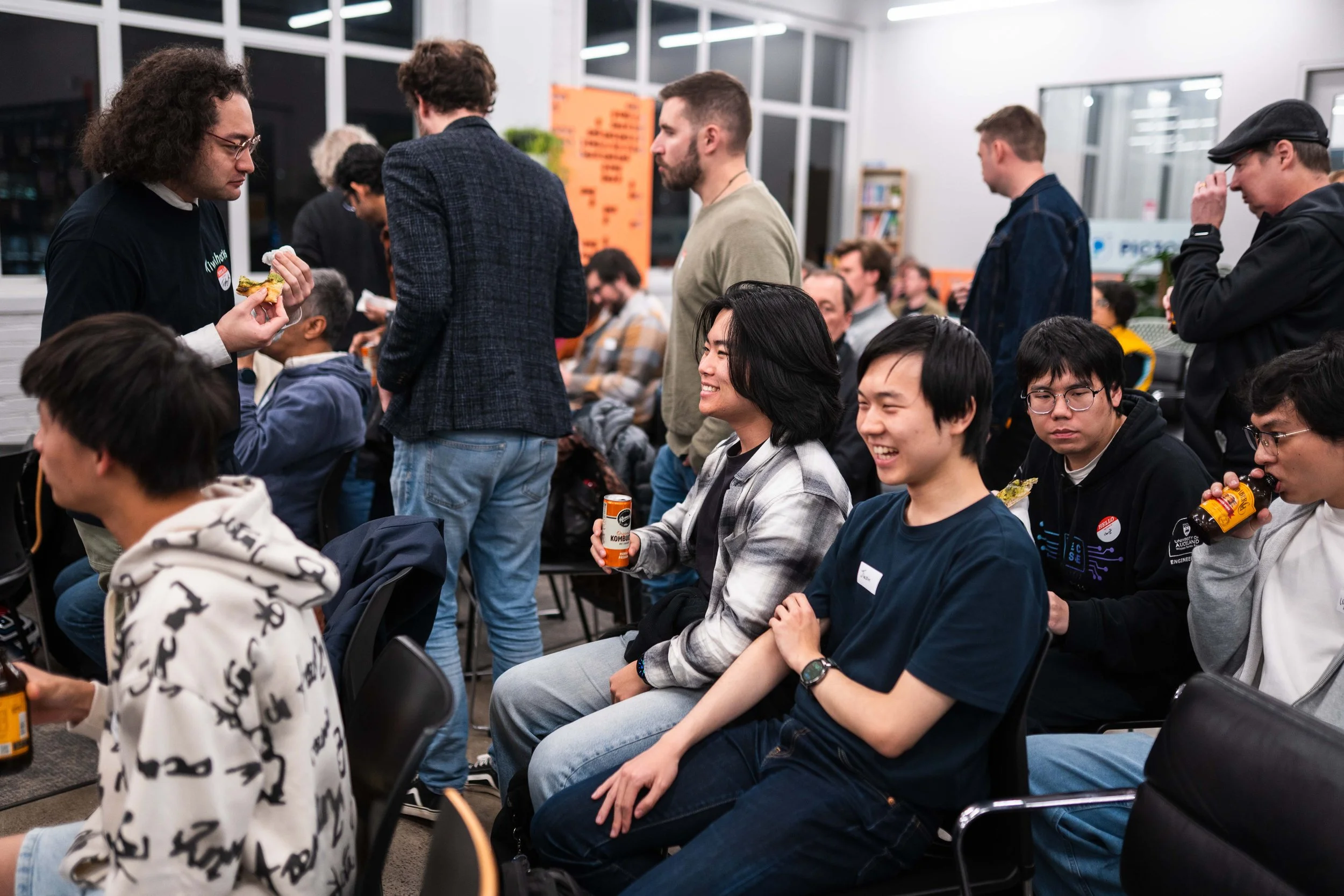
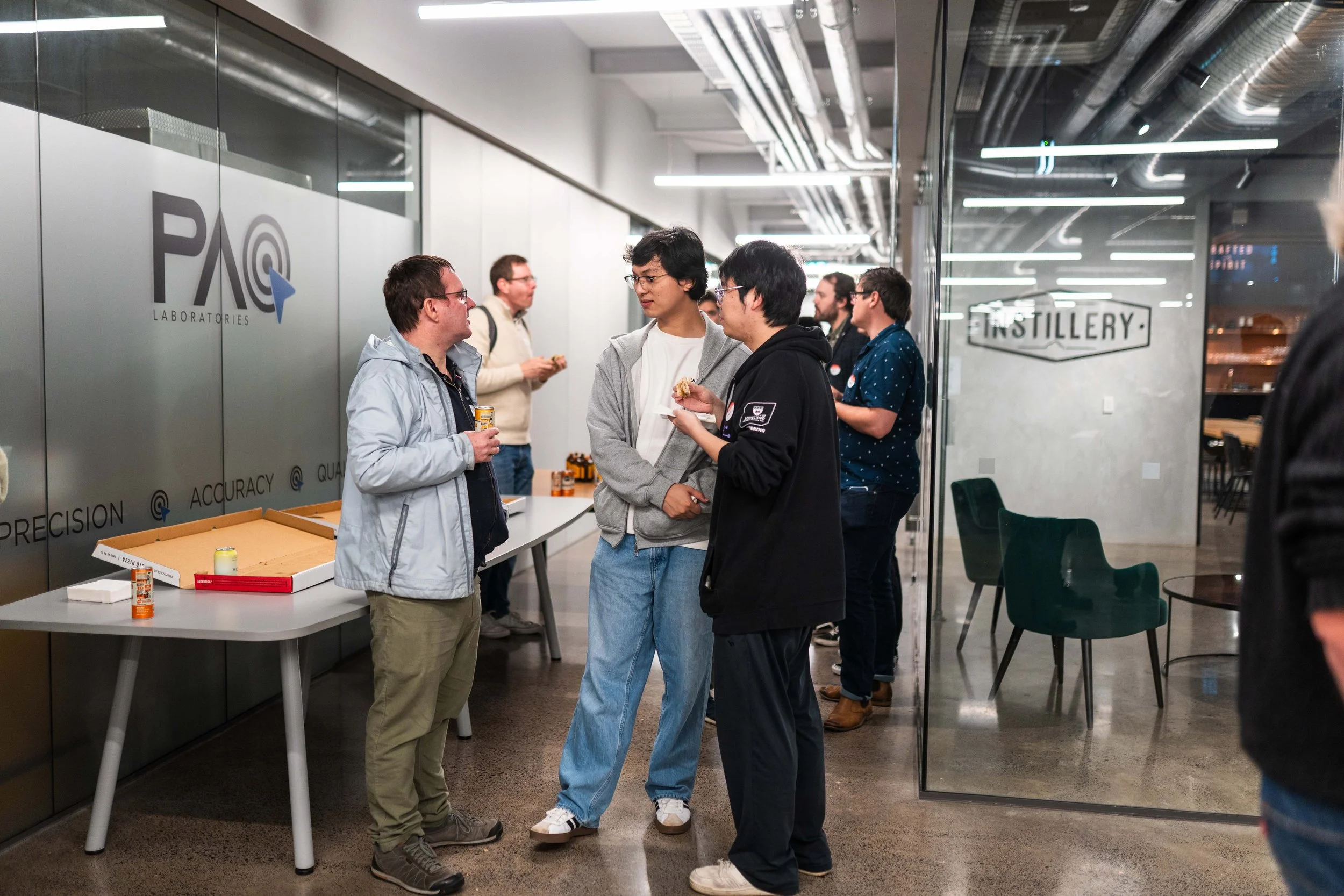
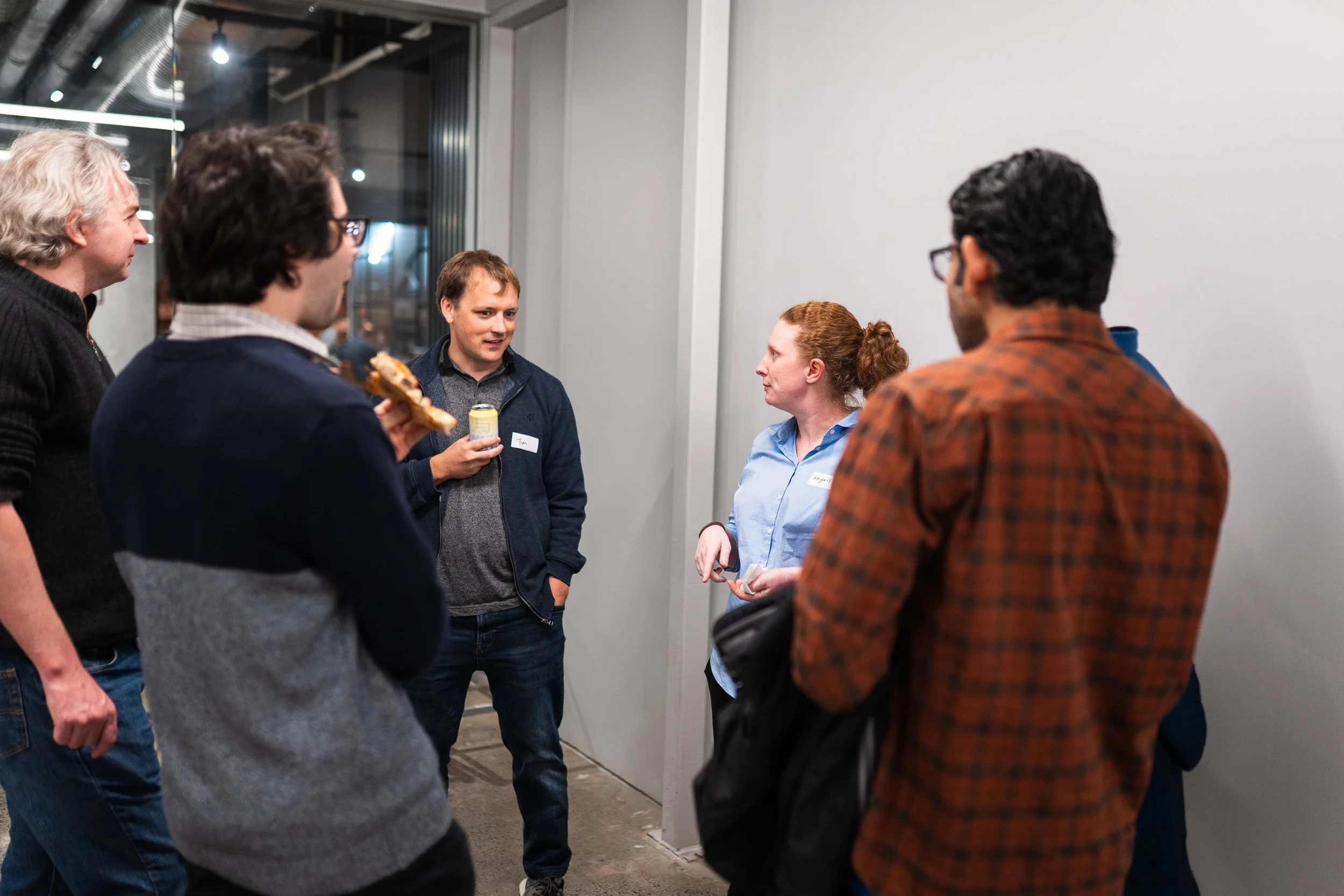
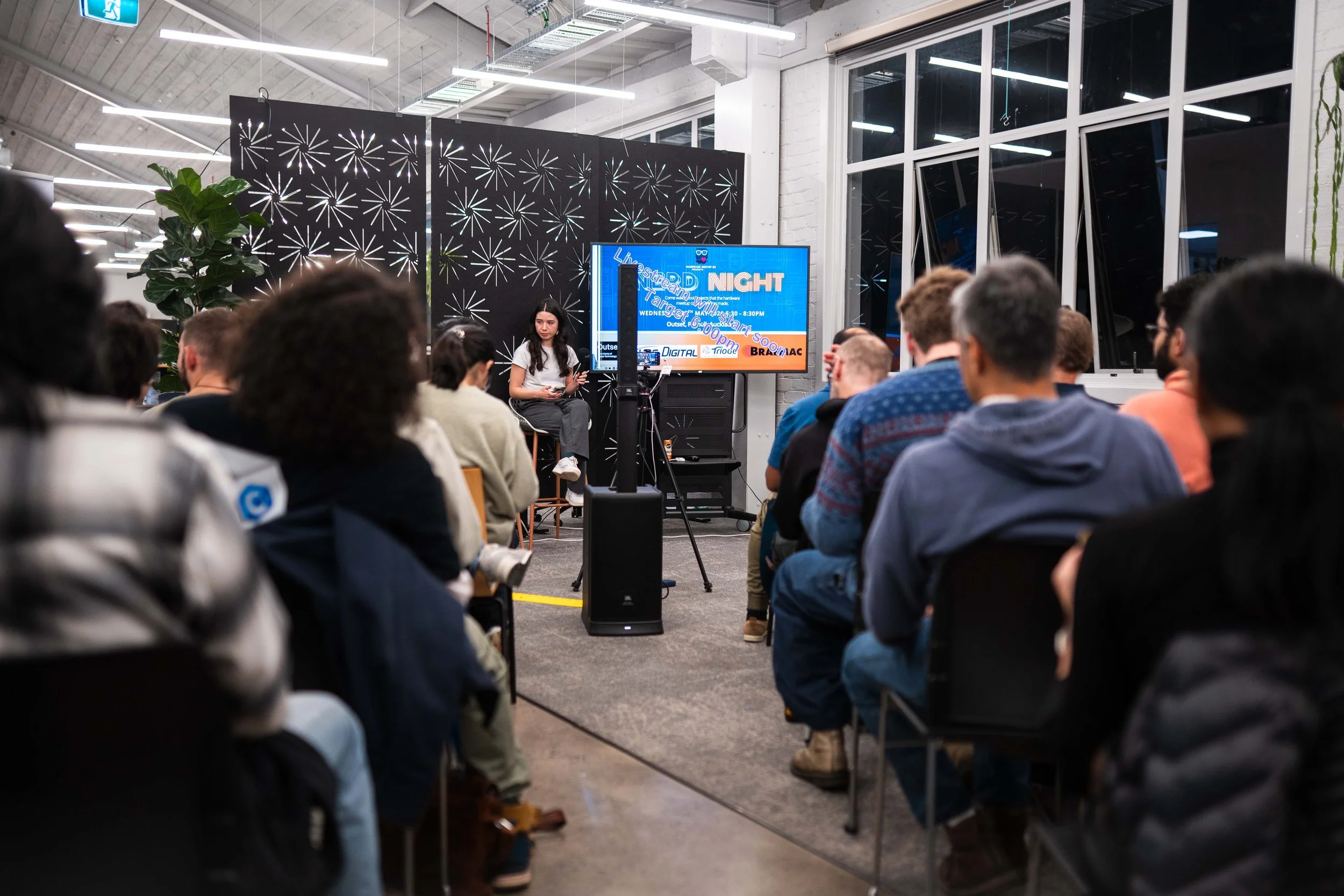
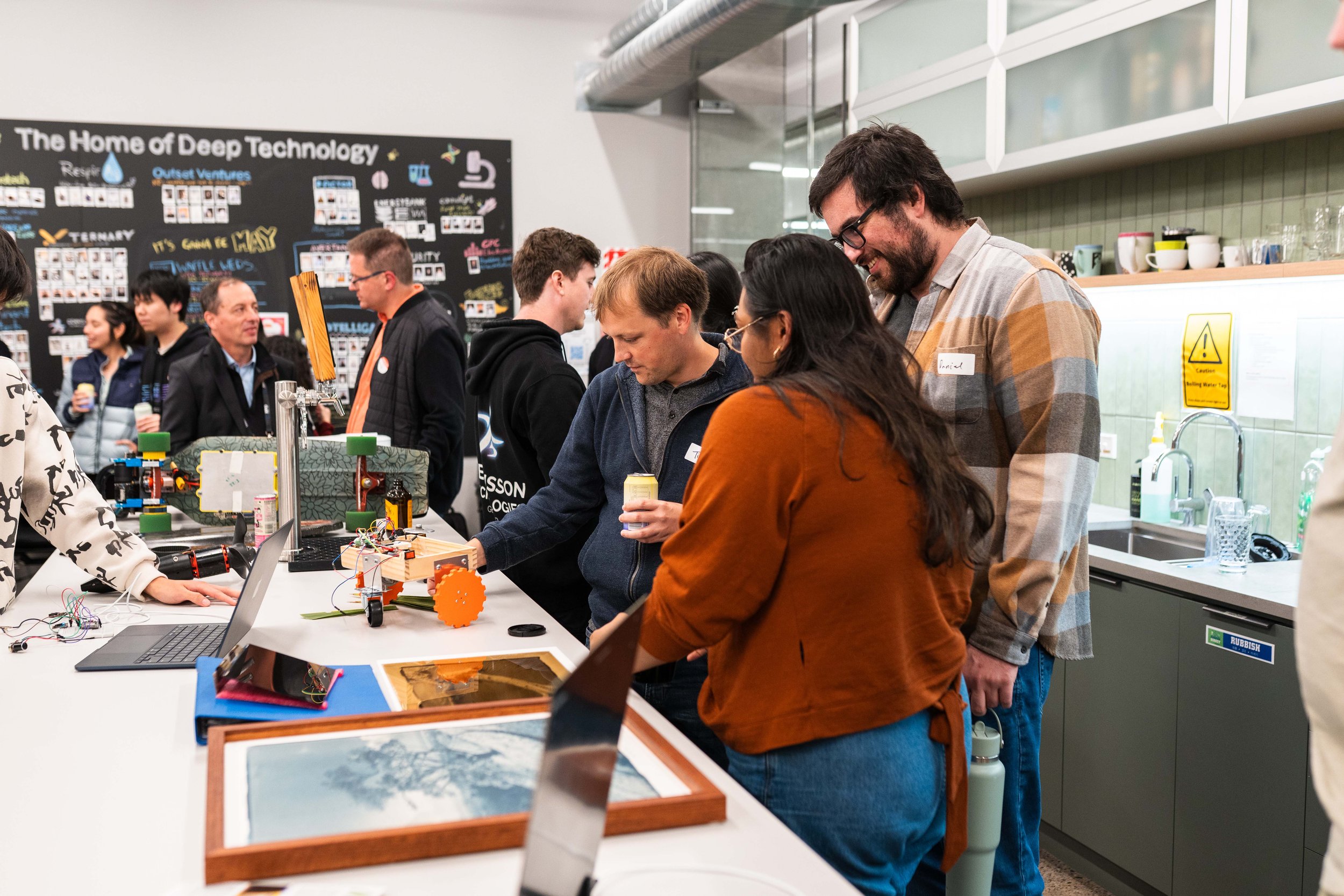
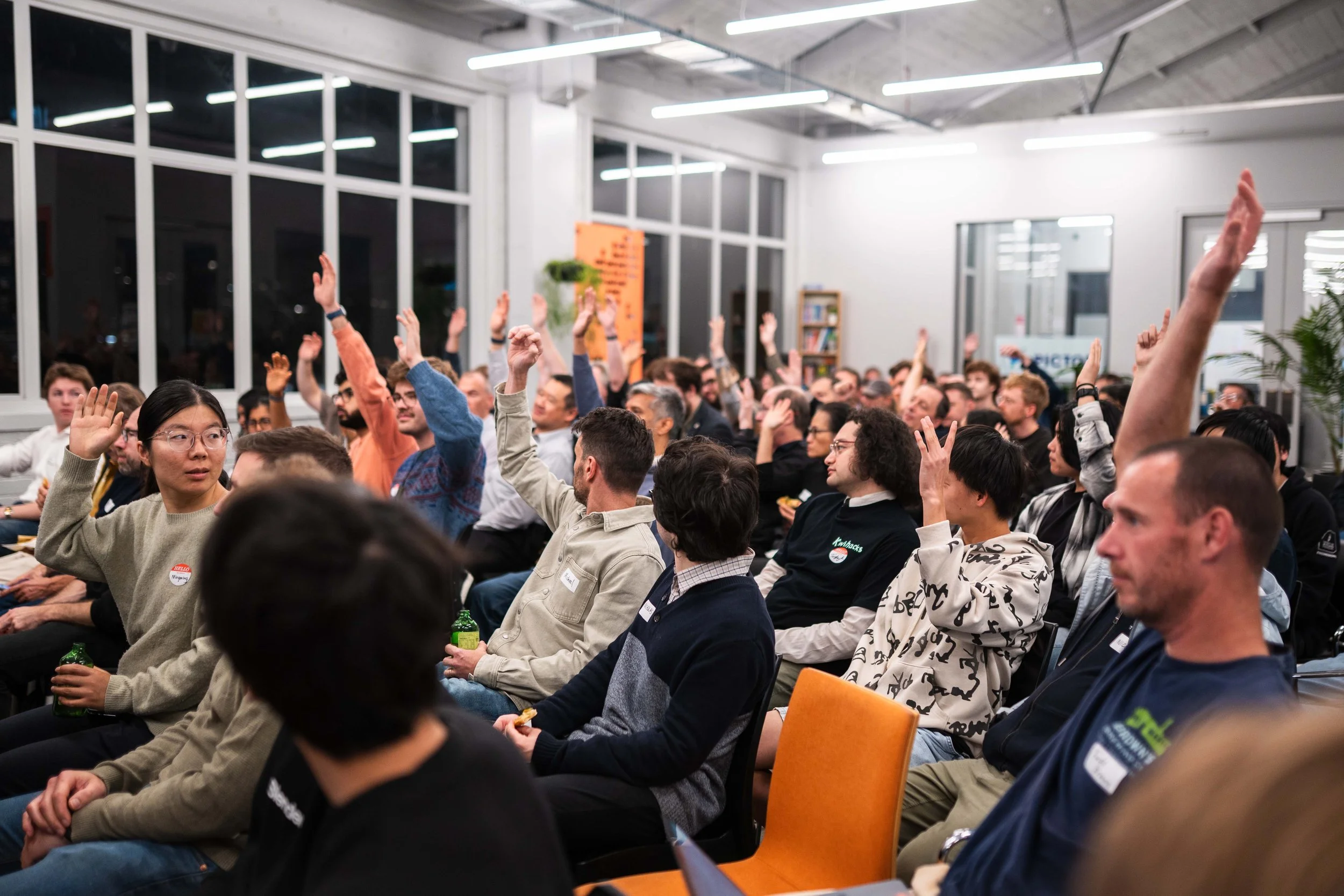
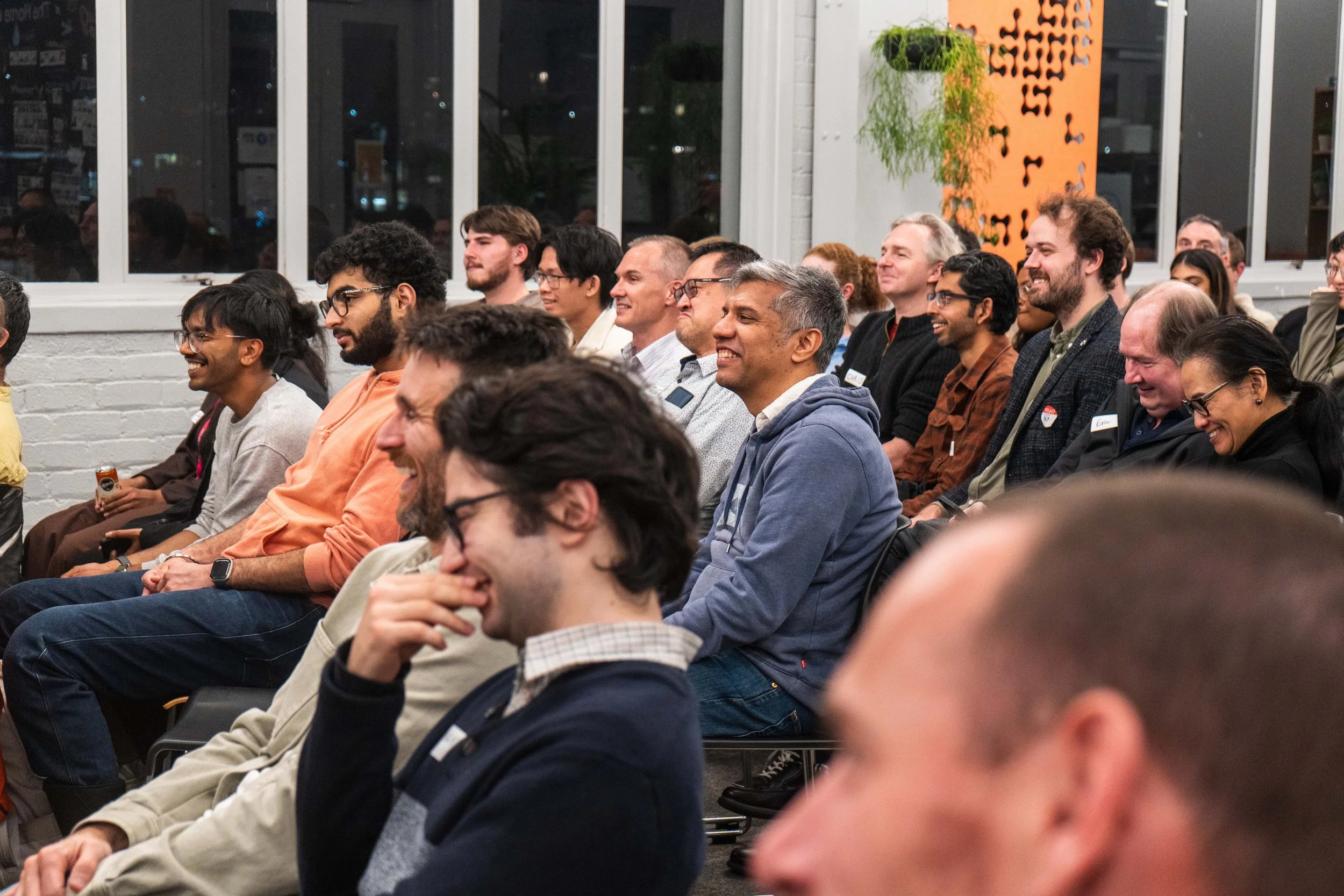
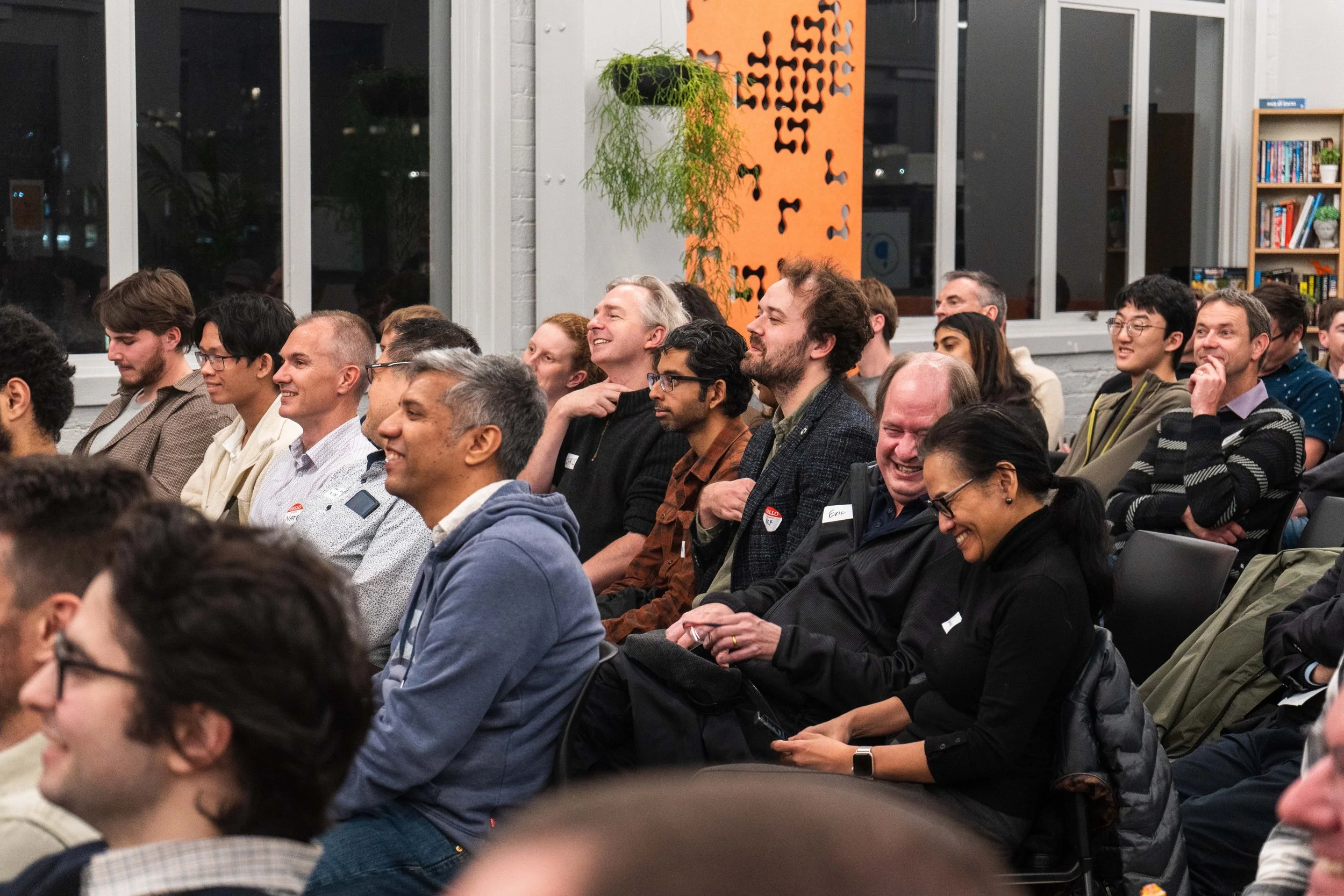
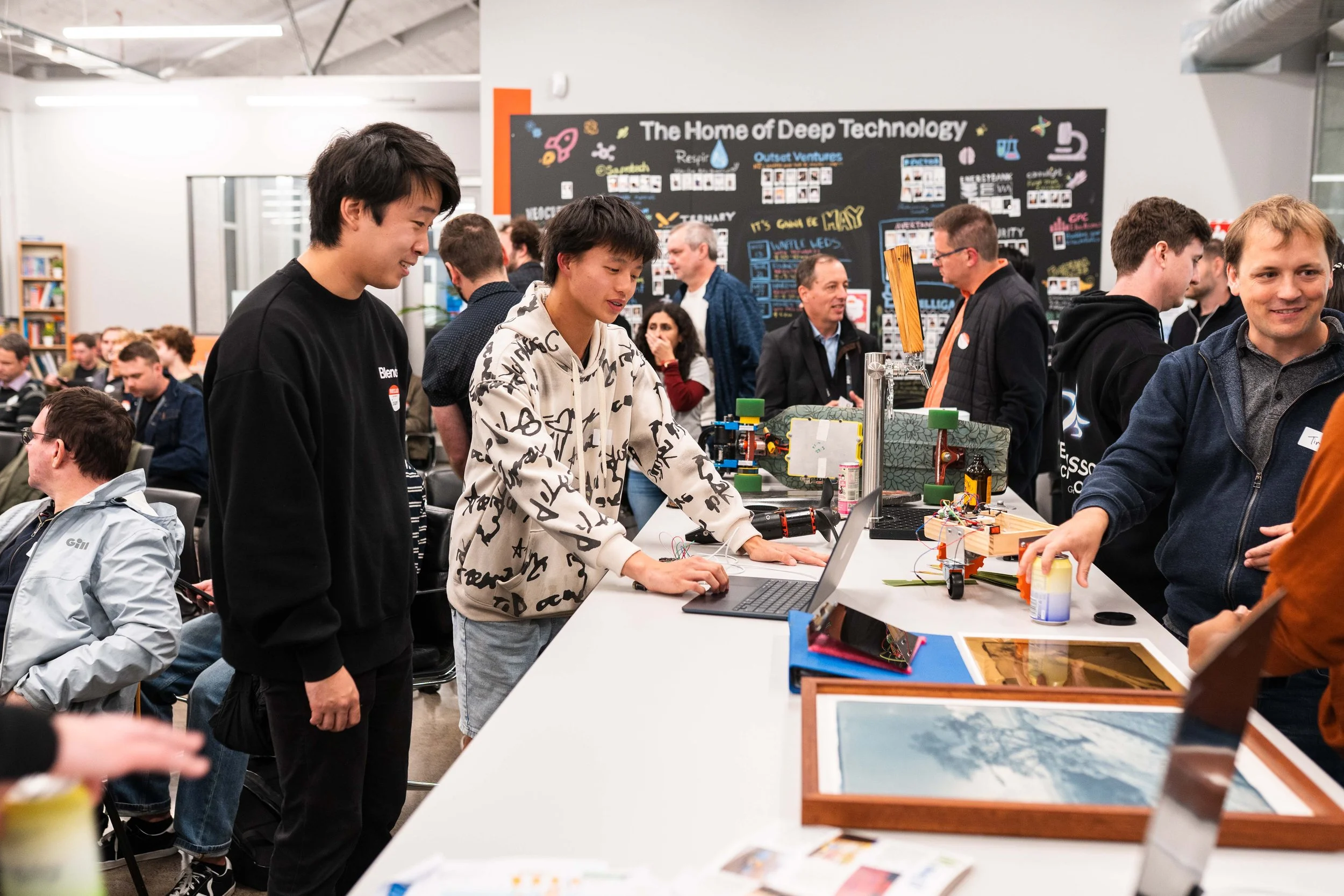
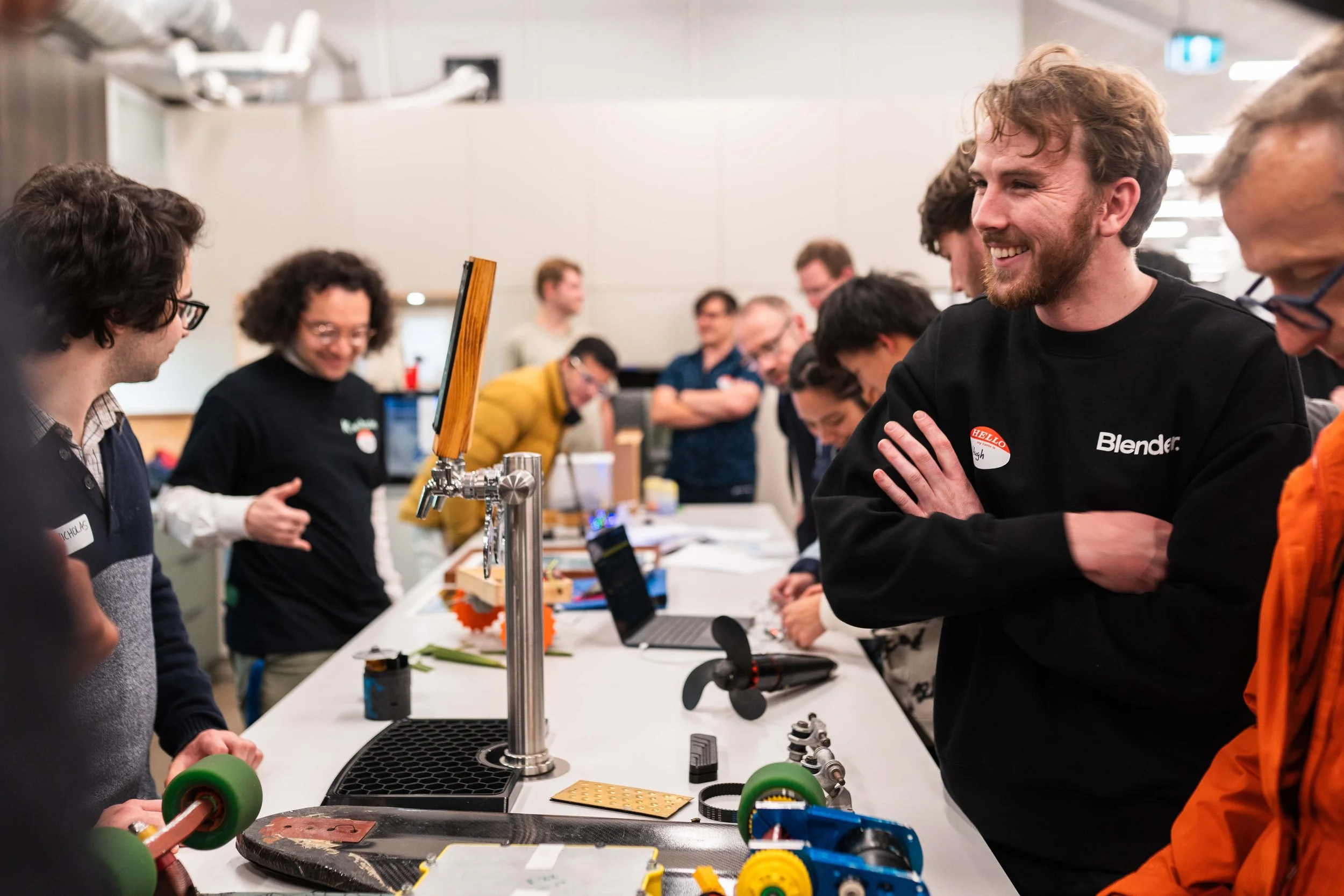
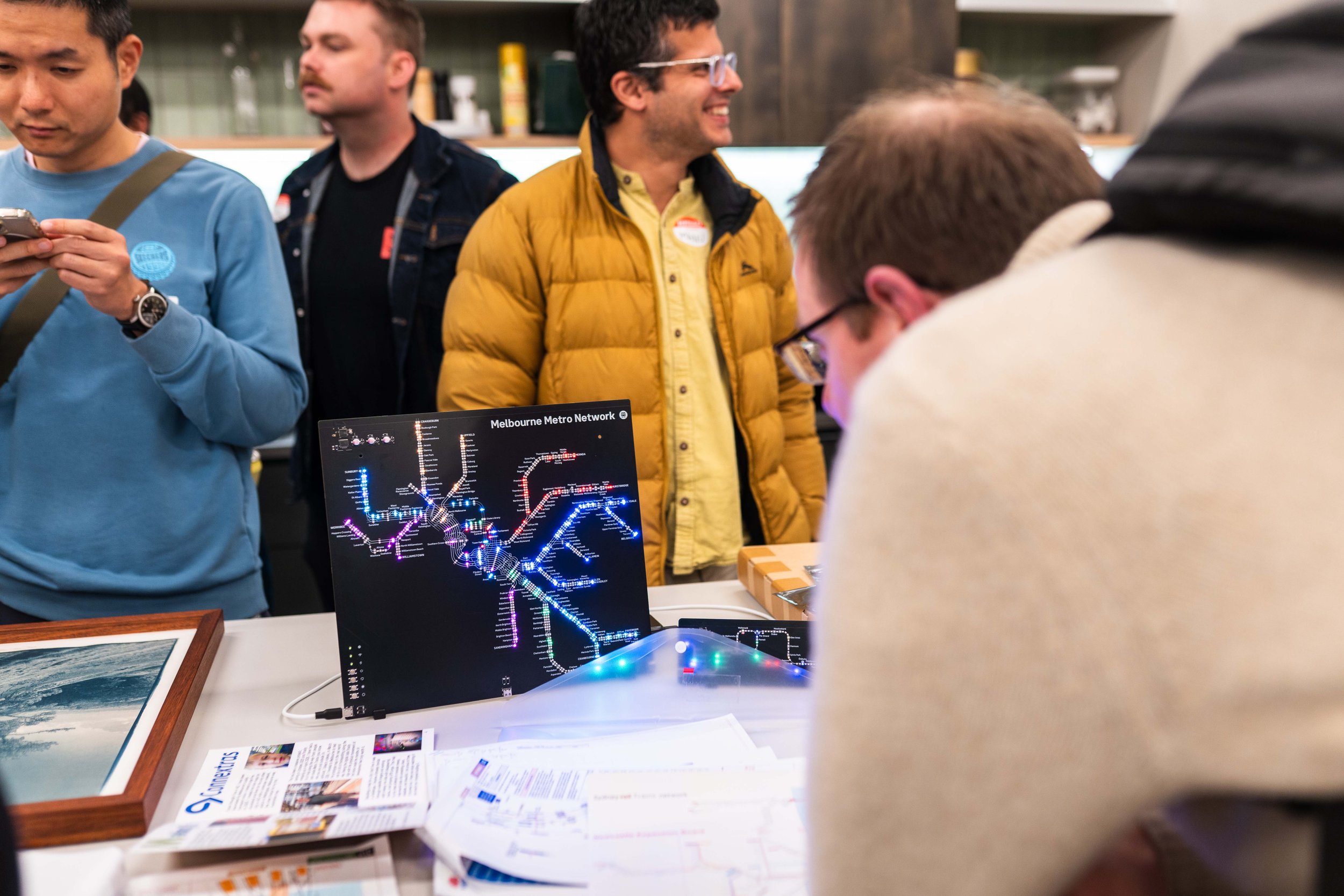
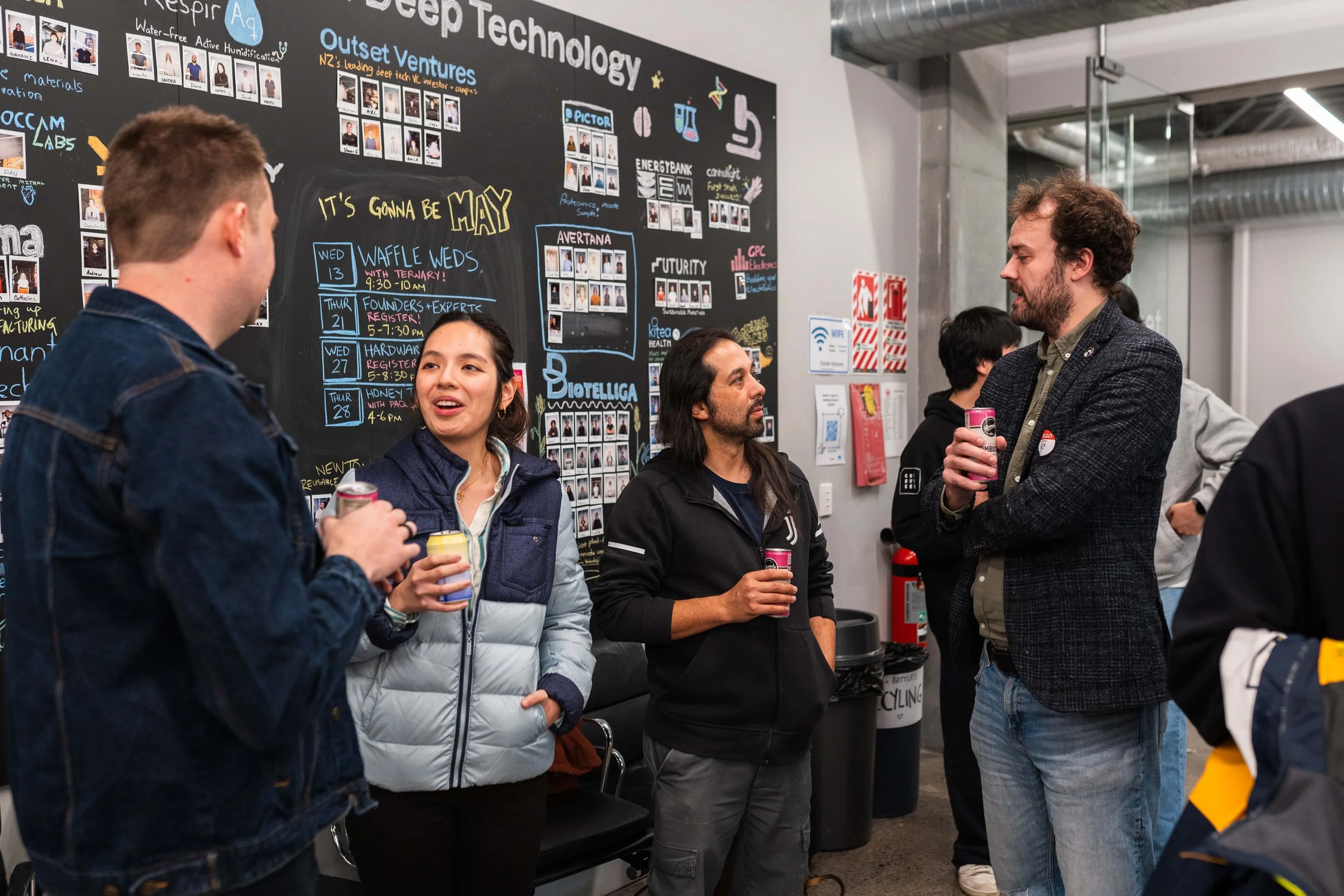
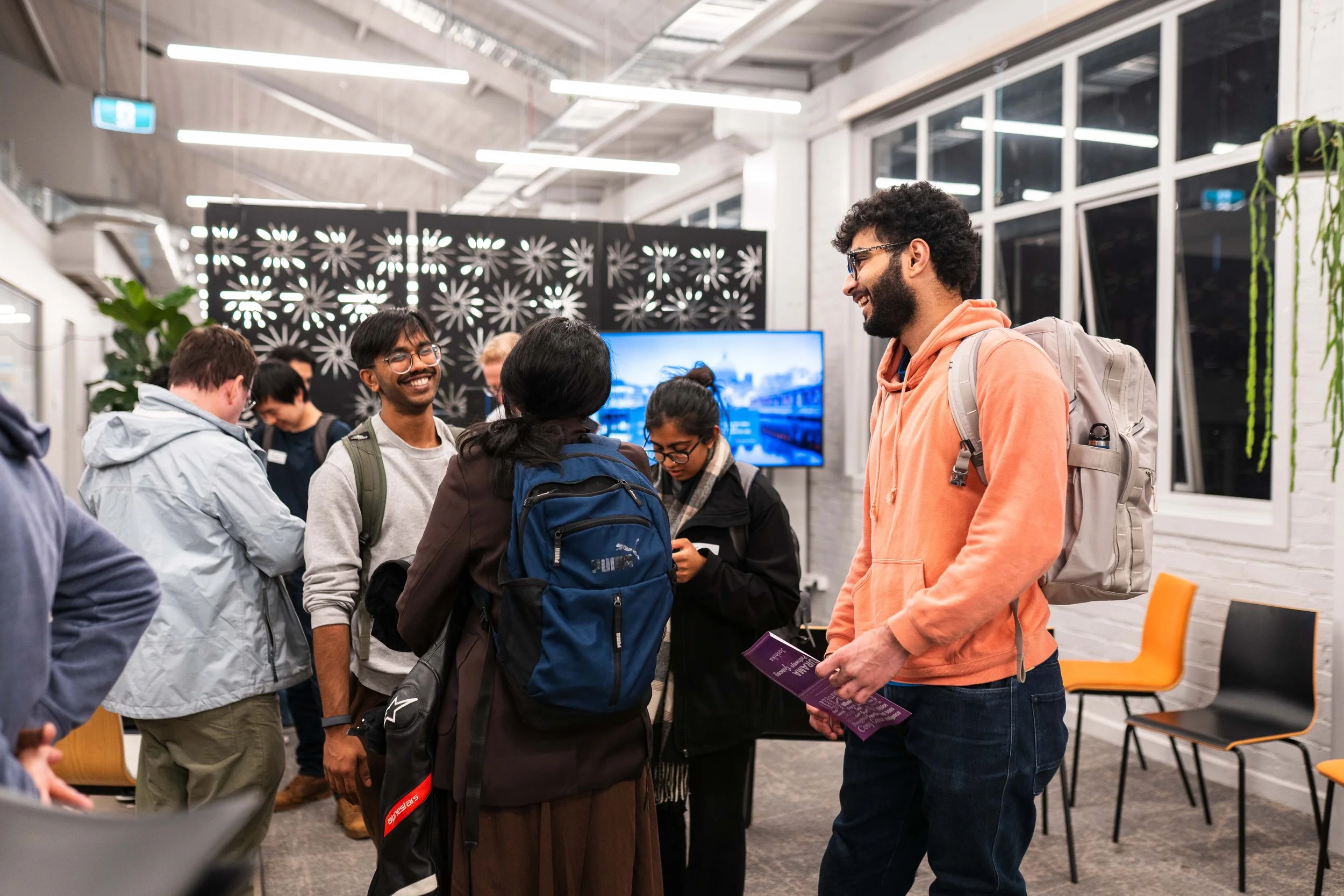
This year’s Nerd Night sold out before the event, bringing together a packed room of makers, engineers, students, inventors, and enthusiasts to share the projects they’ve been building simply because they wanted to. From robotic cat deterrents to solar-powered lawnmowers, space payloads, electric skateboards, terrible keyboards, and experimental photographic printing systems, the evening was a reminder that some of the best engineering starts with curiosity.
Mikayla Stokes
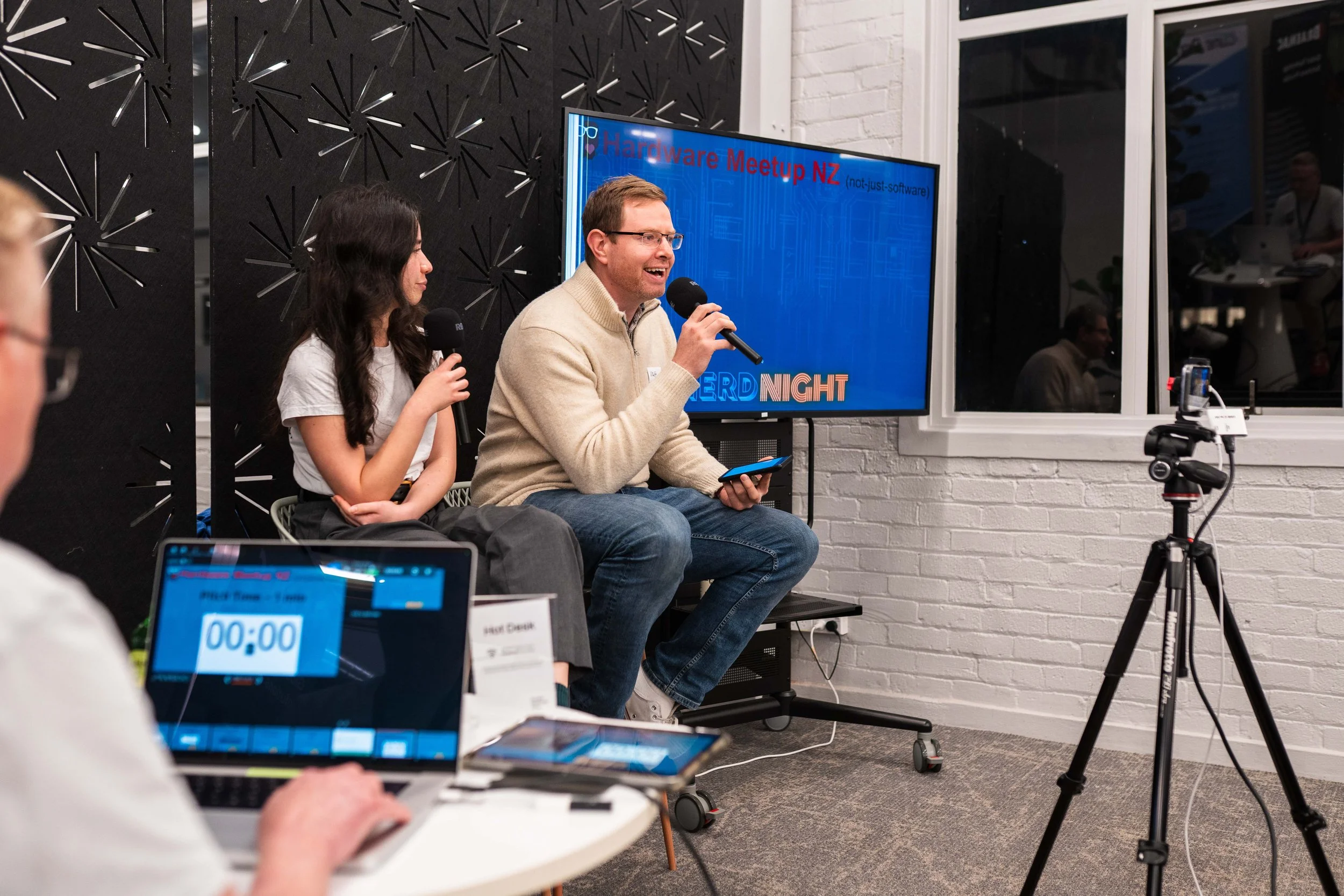
Mikayla Stokes welcomed attendees to the event, noting that around half the audience were first-time visitors to Hardware Meetup New Zealand. She reflected on how the community has grown over the years and explained what makes Nerd Night special: instead of hearing from established companies, attendees get to see the projects people build in their spare time simply because they are fascinated by an idea.
Mikayla shared her own journey into engineering. Despite initially disliking STEM subjects, a robotics competition sparked an interest that led to building robots, competing in Bright Sparks, creating inventions that occasionally flooded her parents’ garage, appearing on children’s television shows, and eventually becoming an automation engineer at Crown Equipment. It was the perfect reminder that many engineering careers begin with a project that seemed like a good idea at the time.
Michael Kenealy – Building a Robot to Defend His Lawn
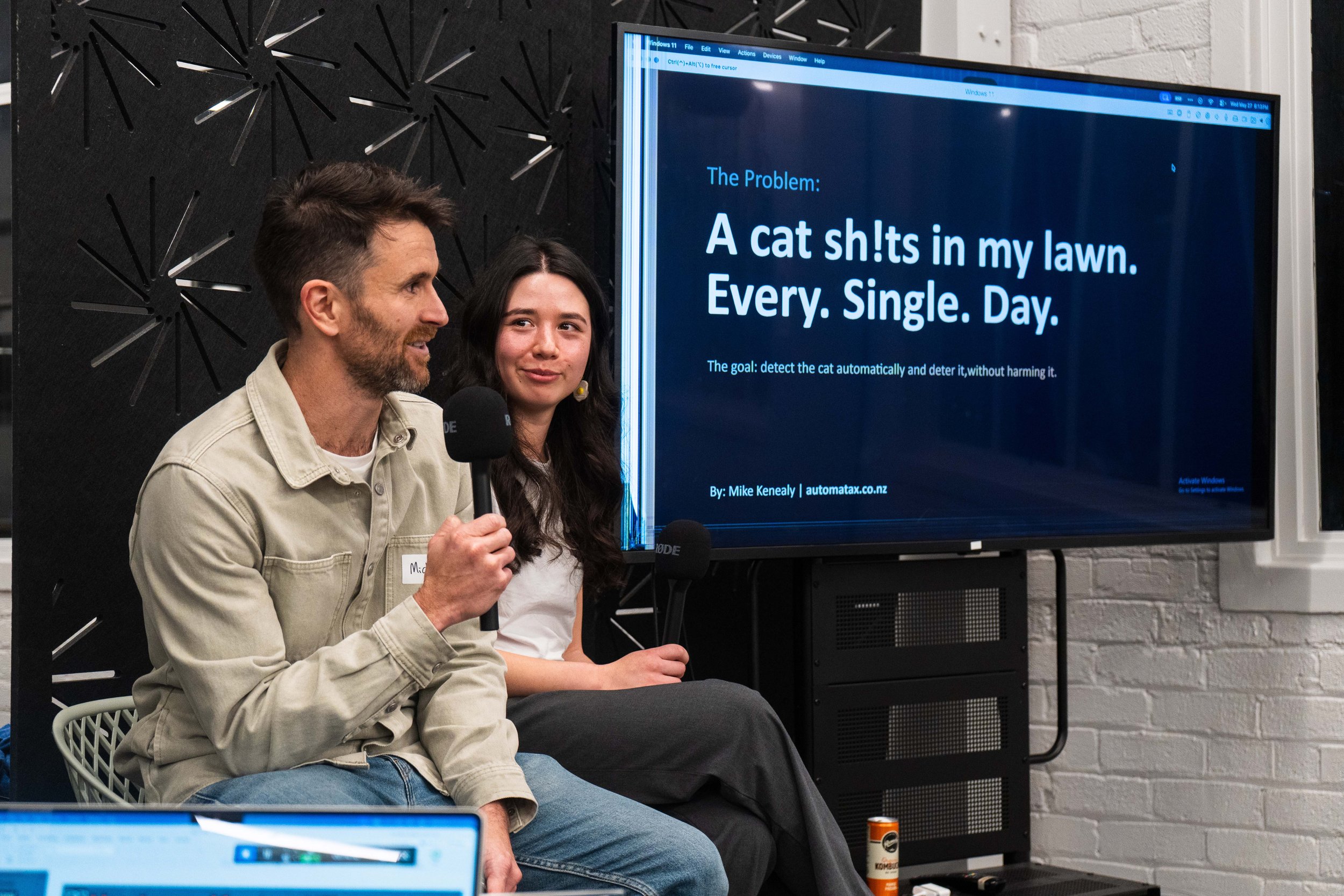
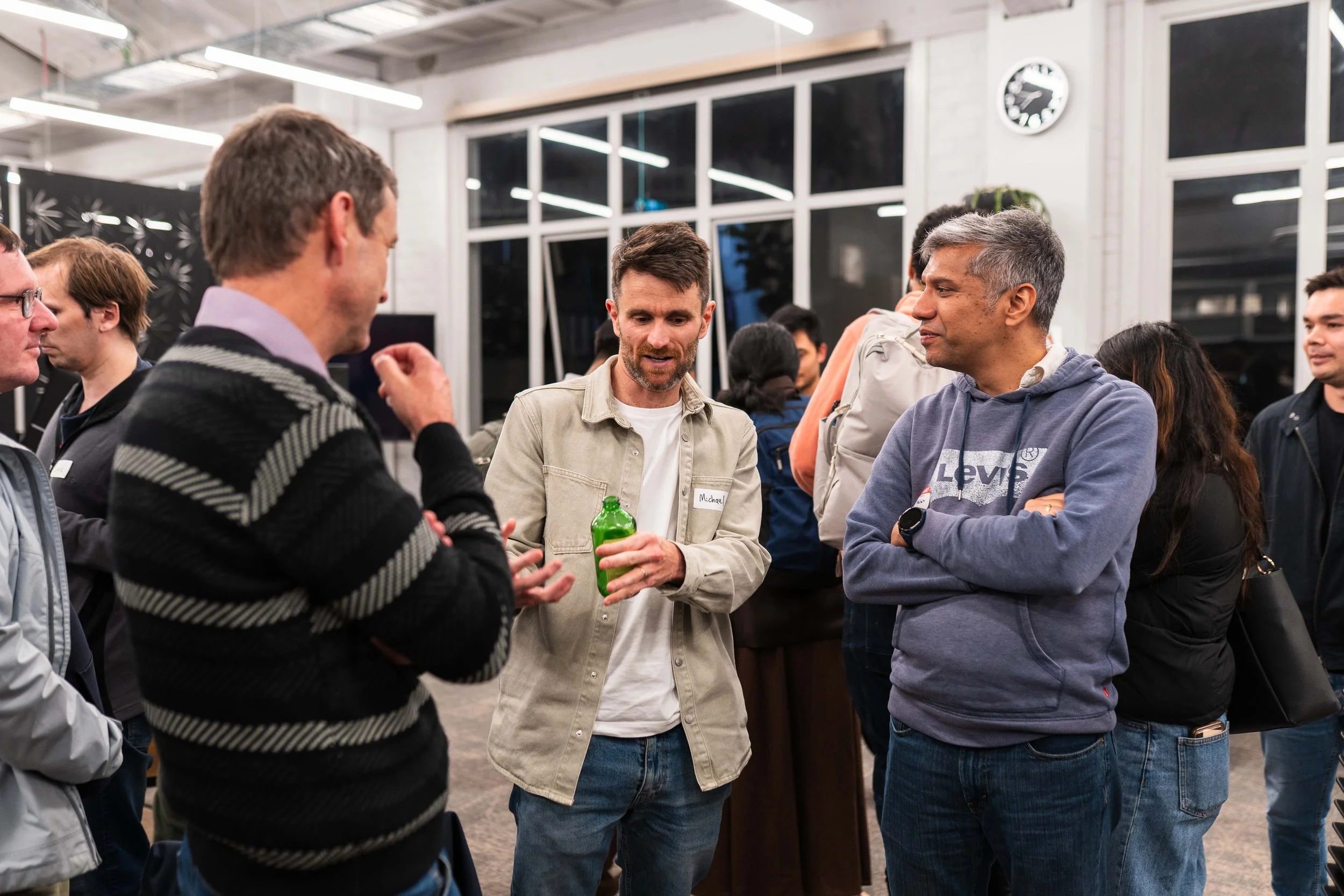
Michael’s project began with what he described as the biggest problem in his life:
A neighbourhood cat repeatedly using his garden as a bathroom.
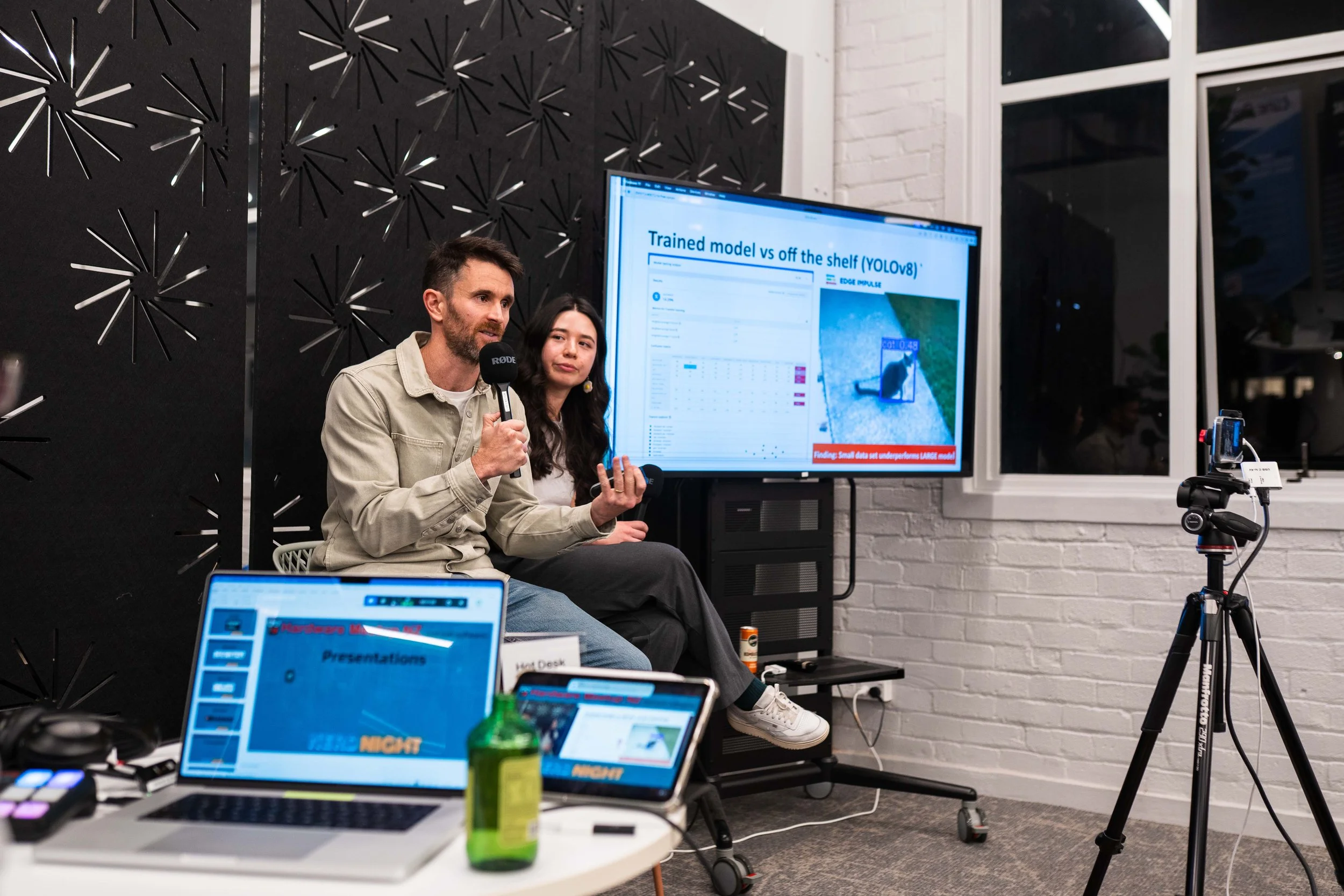
Rather than choosing a simple solution, Michael embarked on a journey involving robotics, machine vision, AI models, autonomous vehicles, SLAM mapping, edge inference, turret design, and water cannons.
Starting with no robotics background, he taught himself CAD, machine learning tools such as Edge Impulse, ESP32 development, and AI-assisted software development. The resulting system uses computer vision to identify cats, track them, and activate a water-spraying deterrent system.
Along the way he learned valuable lessons about training data, model performance, embedded AI, and rapid prototyping.
The project may have started as a joke, but it became a compelling demonstration of how modern AI and embedded hardware tools have made advanced robotics accessible to hobbyists.
Most importantly, Michael confirmed that no cats were harmed during development. The cat, however, appears to have stopped visiting.
Vibhaa Sharma – A Smoke Bomb for Space
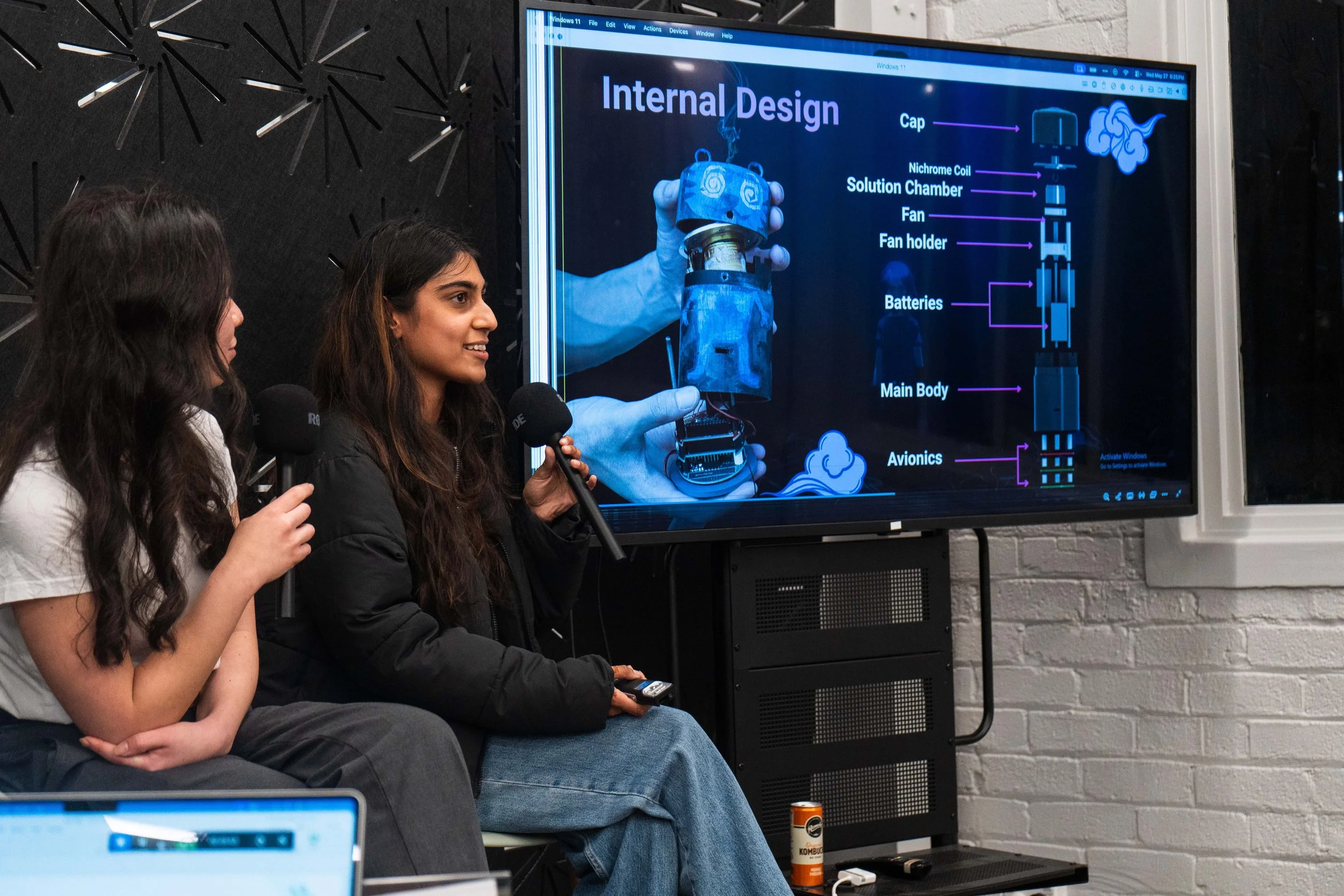
Representing the Auckland Programme for Space Systems (APSS), Vibhaa Sharma presented her team’s payload for the PSAT rocket programme.
Inspired by a smoke bomb from the animated series Arcane, the team designed a vapour-generating payload that could be deployed from a rocket and assist with retrieval after landing.
The project involved Custom PCB design, Power electronics, Embedded systems, GPS tracking, Sensors and telemetry, Fluid dynamics and Extensive prototyping and testing.
For many team members it was their first serious engineering project, and the process included countless hours debugging hardware, redesigning boards, and solving unexpected challenges.
One highlight was finally getting their custom microcontroller board to flash successfully after months of effort—a moment Vibhaa described as one of the best experiences of her engineering degree so far.
The payload ultimately launched successfully, generated visible vapour, collected data, and was successfully recovered, making the project a significant achievement for the team
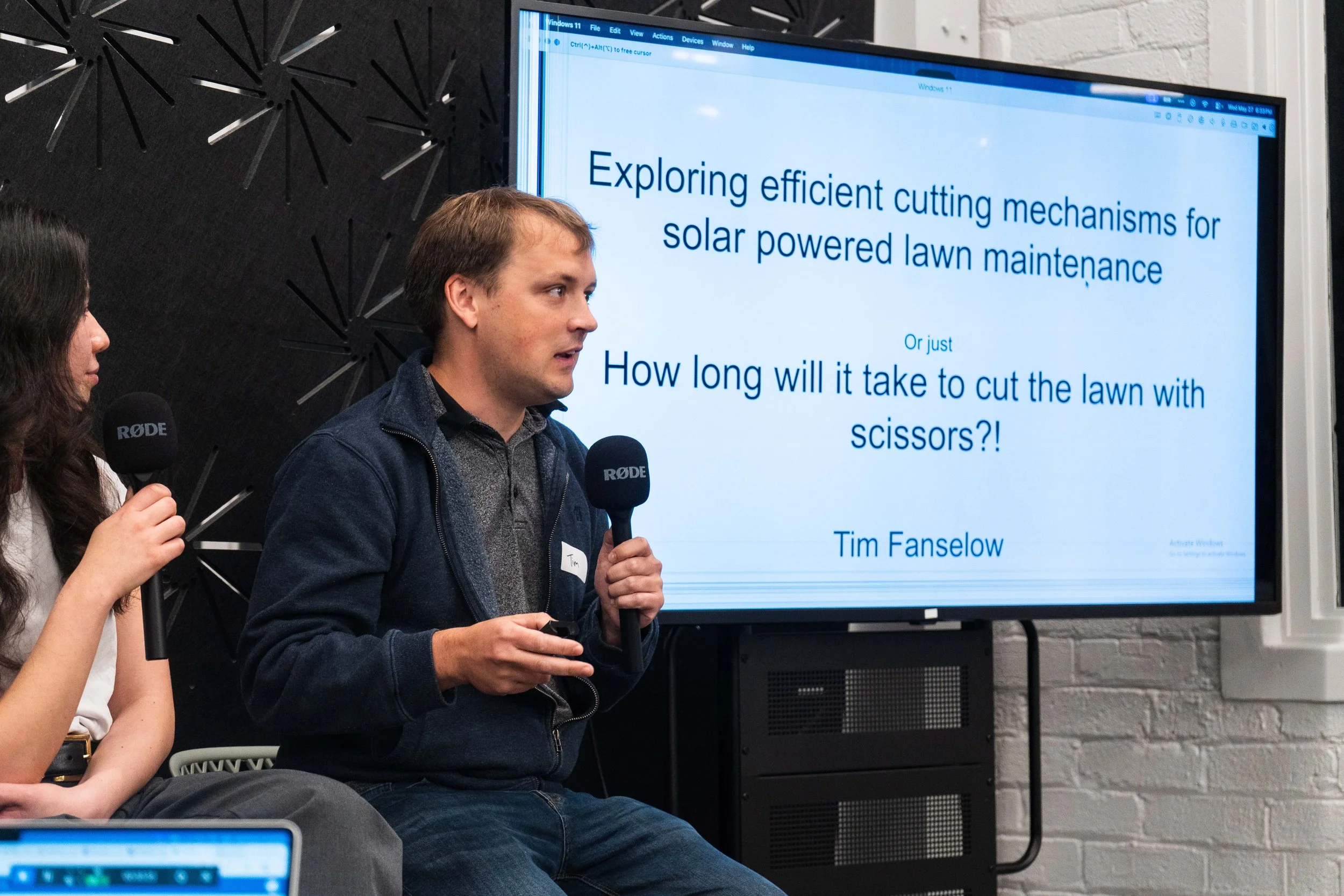
Tim Fanselow – How Long Does It Take to Mow a Lawn with Scissors?
Tim’s presentation may have started with a ridiculous question:
“How long would it take to cut a lawn using scissors?”
But underneath the humour was a genuinely interesting engineering challenge.
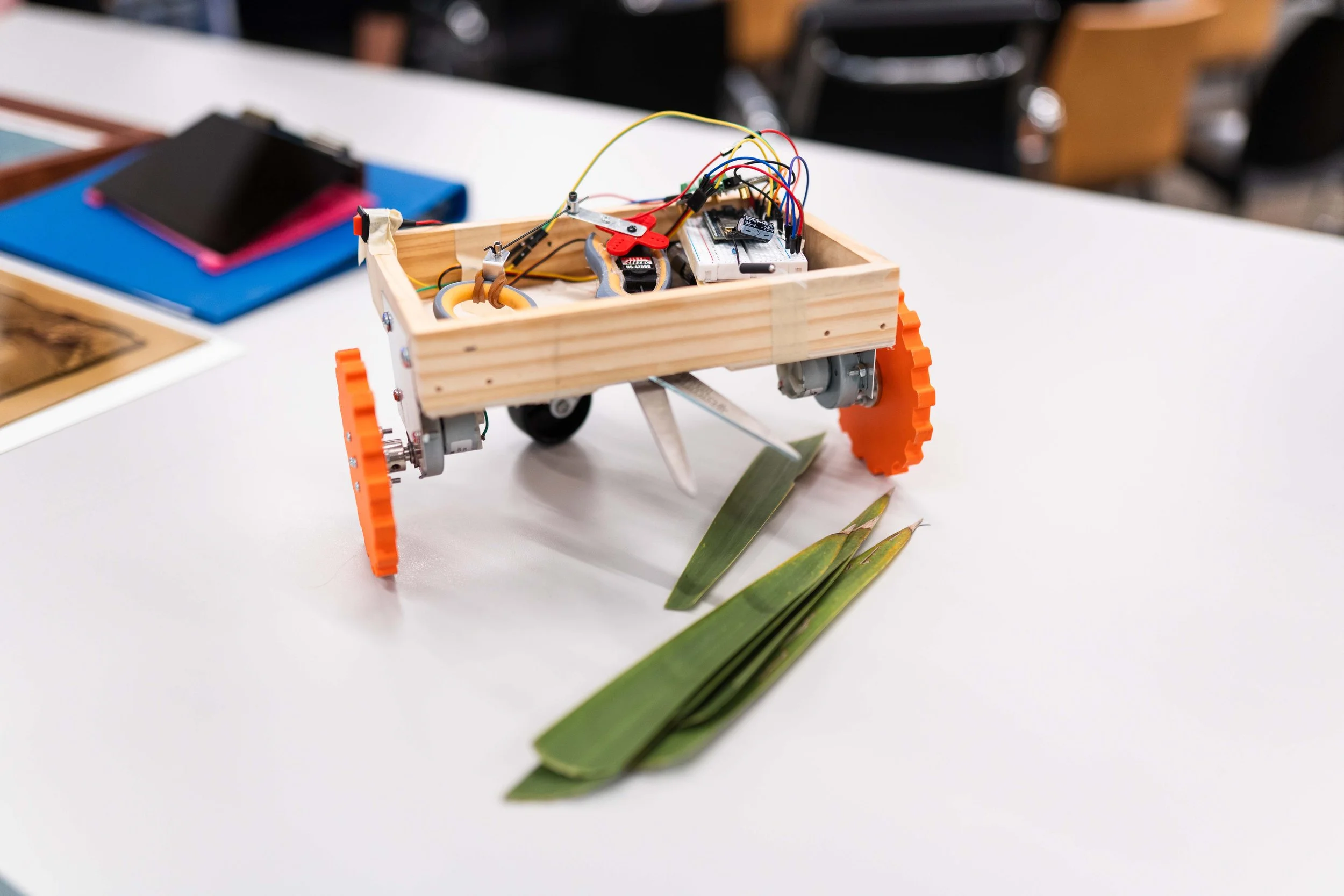
Living in sunny Southern California, Tim wanted a fully autonomous lawnmower that required no charging dock or external power source. Rather than starting with conventional lawnmower designs, he asked a different question:
What if the mower was designed specifically around solar power?
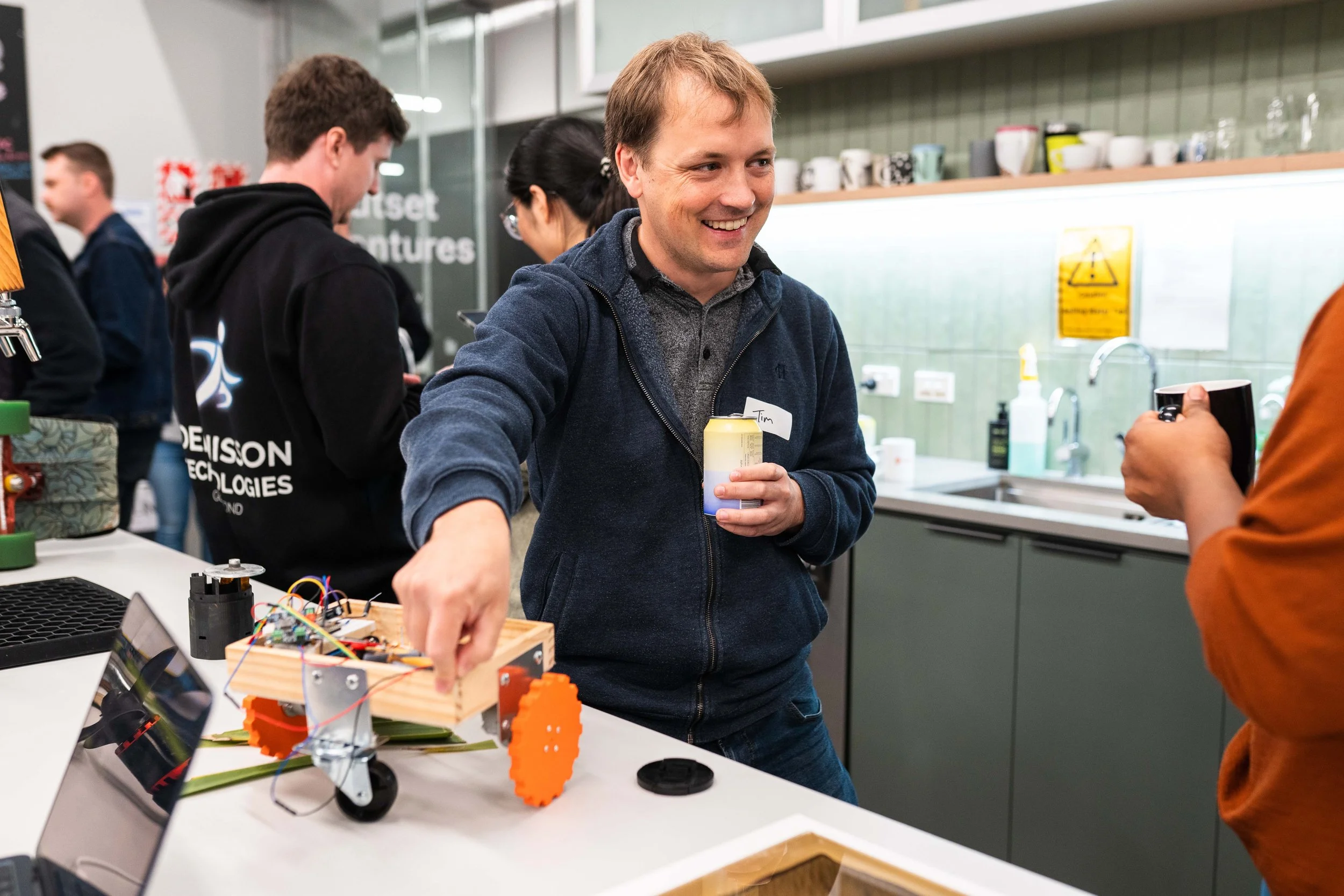
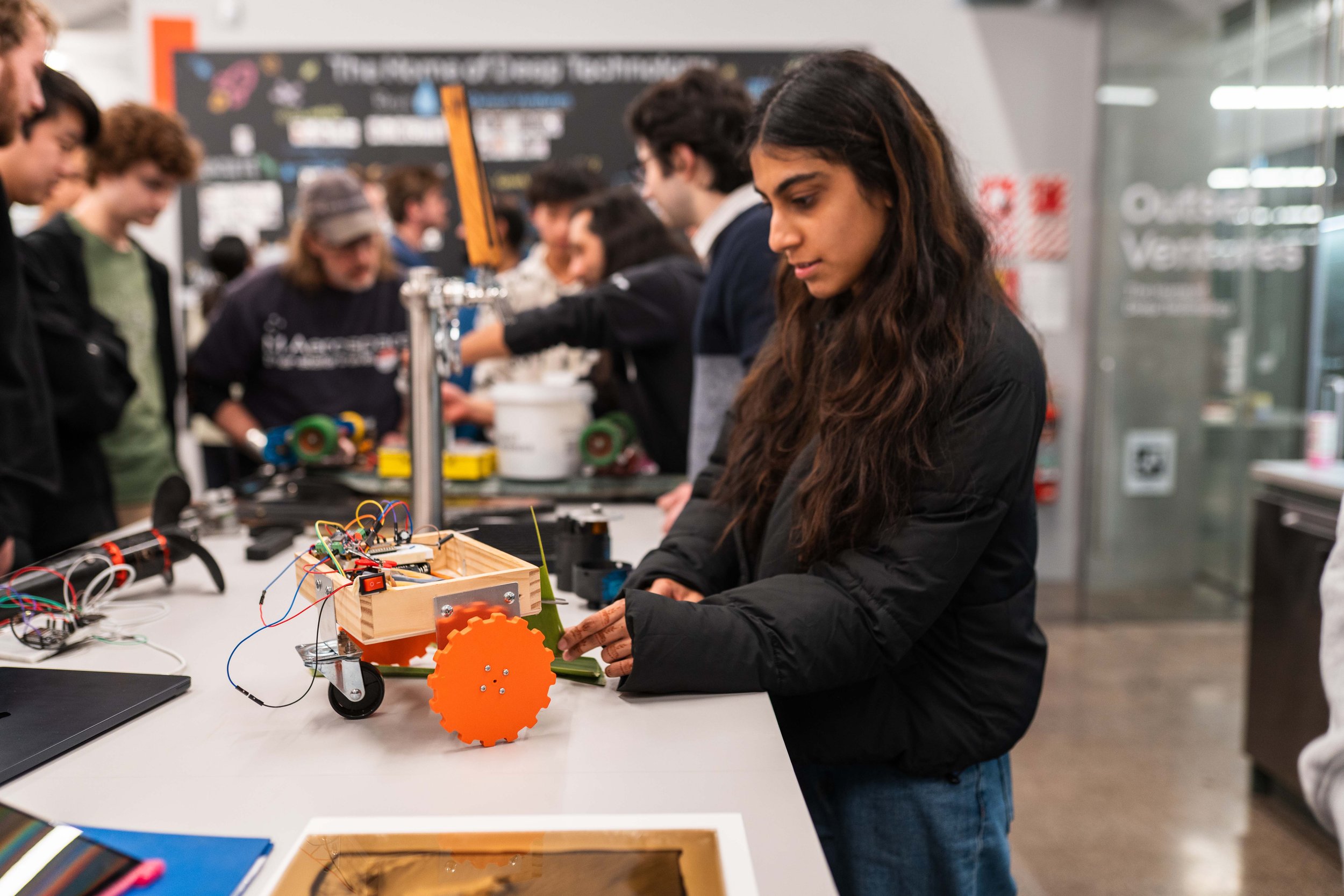
Because solar energy is limited but time is abundant, Tim concluded that traditional high-speed spinning blades are inefficient. Instead, he experimented with scissor-based cutting mechanisms powered directly by solar energy.
His prototype uses reciprocating cutting blades, solar panels, and a simple autonomous platform. Future versions may use machine vision, lidar-inspired sensing, or even behaviour inspired by grazing sheep to determine where to cut next.
Whether or not scissors prove to be the ultimate solution, Tim demonstrated the value of rethinking problems from first principles rather than simply automating existing approaches.
Reid Davidson – Chasing Rockets Across Paddocks
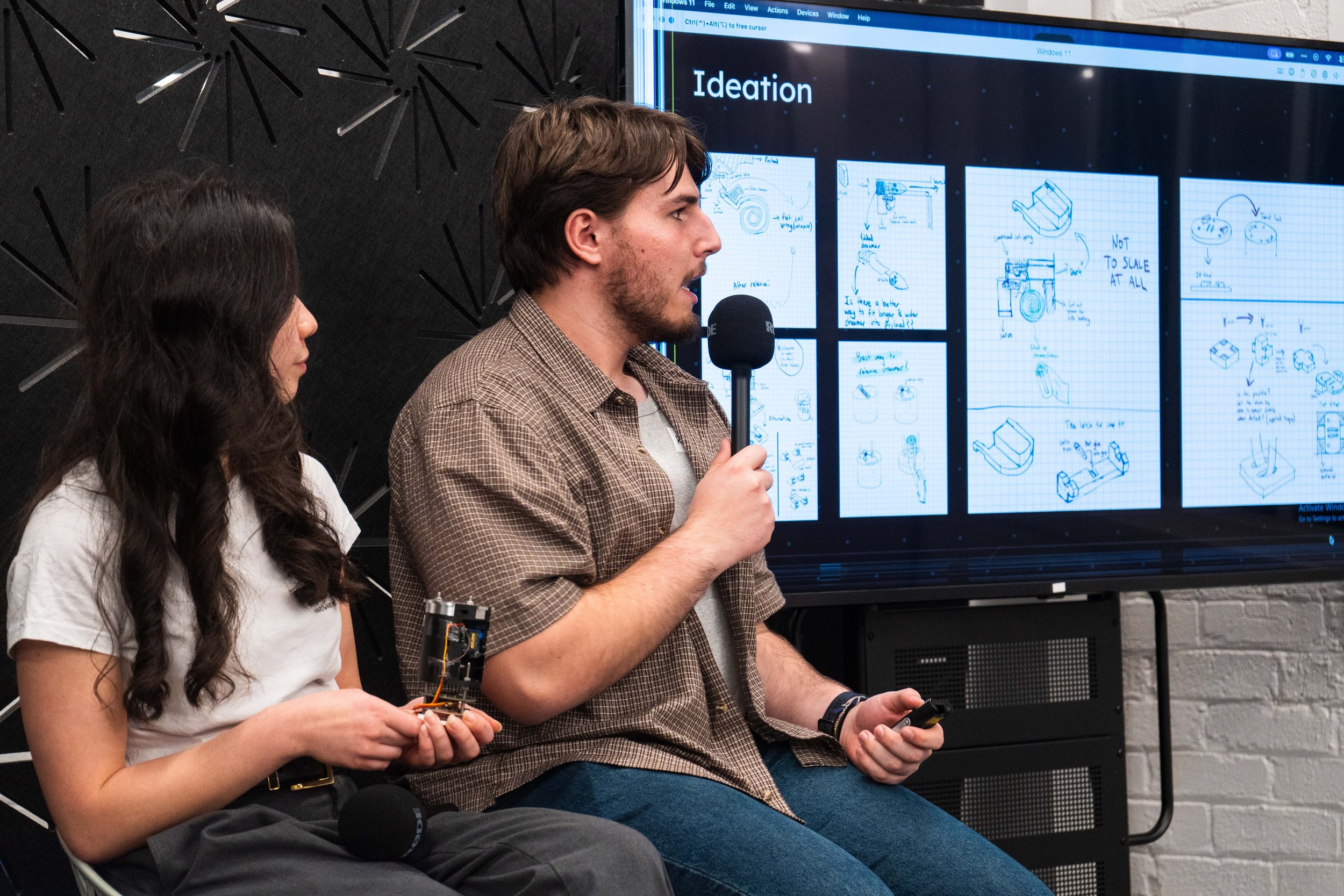
Another APSS participant, Reid Davidson, shared his team’s experience building a retrievable rocket payload.
Their design focused on two key goals:
Gathering useful flight data.
Making sure the payload could actually be found afterwards.
The team developed a deployment system designed to release a visible streamer during descent, alongside GPS and LoRa tracking systems.
Like many engineering projects, extensive testing suggested everything would work perfectly.
Like many engineering projects, reality had other ideas.
Although the streamer worked flawlessly in testing, it failed to deploy during the actual launch. Despite that setback, the team successfully collected telemetry, recovered the payload, and generated a substantial amount of flight data.
One memorable moment came during recovery when the team spent nearly an hour searching an apparently empty paddock before discovering their payload hidden behind a small hill.
The project was a perfect example of the difference between laboratory success and field success—and the lessons learned from both.
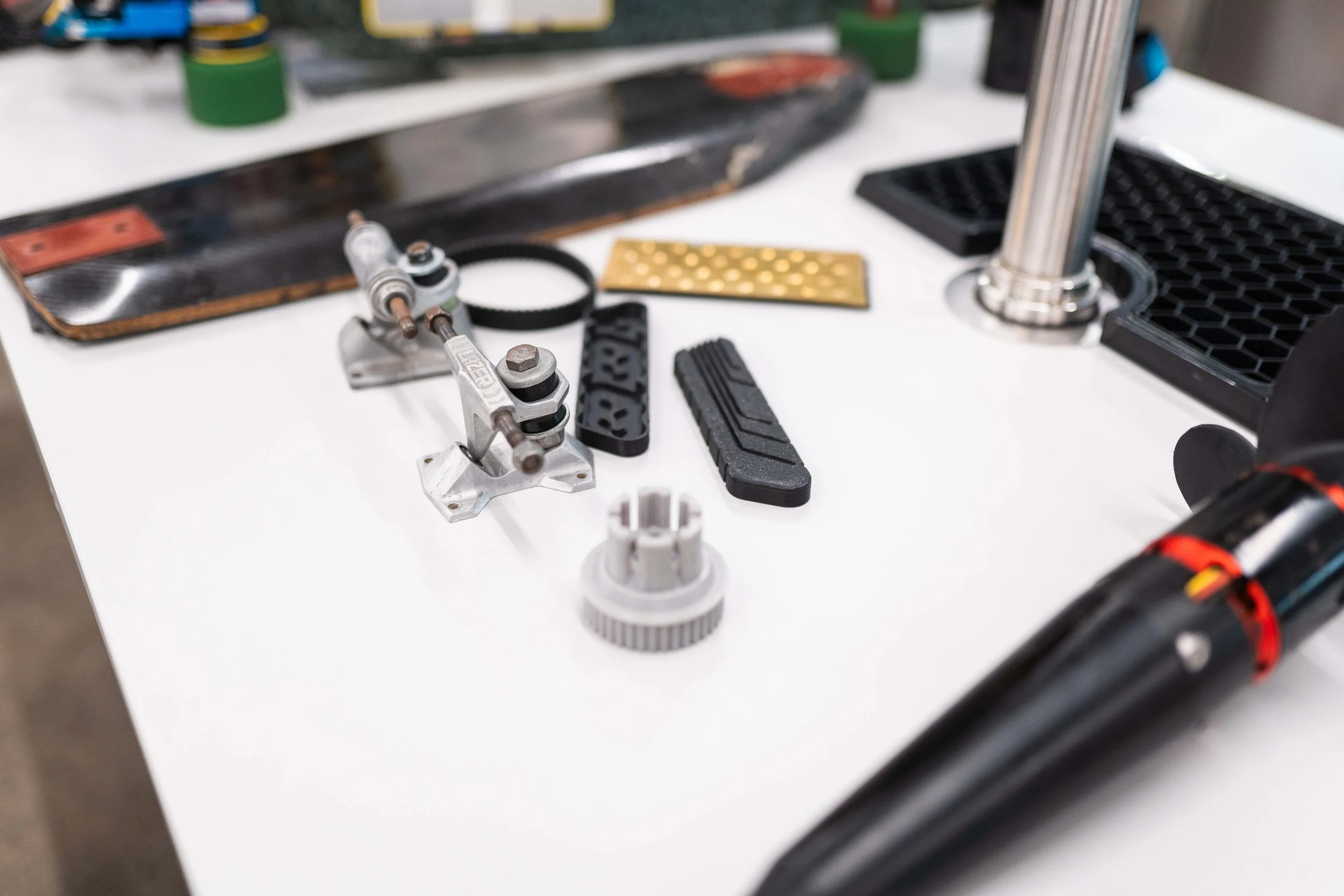
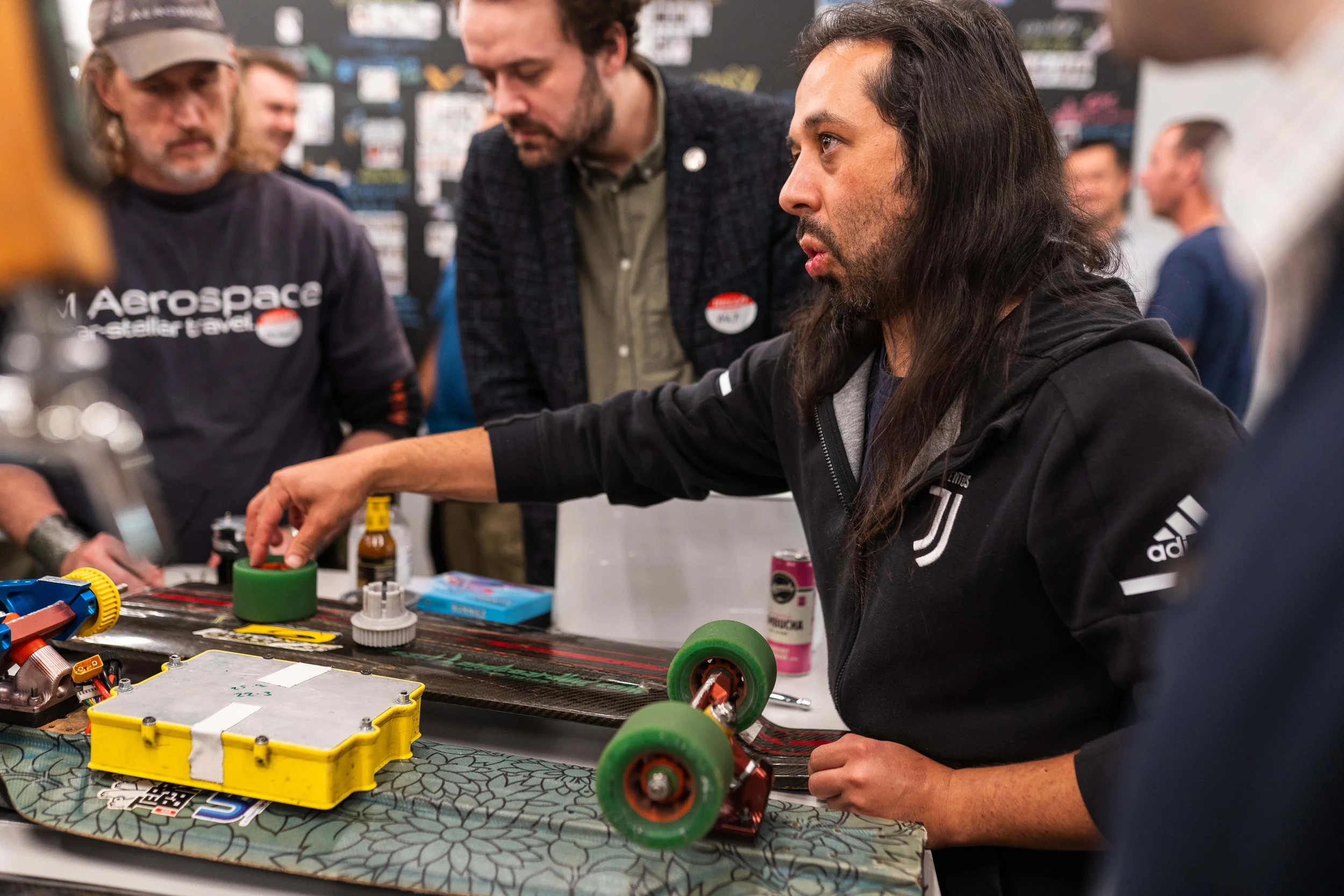
Krish KC – Skateboards, CNC Machines, and Growing Surfboards
Krish’s presentation demonstrated what happens when engineering, extreme sports, and relentless experimentation collide.
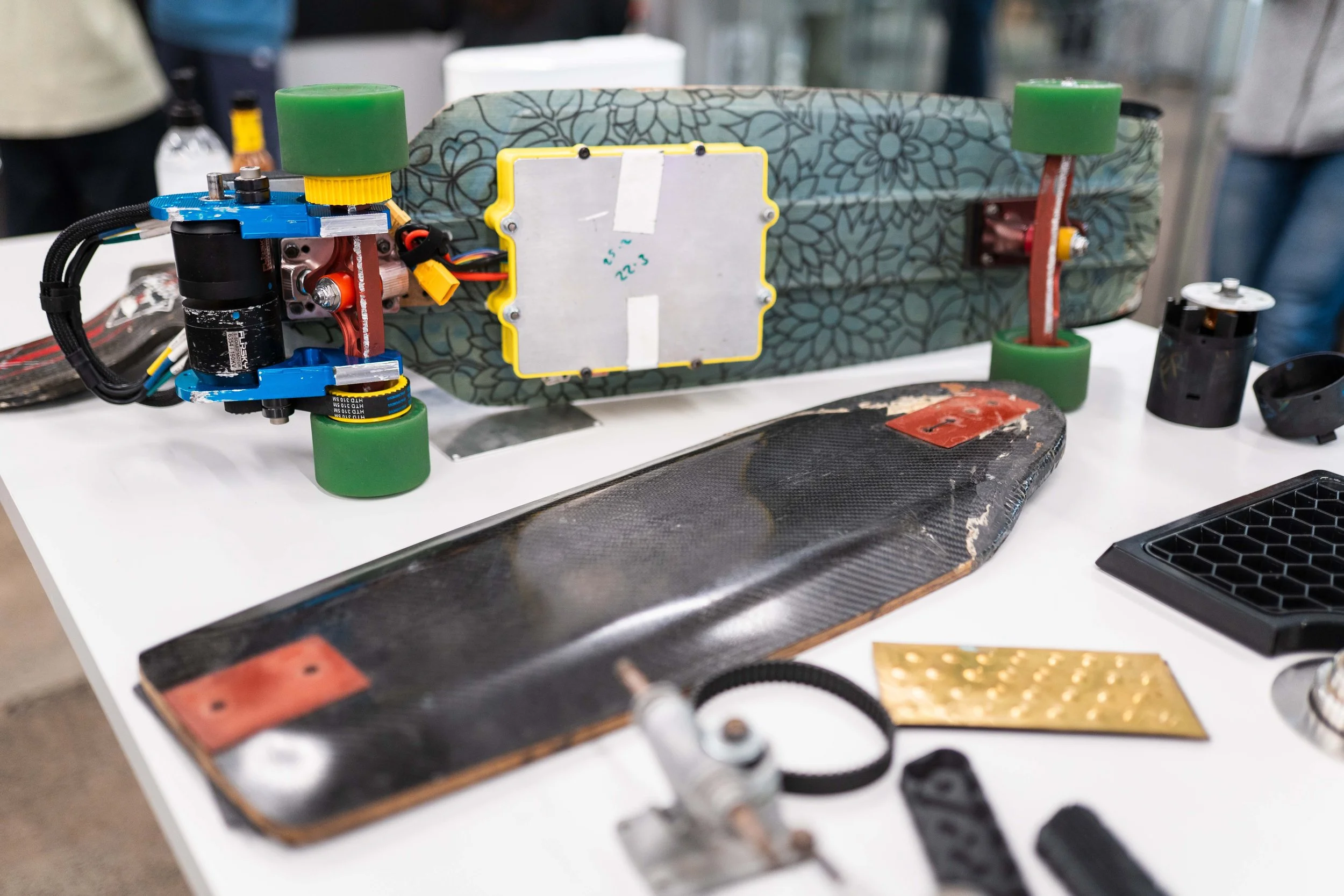
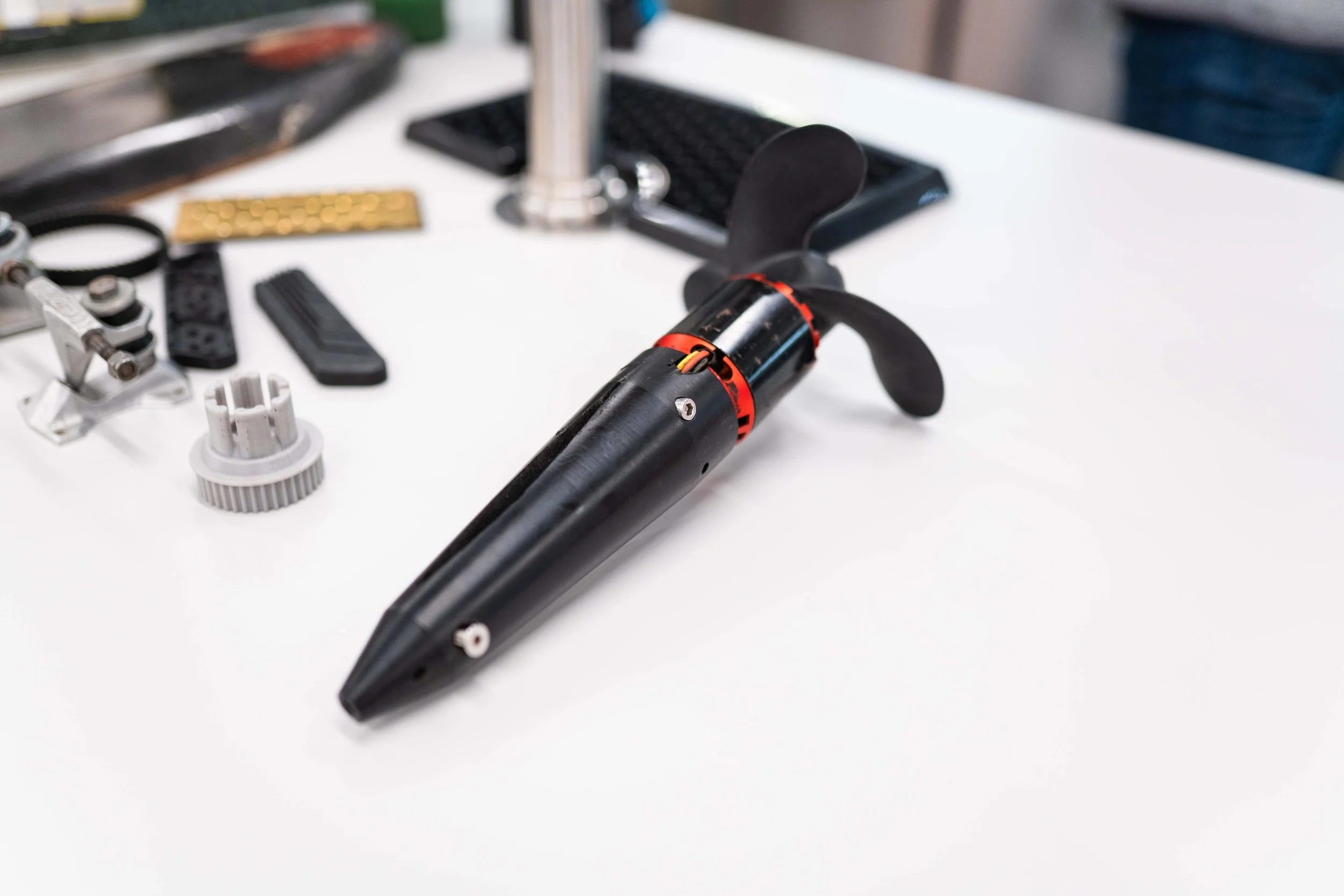
A long-time downhill skateboarder, Krish began modifying and building his own skateboards after realising that off-the-shelf products couldn’t meet his needs.
His projects have included:
Custom carbon fibre skateboard decks
Bespoke CNC-machined trucks
Electric-assist downhill skateboards
Home anodising systems
Electric foil boards
Experimental hydrofoil designs
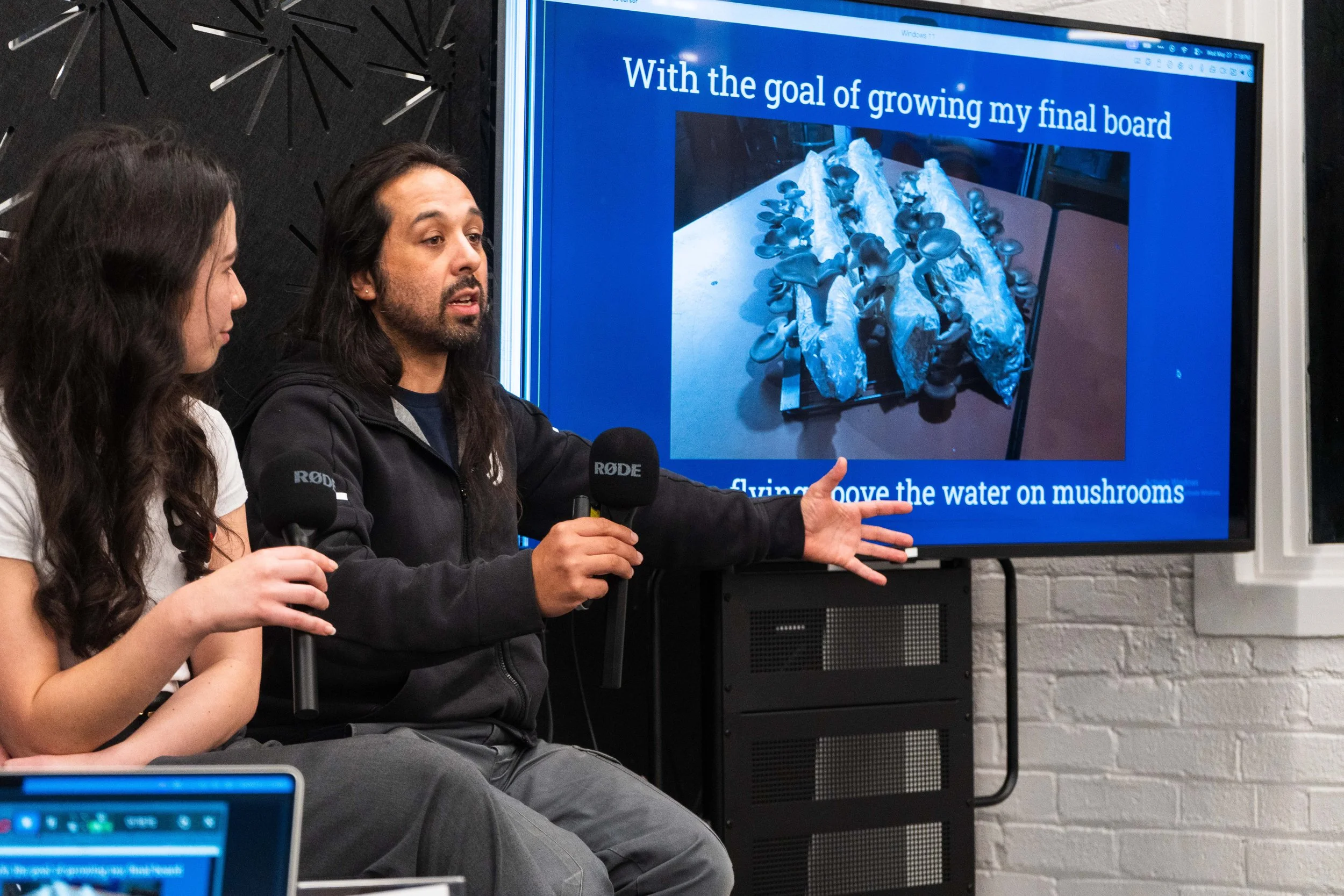
Perhaps the most ambitious project currently underway is an attempt to grow biodegradable surfboards using mycelium—the root structure of mushrooms—as an environmentally friendly alternative to conventional foam cores.
His presentation highlighted a recurring Nerd Night theme: learning new skills not because they’re required, but because they unlock new possibilities.
When commercial solutions didn’t exist, Krish simply built his own.
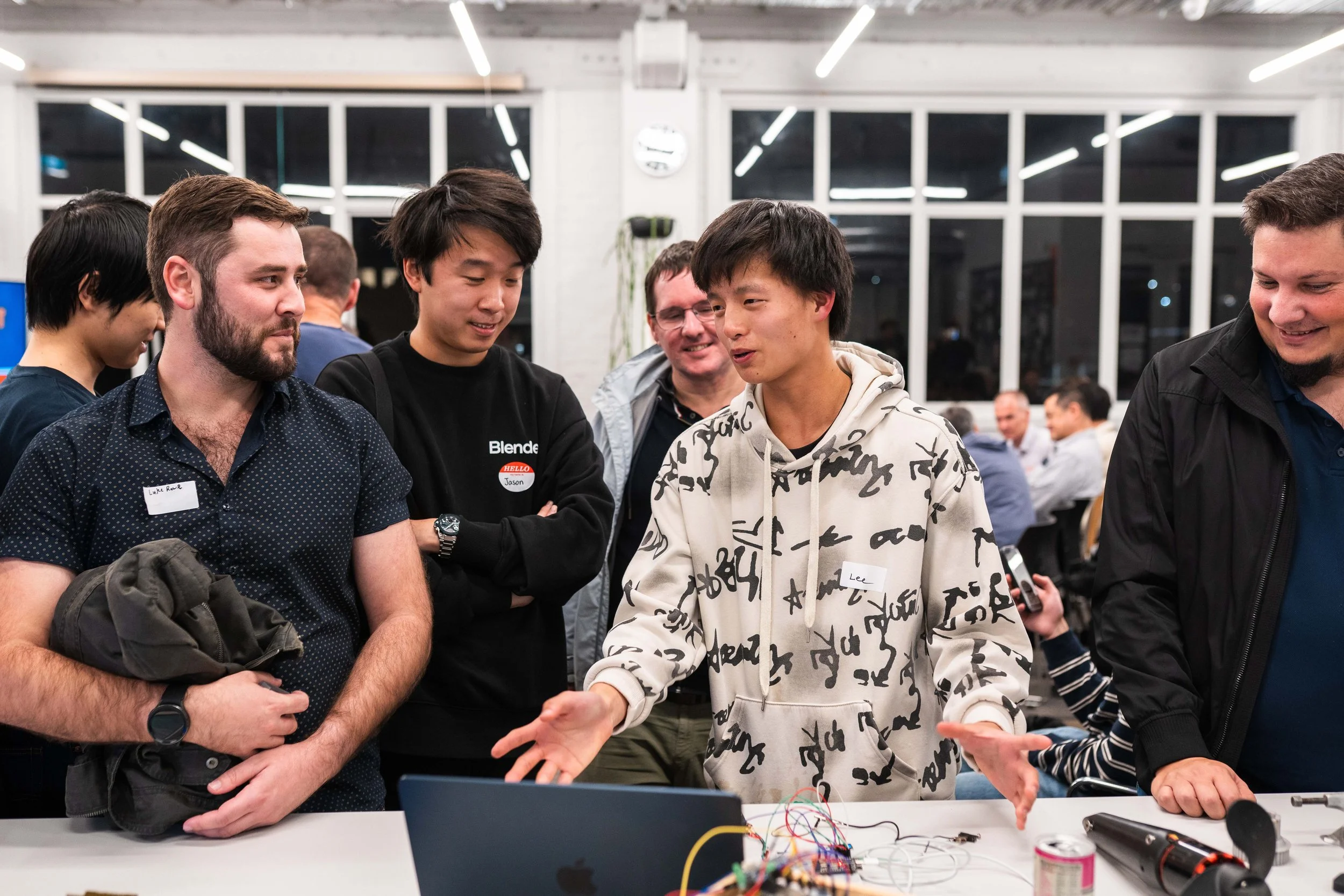
Lee Lin – The World’s Worst Keyboard
Every Nerd Night needs at least one project that is simultaneously impressive and completely unnecessary.
Lee Lin delivered exactly that.
Built during Kiwi Hacks, his project was a deliberately terrible keyboard.
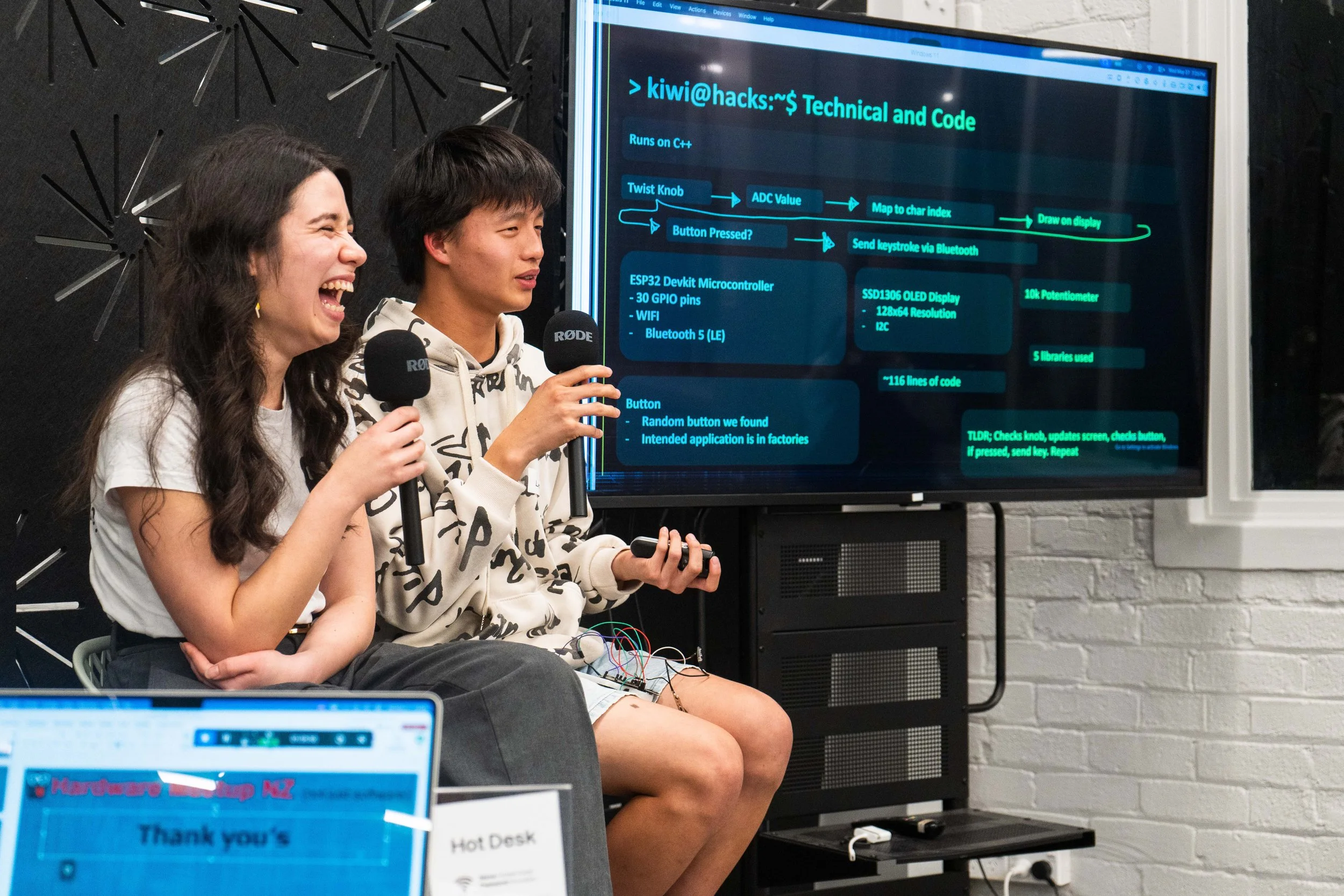
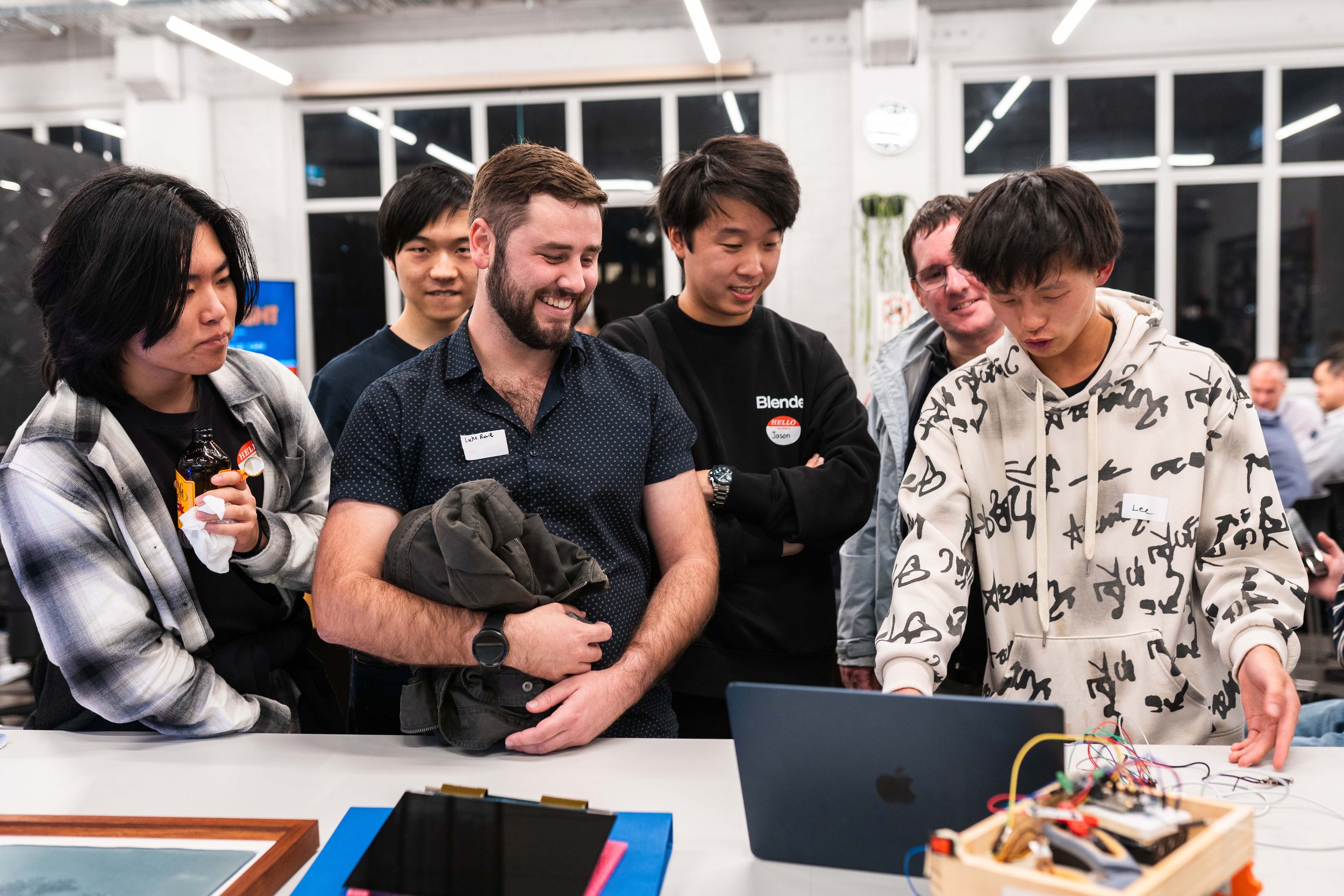
Instead of using keys, users rotate a potentiometer to select a character and press a button to enter it. The device connects over Bluetooth and functions as a genuine keyboard.
Technically.
Typing speeds are measured in minutes per word.
The keyboard includes no backspace key, occasionally drifts randomly, and generally succeeds in making users appreciate every keyboard they’ve ever owned.
Built using an ESP32, OLED display, potentiometer, and approximately 116 lines of code, the project became an audience favourite and perfectly captured the spirit of Nerd Night: creating something simply because it would be funny to build.
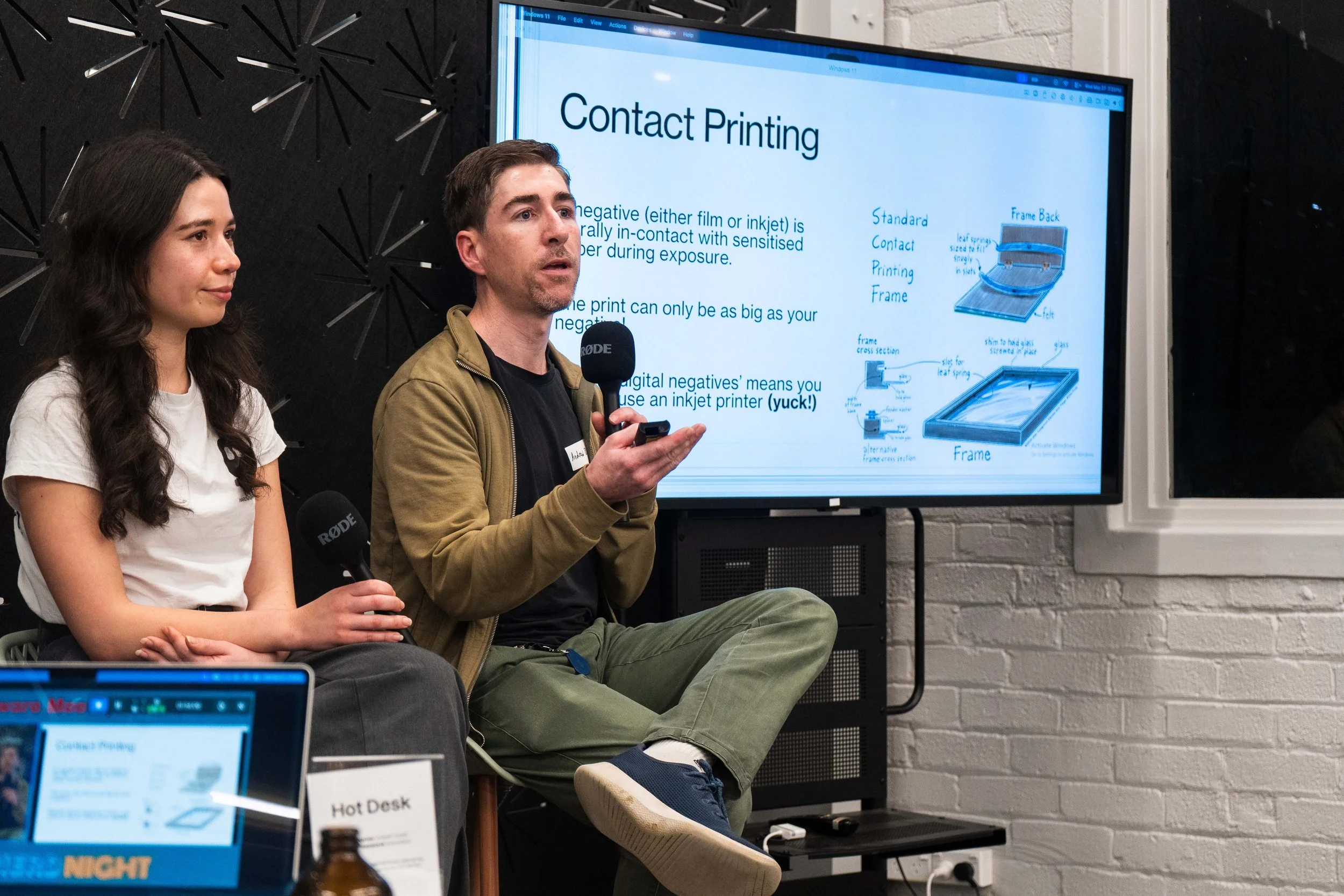
Andrew Burns – Engineering Meets Art
Andrew Burns brought a very different kind of project to the stage.
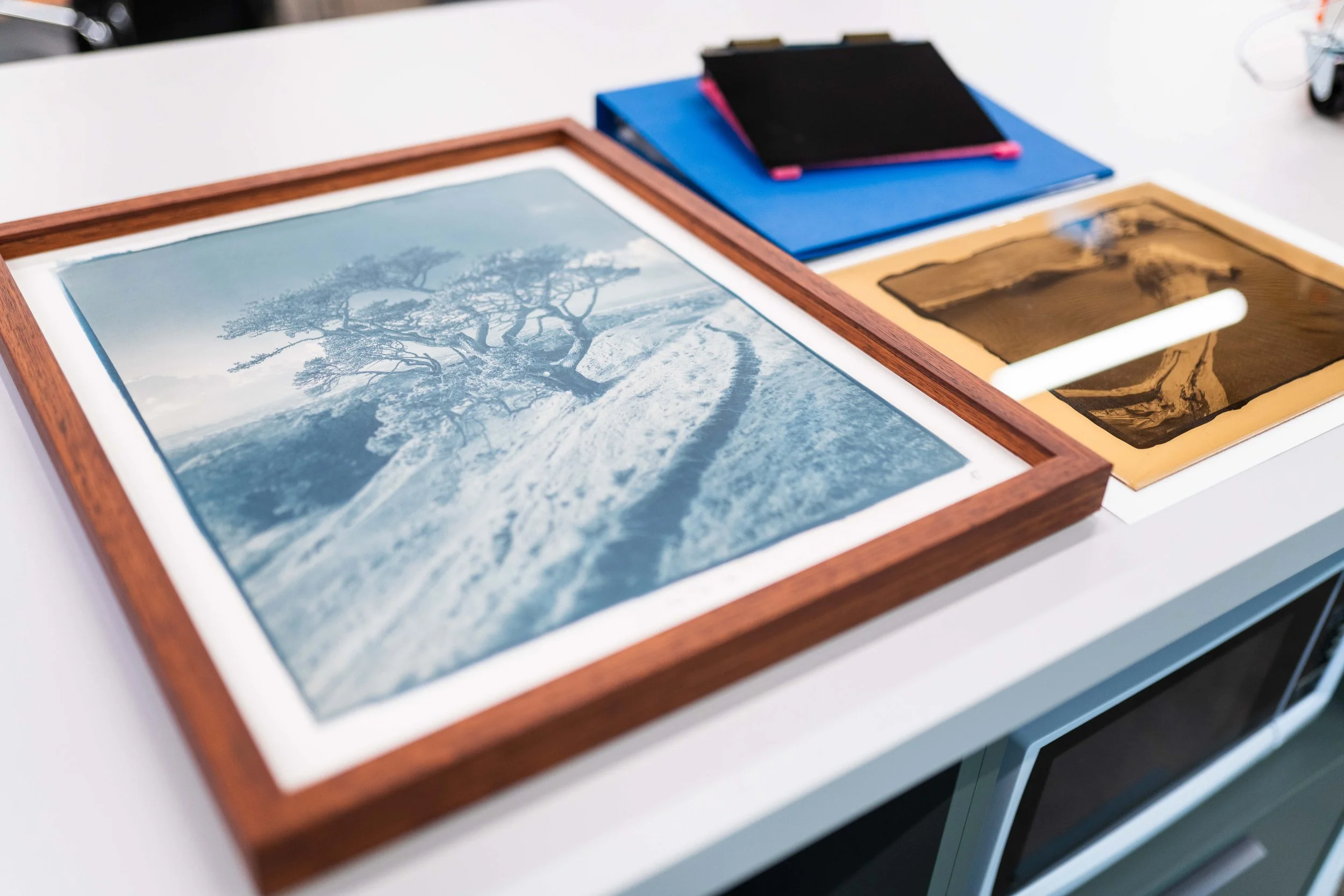
An engineer by profession and artist by passion, Andrew combines historic photographic printing processes with modern technology.
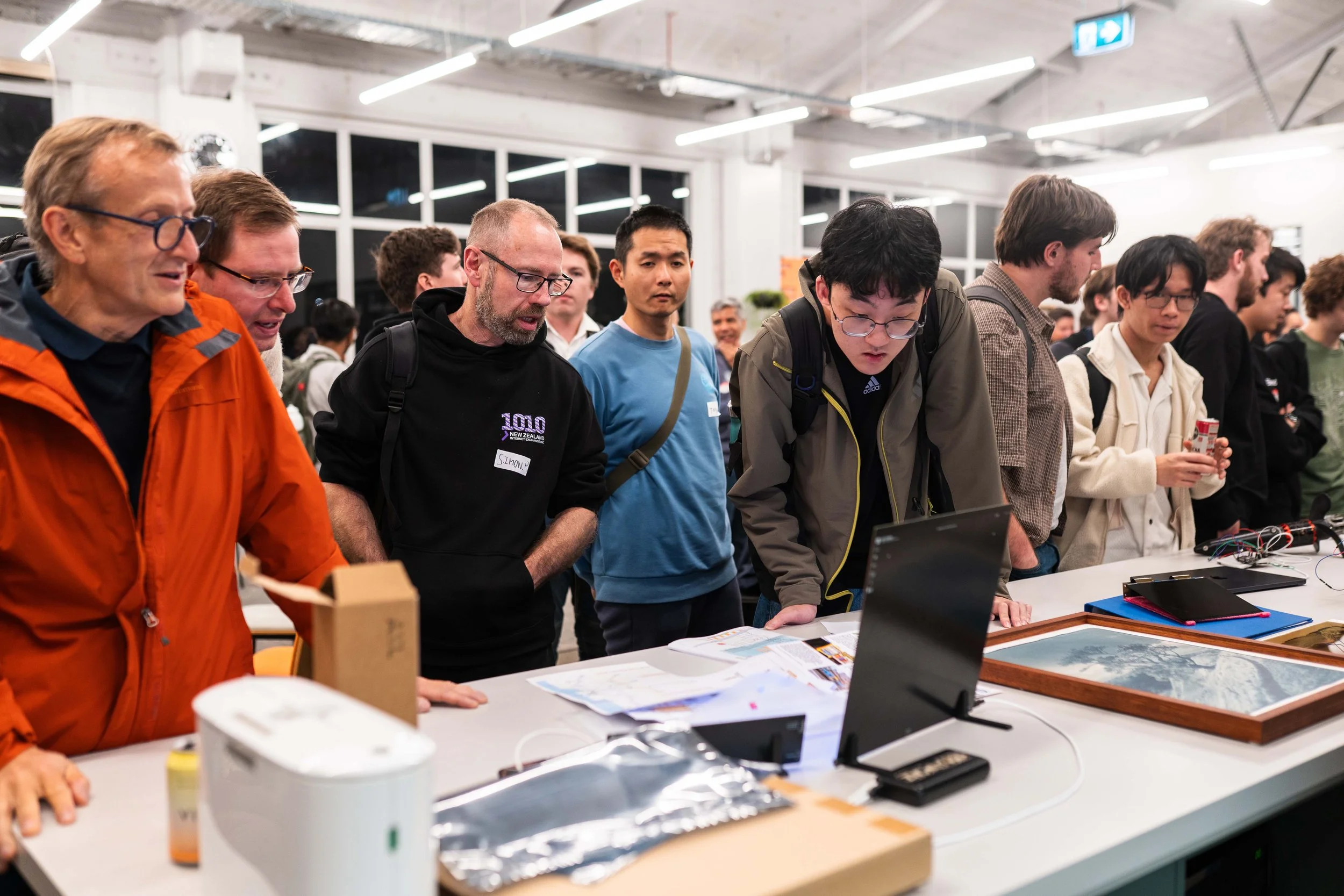
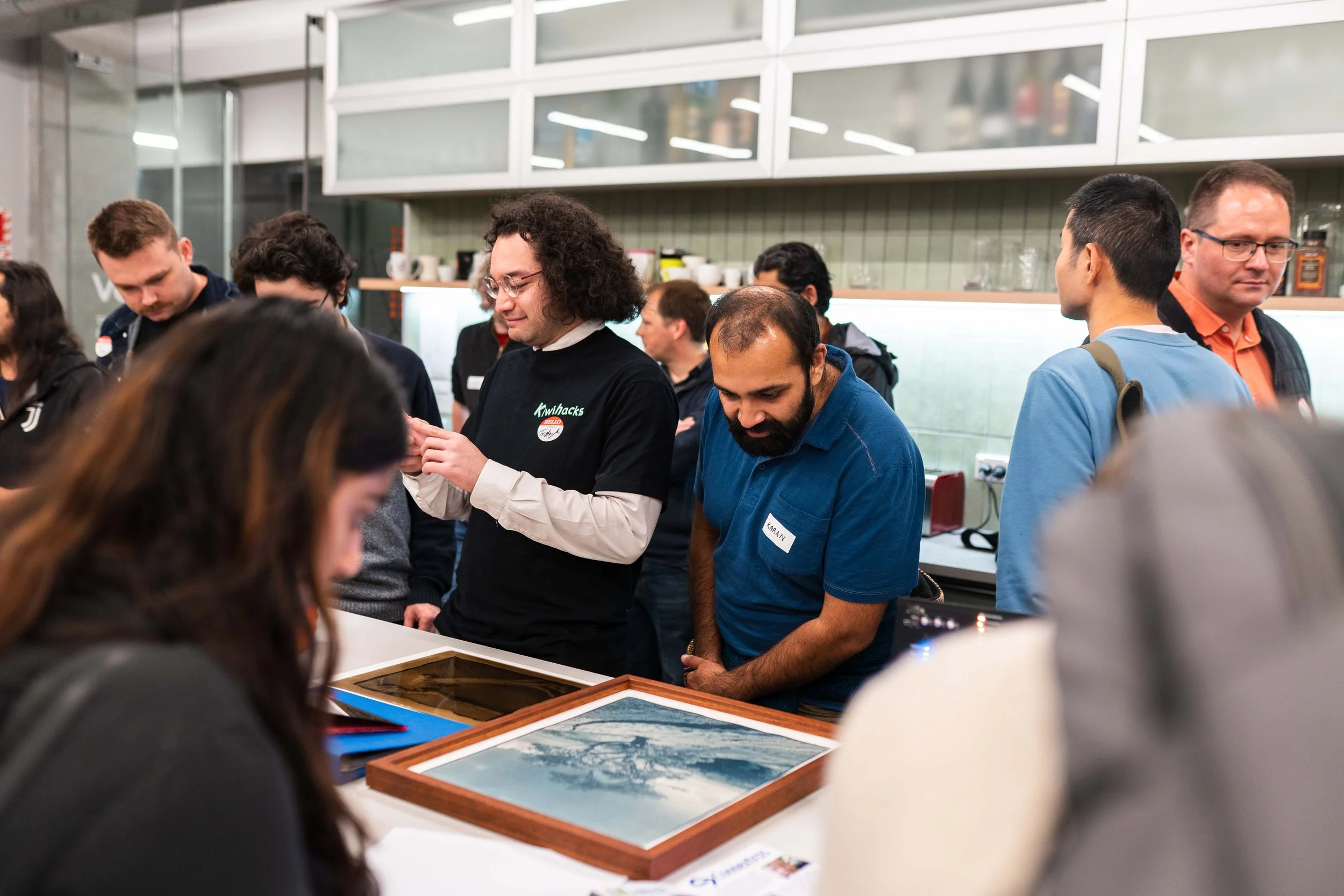
His latest project involved creating a custom ultraviolet projector capable of producing large-scale alternative photographic prints without the need for traditional film negatives.
The system incorporated:
High-power UV LEDs
Custom optics
Water cooling
LCD-based image projection
Historic photographic chemistry
The result was a series of striking photographic artworks produced through a blend of nineteenth-century chemistry and twenty-first-century engineering.
Andrew’s presentation served as a reminder that engineering isn’t just about solving practical problems—it can also be a powerful creative tool.
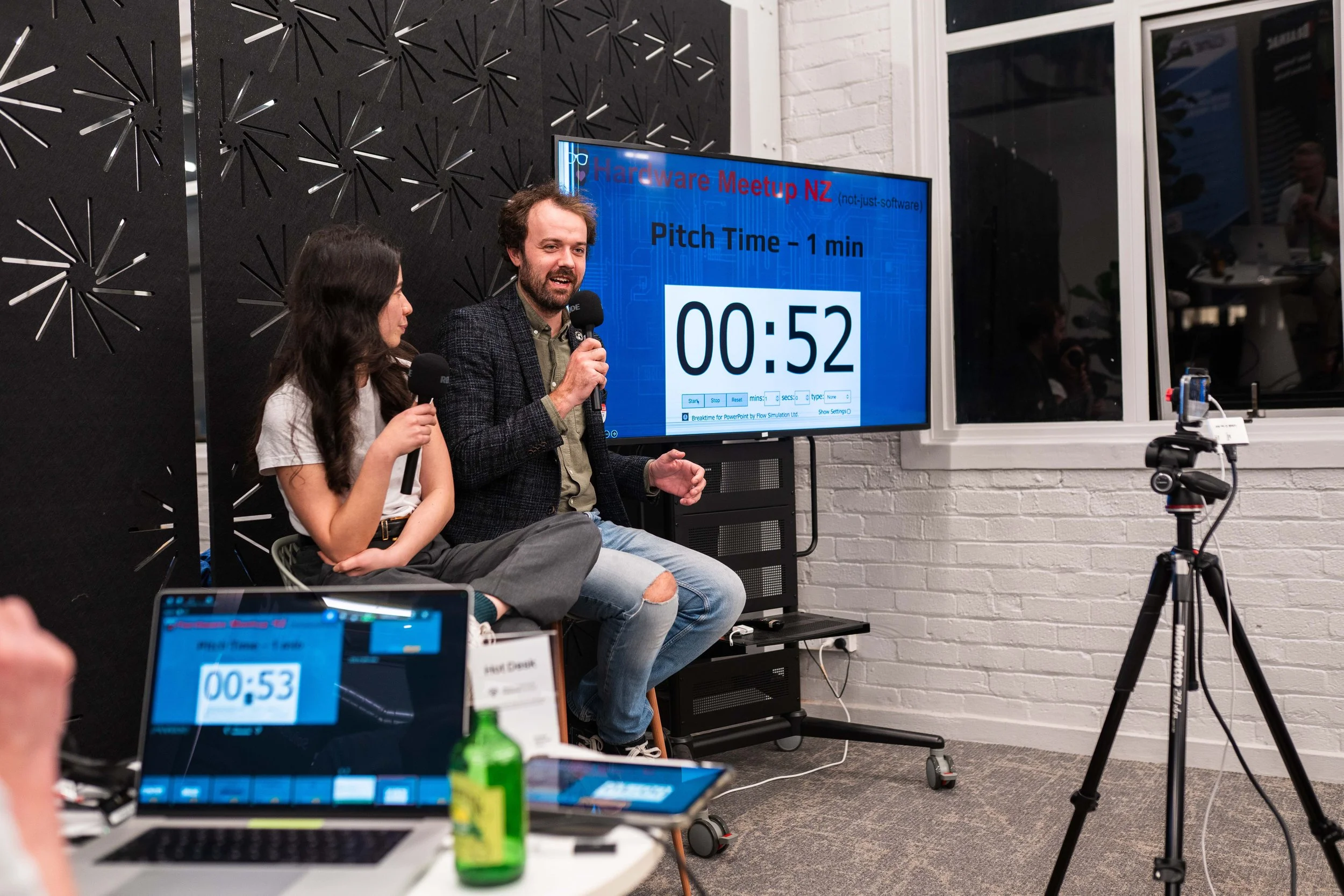
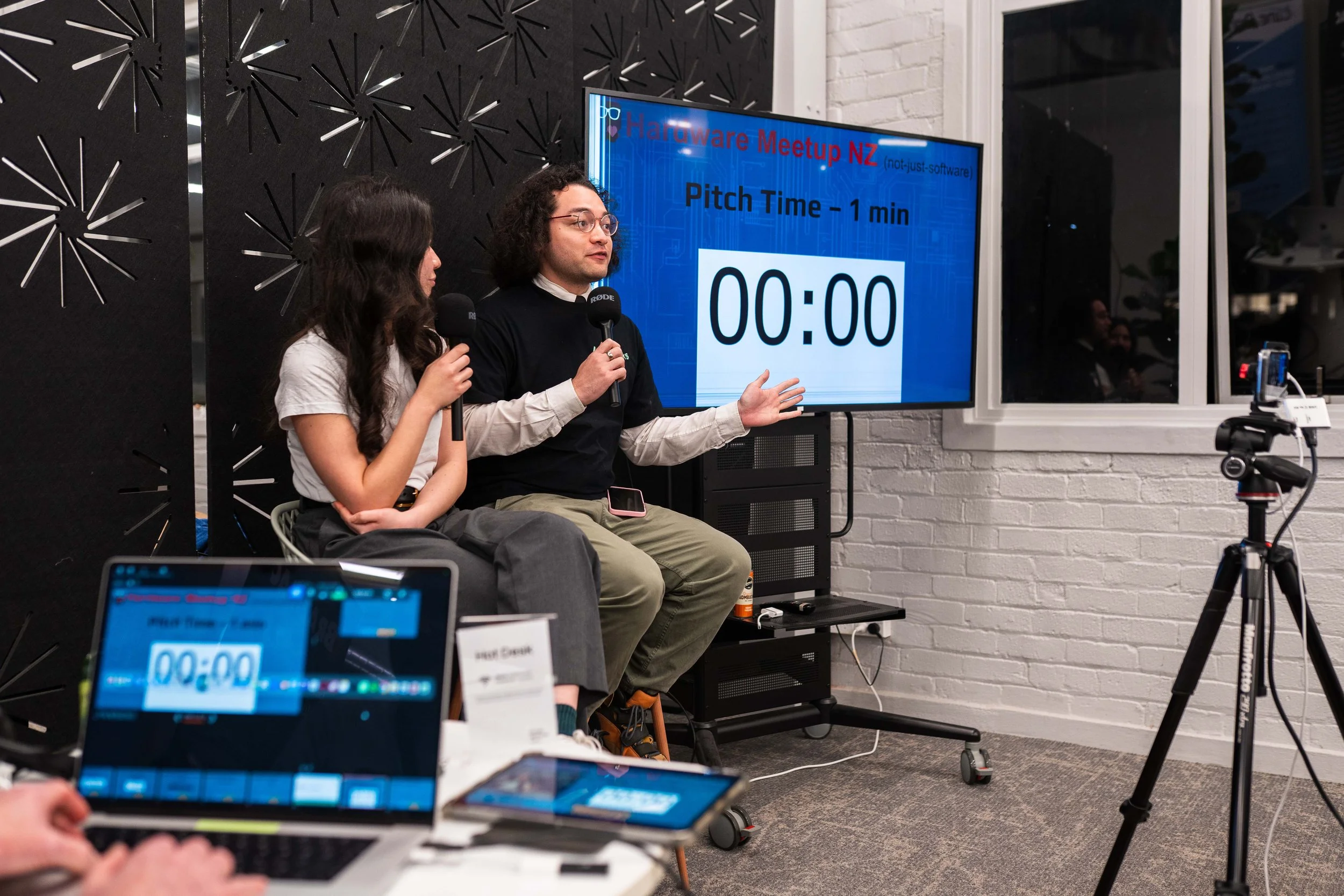
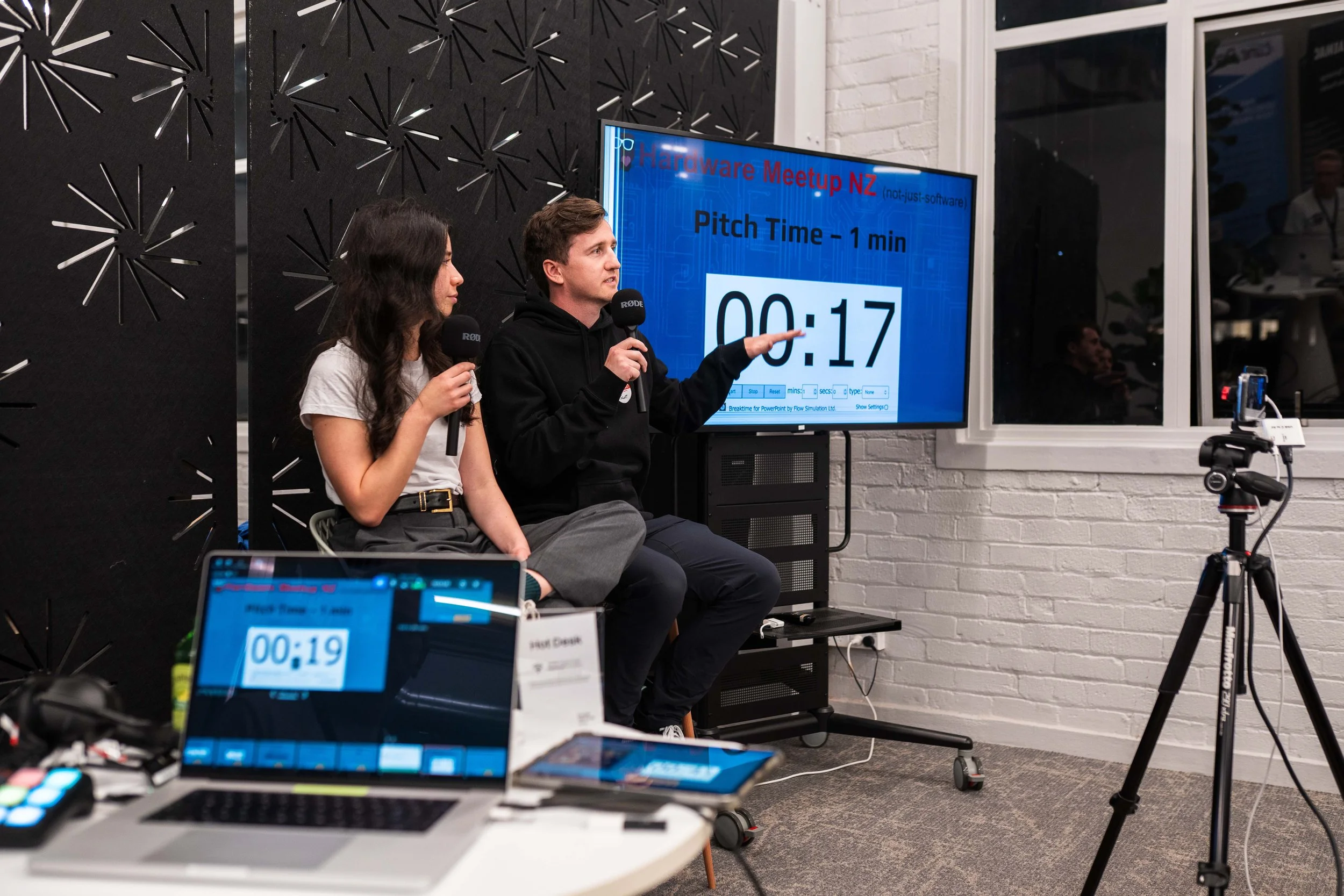
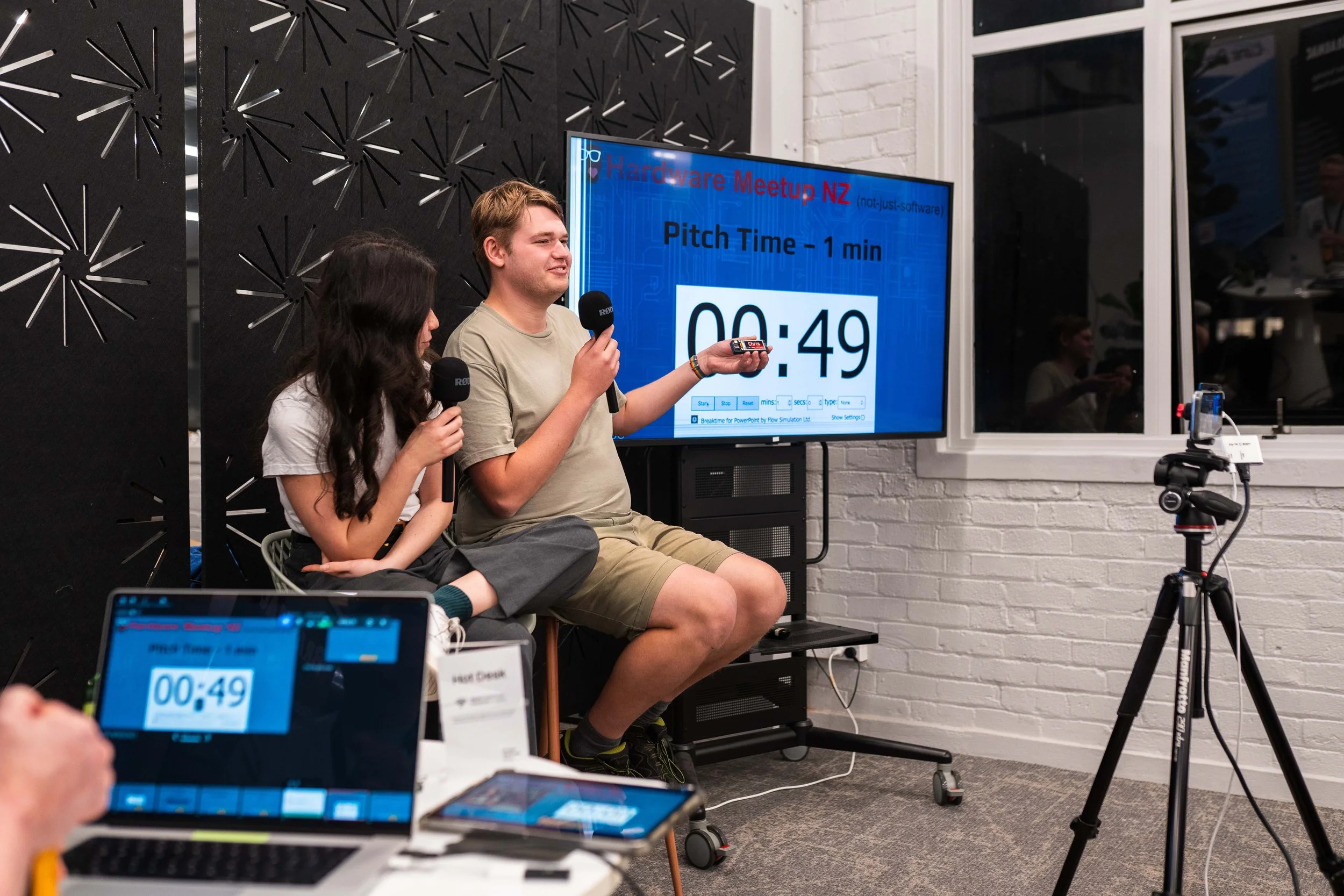
Pitch Time
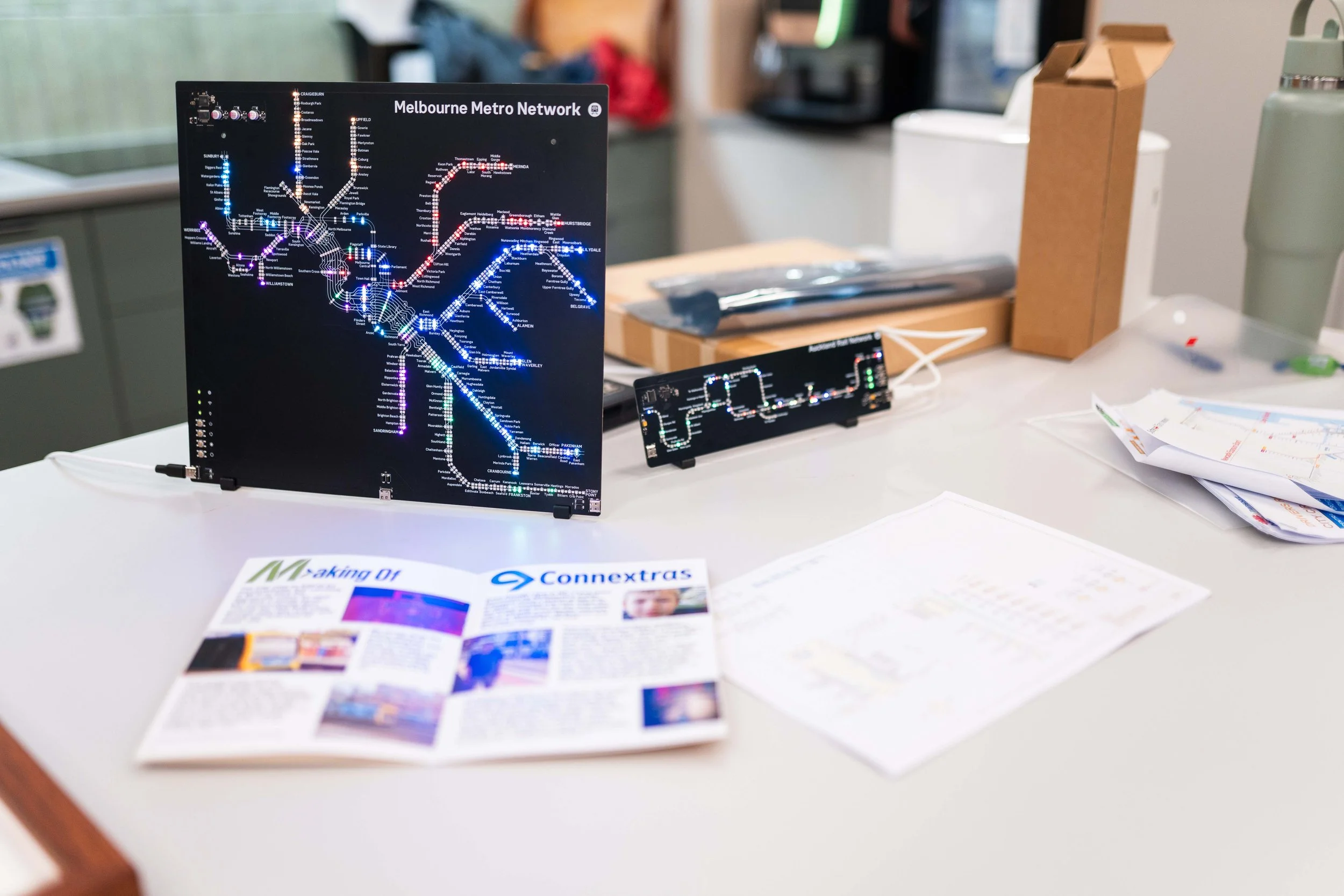
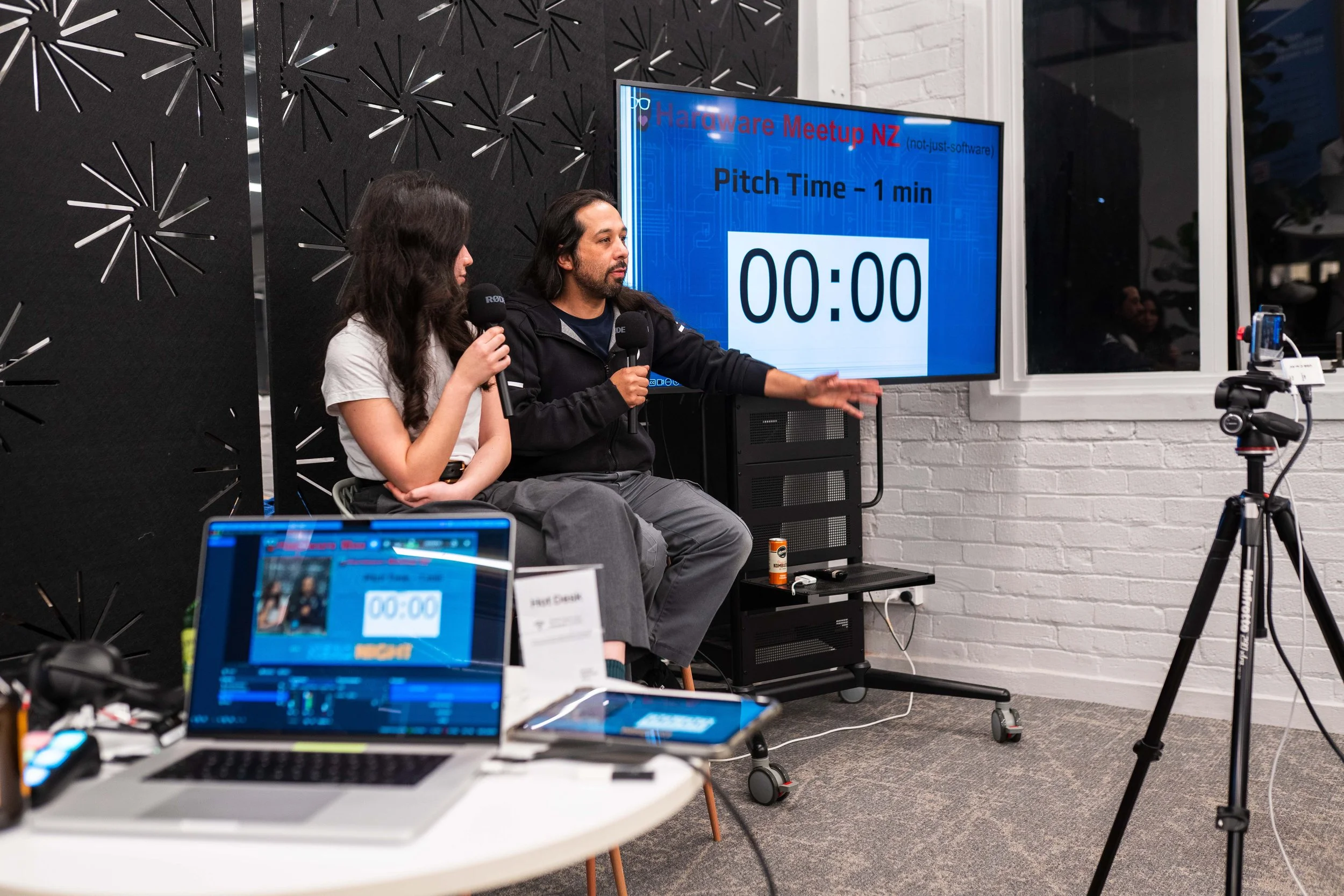
As always, Pitch Time gave attendees an opportunity to share projects, opportunities, and requests with the community.
Highlights included:
Common Workshop
Alex announced plans for a new maker space focused on hardware prototyping and small-scale manufacturing, featuring facilities for electronics, machining, CNC routing, woodworking, and assembly.
PAQ Labs
Scott shared an opportunity for a mechatronics-focused Masters or PhD graduate to join an advanced computer vision and automation project.
Chris’s Electronic Name Badge
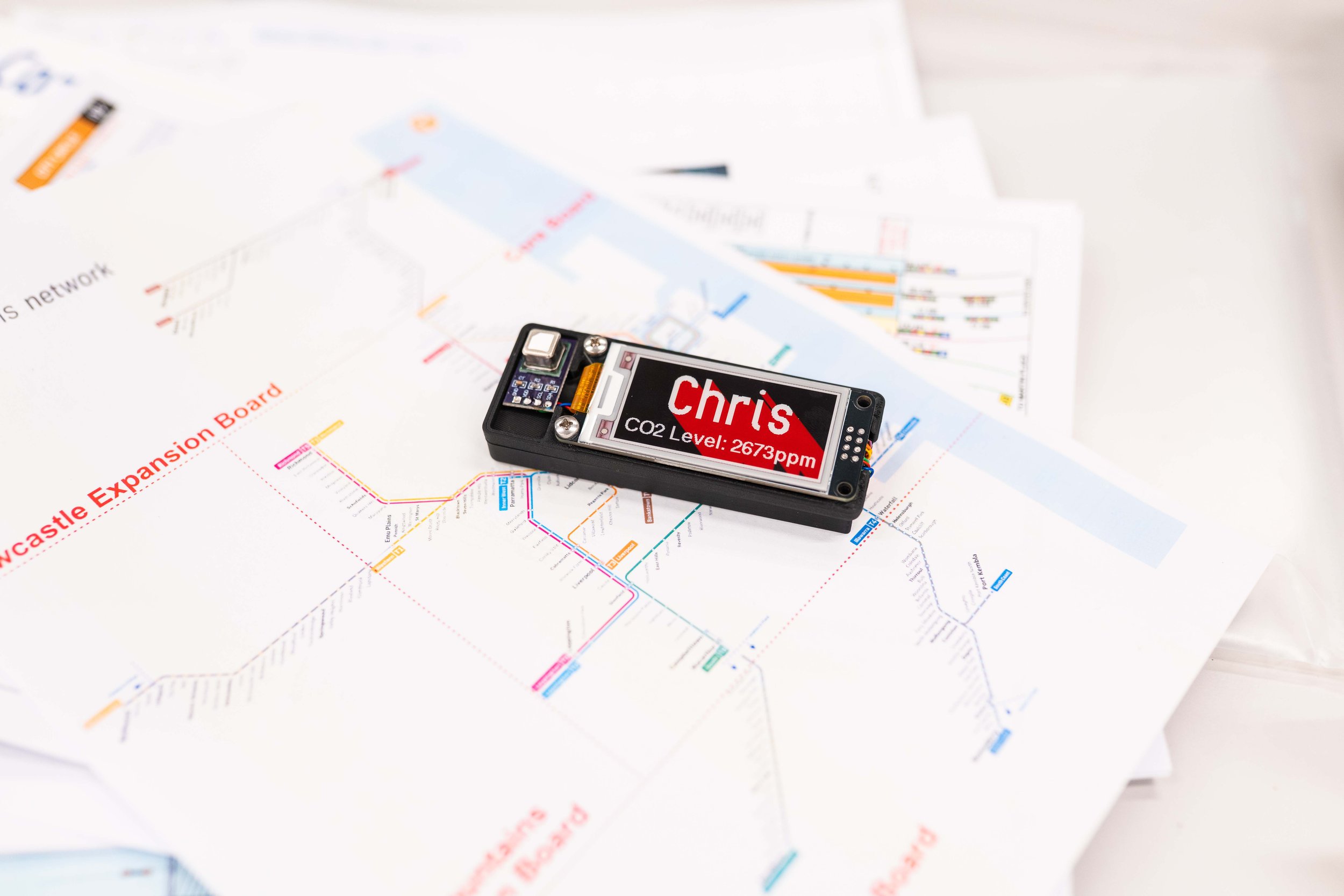
Chris unveiled a surprisingly sophisticated electronic conference badge featuring an e-paper display, environmental sensing, Bluetooth connectivity, and recycled vape batteries.
Matthew’s Environmental Sensor
Matthew demonstrated a compact environmental monitoring device capable of measuring air quality, particulates, VOCs, carbon dioxide, temperature, and pressure.
Kiwi Hacks
Tristan provided an update on Kiwi Hacks, New Zealand’s high-school-led hardware hackathon initiative, which aims to expand into Auckland, Wellington, and Christchurch while inspiring the next generation of builders and engineers.
Closing
Mikayla closed the evening by thanking the speakers, sponsors, volunteers, and attendees who continue to make Hardware Meetup New Zealand possible.
She described Nerd Night as her favourite event of the year—and it was easy to see why.
The evening wasn’t about products, startups, or commercial success. It was about curiosity. It was about people building things because they wanted to learn something new, solve a strange problem, or simply see if an idea could work.
Some projects may eventually become businesses.
Others may never leave the garage.
Both are equally valuable.
Because every great engineer starts somewhere, and often that somewhere looks a lot like Nerd Night.
Event Sponsors


Lune Digital
Lune Digital is an embedded systems expert specialising in high-tech, IoT and wearable solutions. For the past 10 years, Lune Digital has been assisting visionary companies with hardware design, electronics engineering, embedded software development, and technical advice. They excel in optimizing battery life, boosting power efficiency, enhancing wireless connectivity, and creating scalable, future-proof systems.
Outset Ventures
Outset Ventures are committed to empowering overlooked science and engineering innovators to transform their ideas into groundbreaking ventures, helping them succeed at the critical early stages. As New Zealand's center of gravity for science and engineering startups and scaleups, Outset is home to a community of 40+ founder-led companies, 5000 square meters of laboratory and workshop spaces, and the country's most active deep technology investment fund.
Triode
Triode is a New Zealand-based advanced electronics manufacturing partner specialising in high-mix, high-reliability PCB assembly across aerospace, MedTech, agritech & industrial sectors. From prototype to production, Triode helps customers solve complex manufacturing challenges with responsive engineering support, advanced SMT capability, & a strong focus on quality and continuous improvement. Combining local agility with global manufacturing standards, Triode partners closely with innovators to turn ideas into reliable products that perform where it matters most.
Braemac
Braemac is a global leader in the distribution of semiconductor components and electronic systems as well as value-added services. Empowering engineers and developers for over 40 years–Braemac features expert in-house engineers, extensive design-phase support, state-of-the-art distribution, value-add facilities, comprehensive supply chain solutions, and unparalleled customer service. Braemac offers solutions for diverse markets and applications, helping customers streamline development, reduce costs, accelerate time to market, and support long term interoperability.
Connect With Hardware Meetup NZ
Follow us on Meetup, LinkedIn, and Instagram, and sign up to receive event updates.
Event Alignment: This is an independently run initiative and is not aligned with any one organisation.
Media Permissions: By attending this public event, you grant Hardware Meetup NZ permission to photograph, video record, and audio record the event and to use these photos, videos and recordings in our website and Social Media Channels.
RECAPS