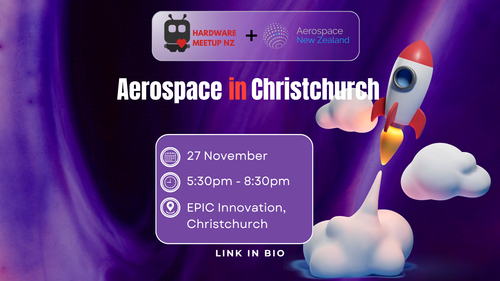
Aerospace in Christchurch
Building the Future of Aerospace from Aotearoa

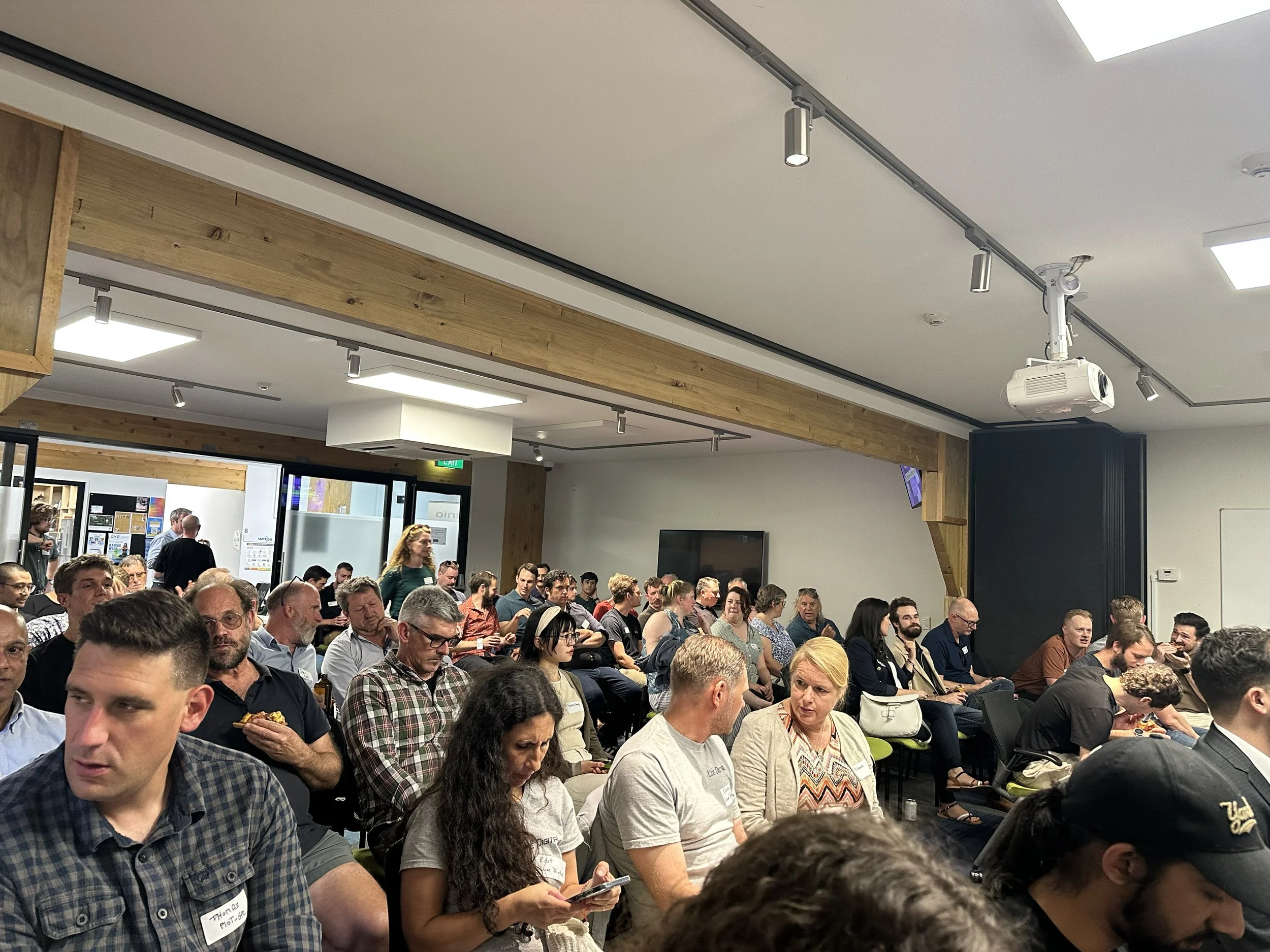
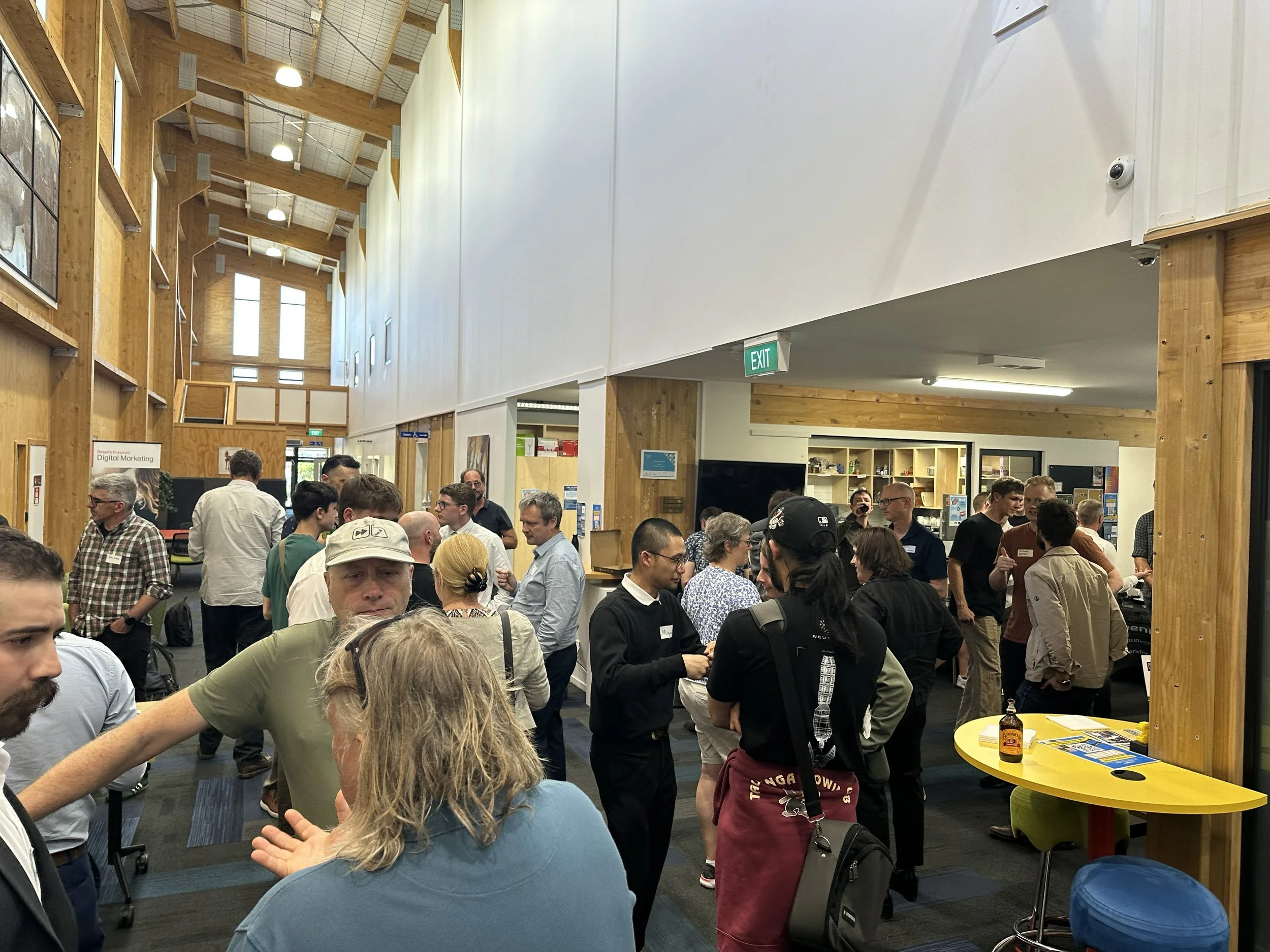
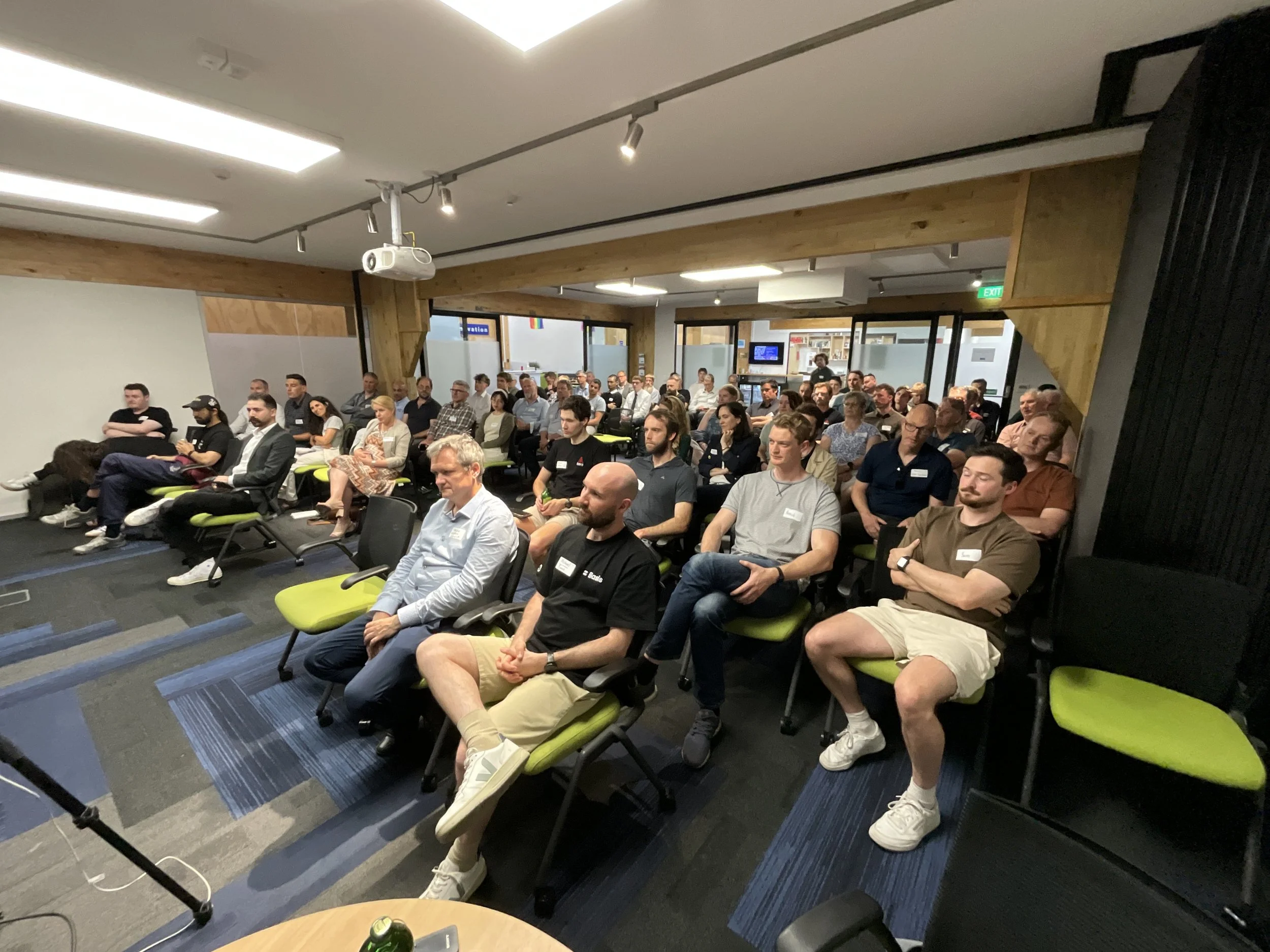
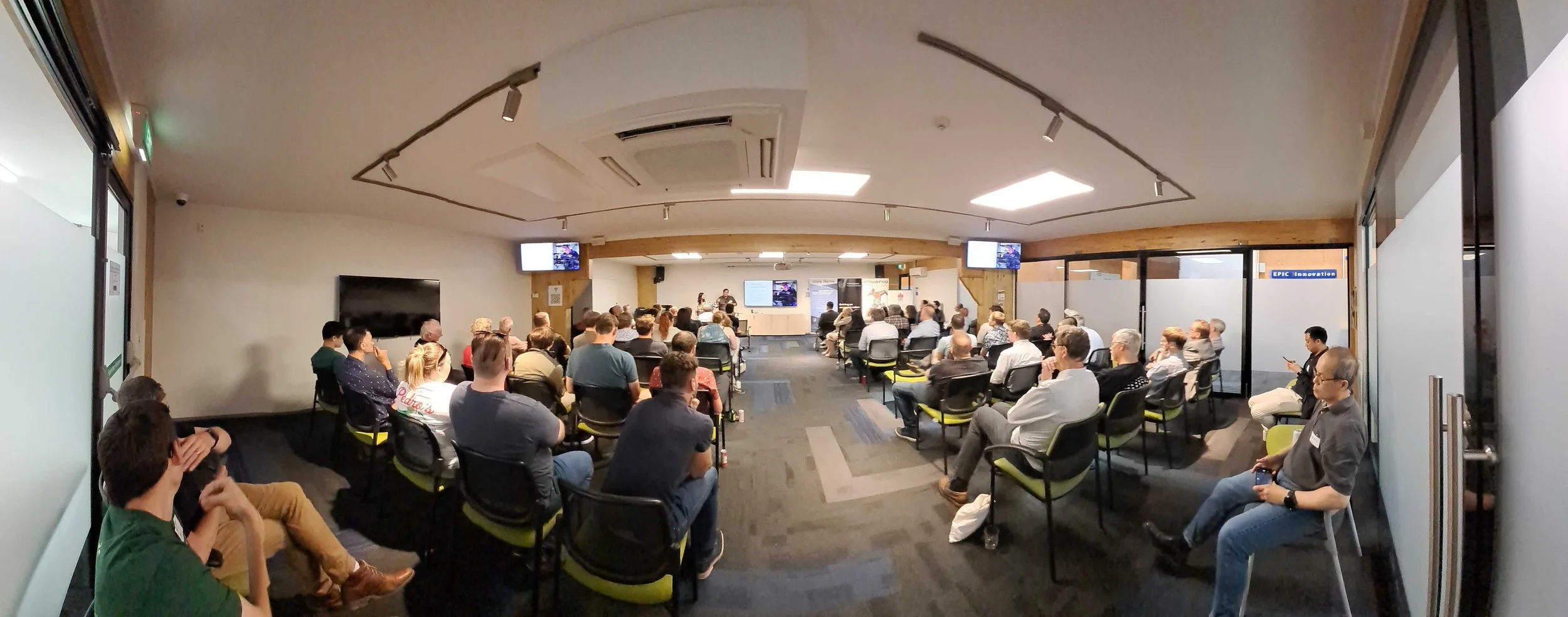
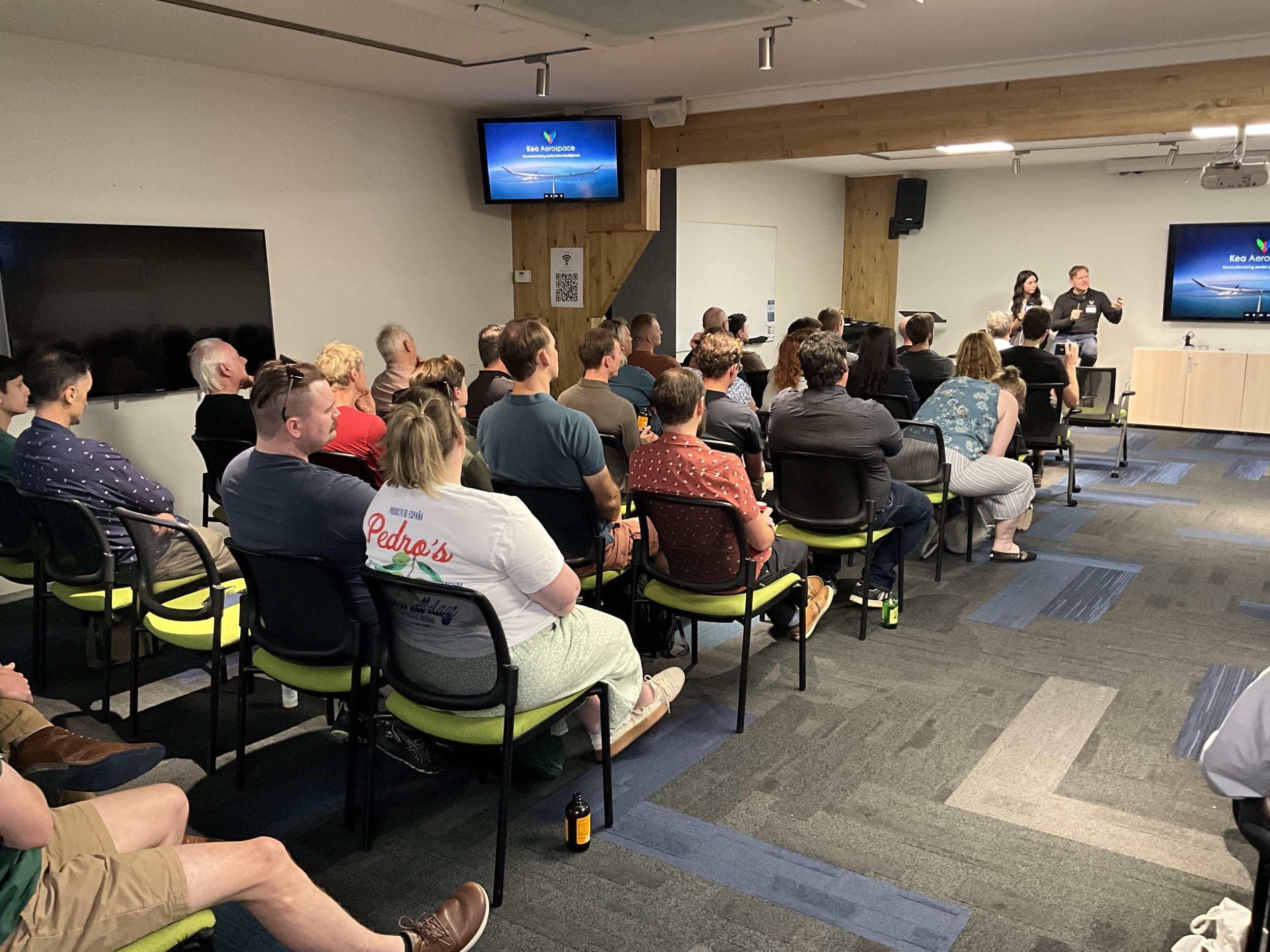
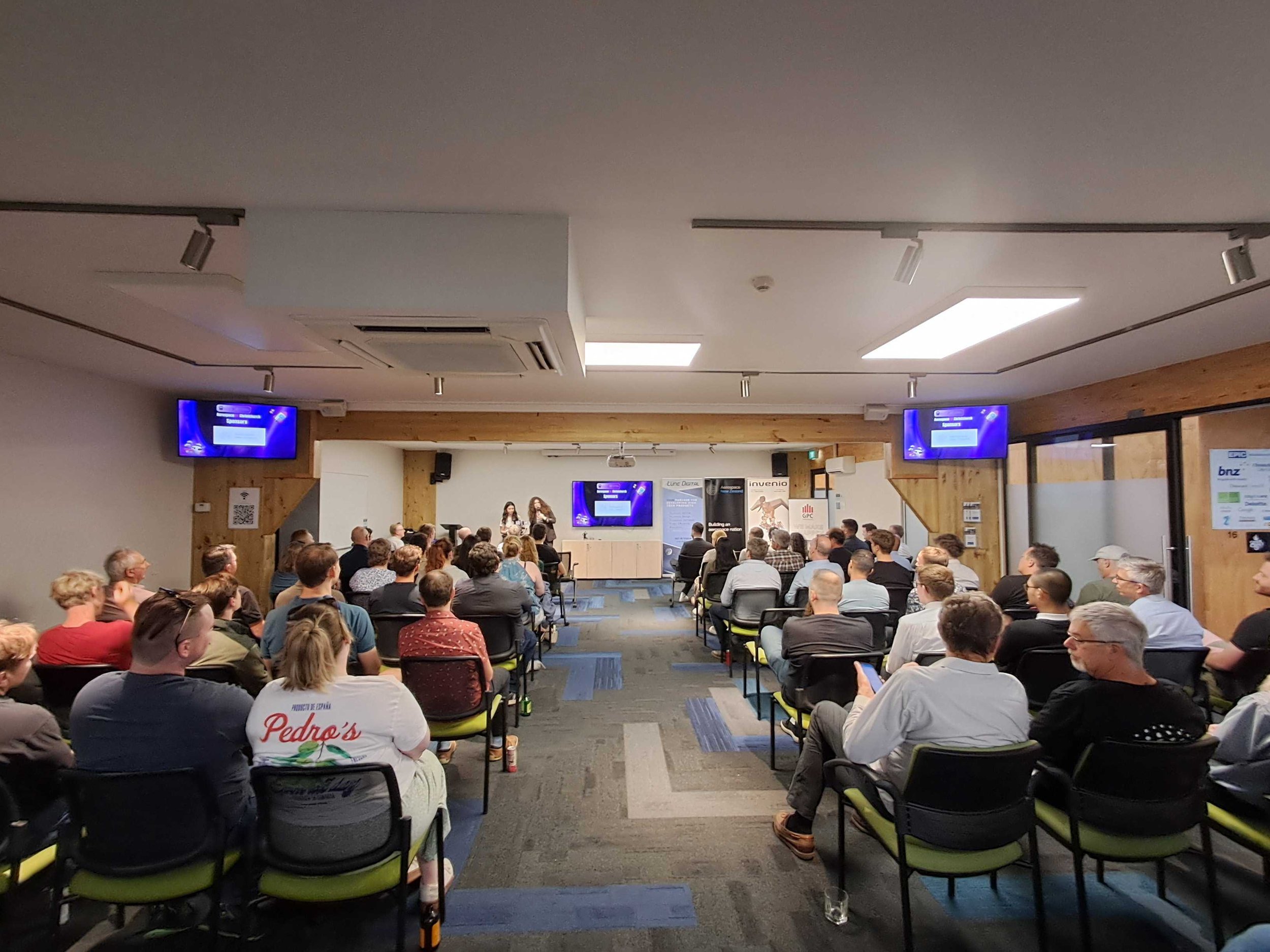
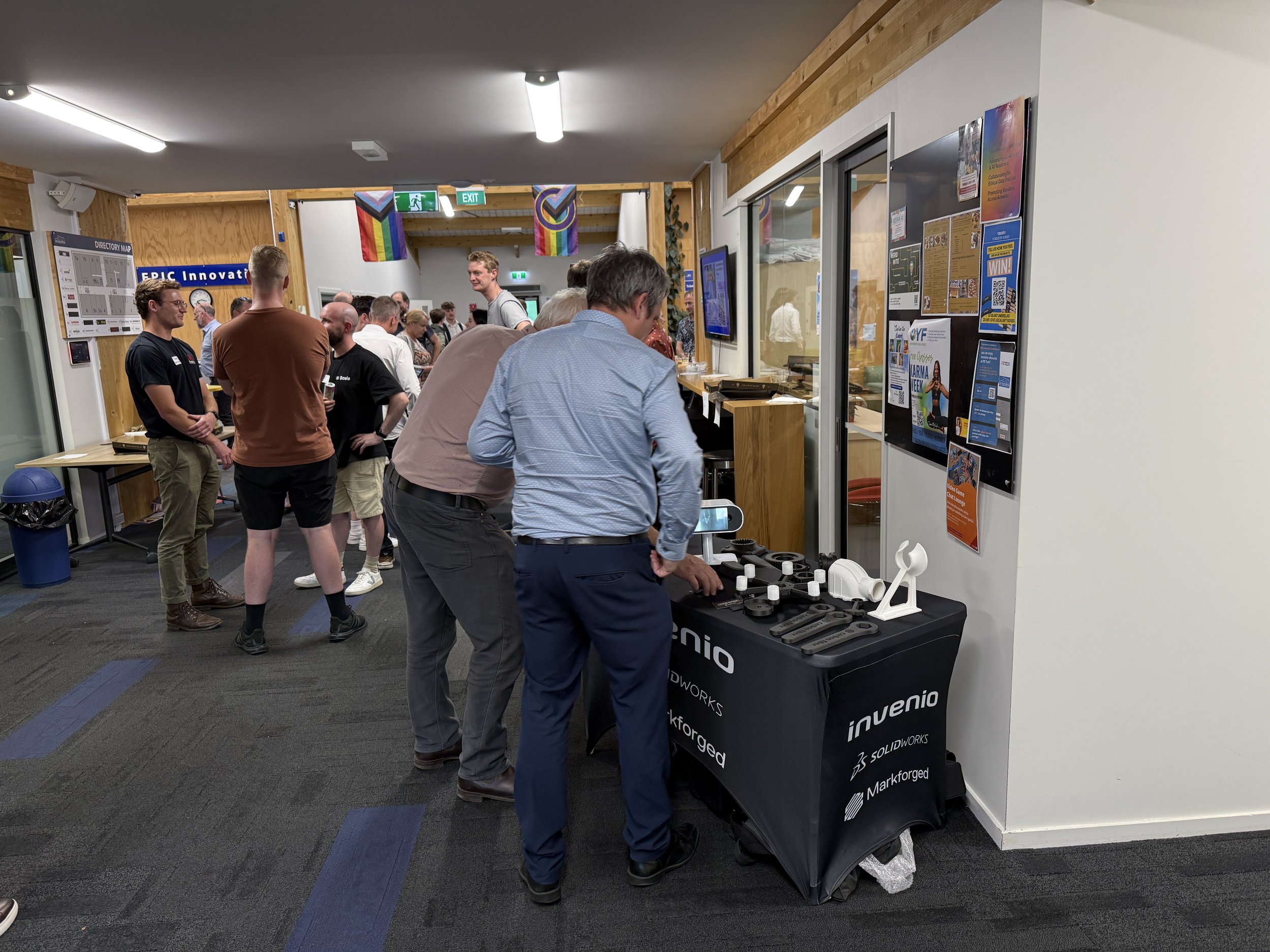
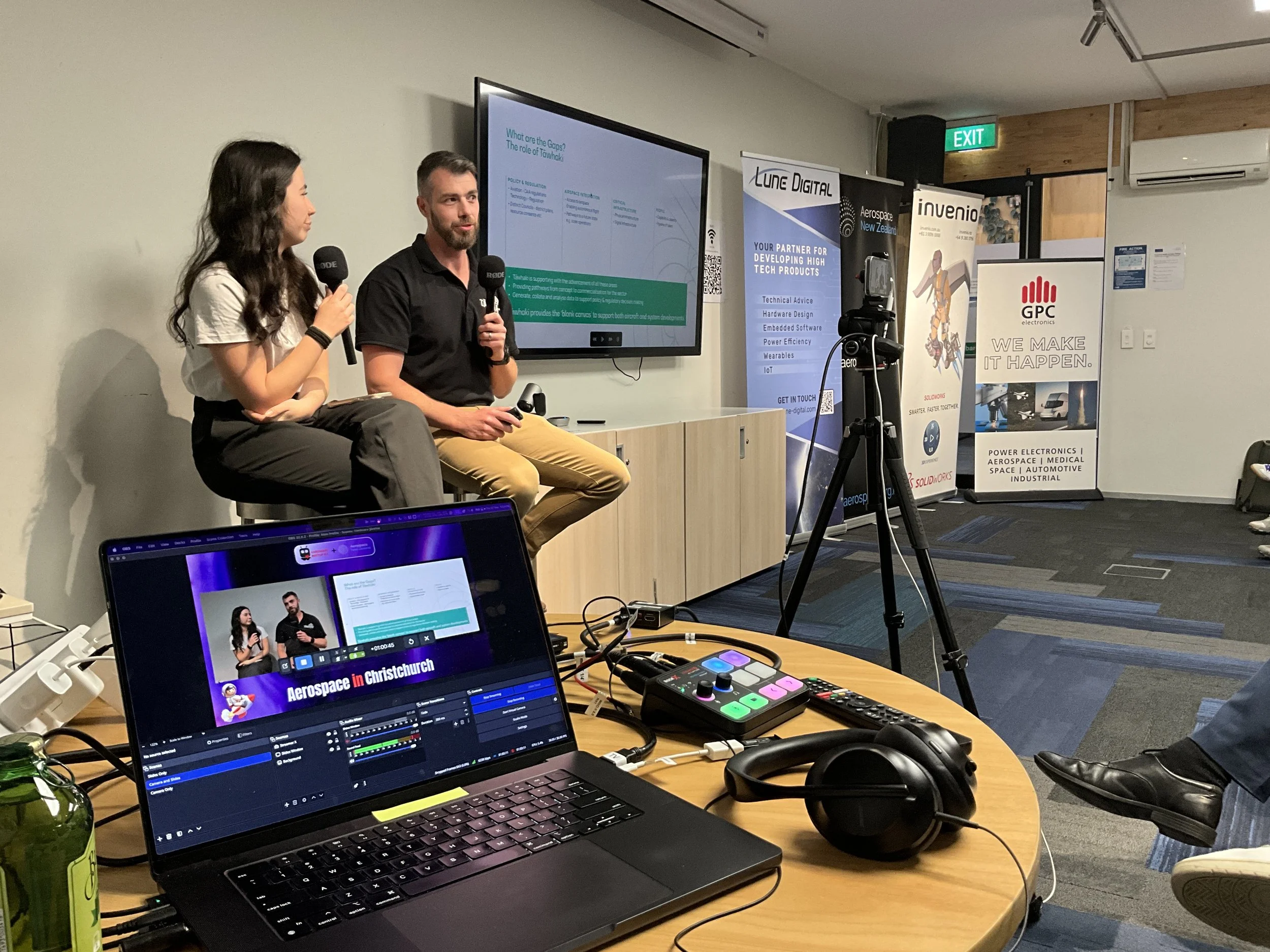
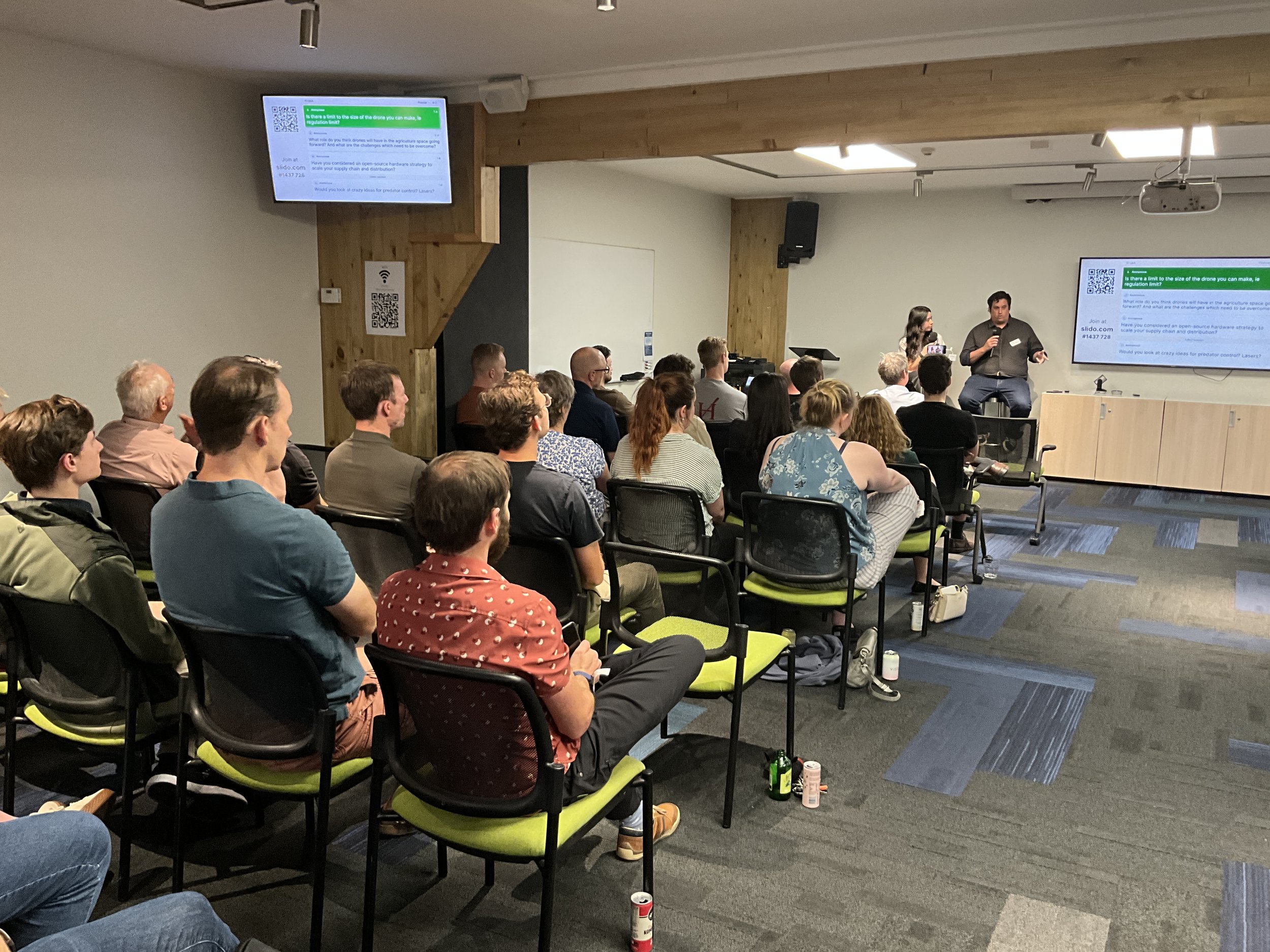
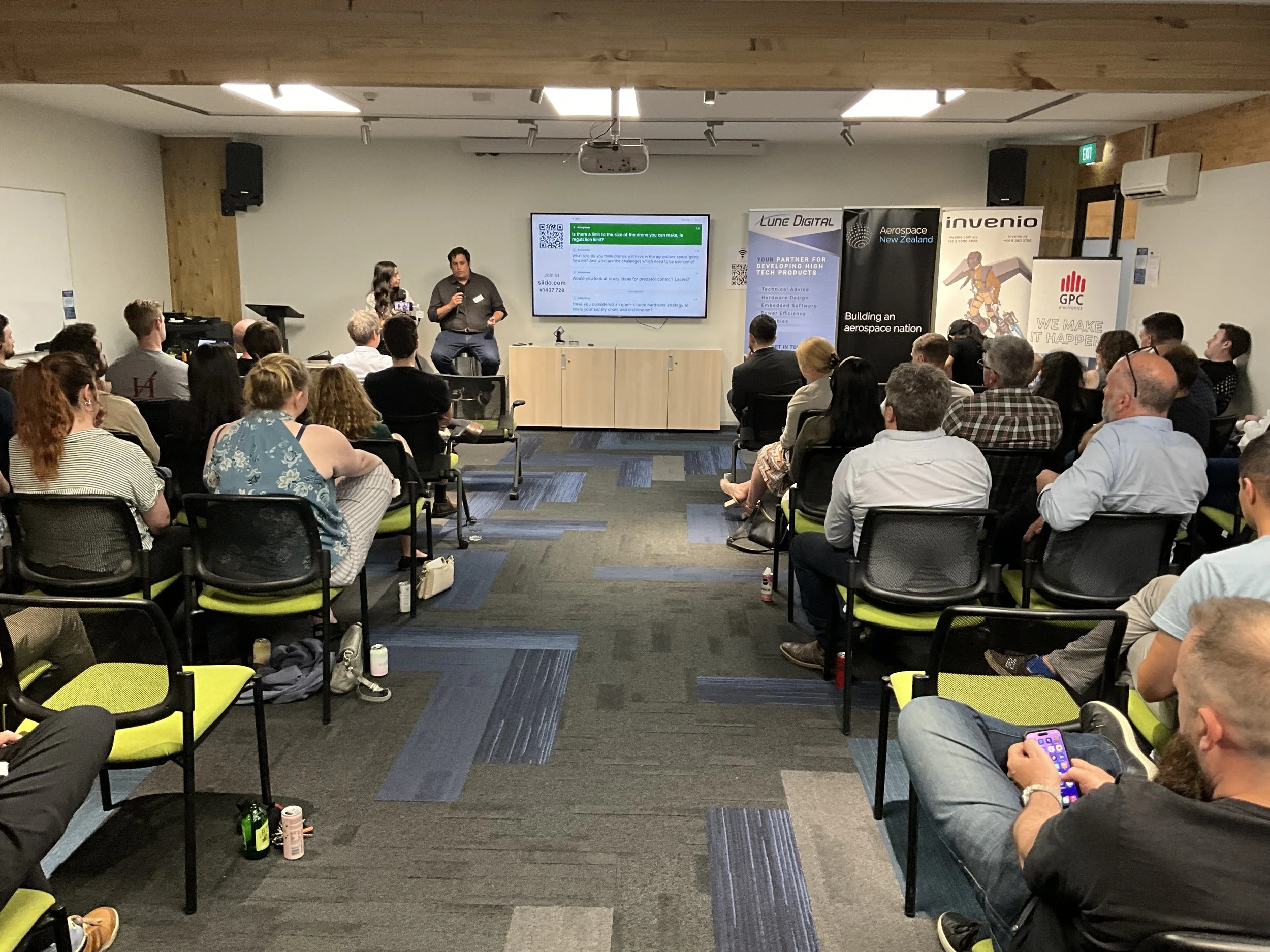
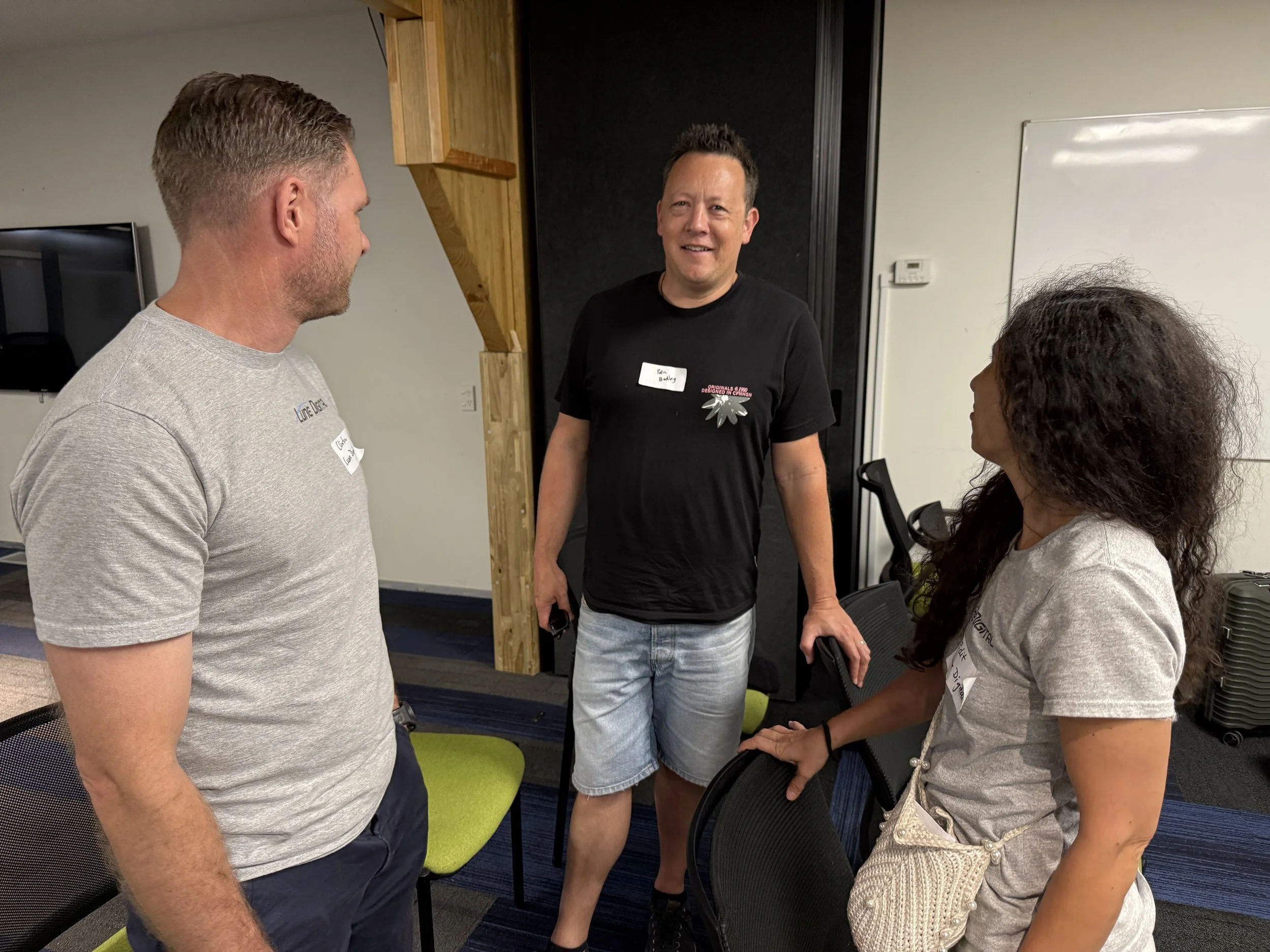
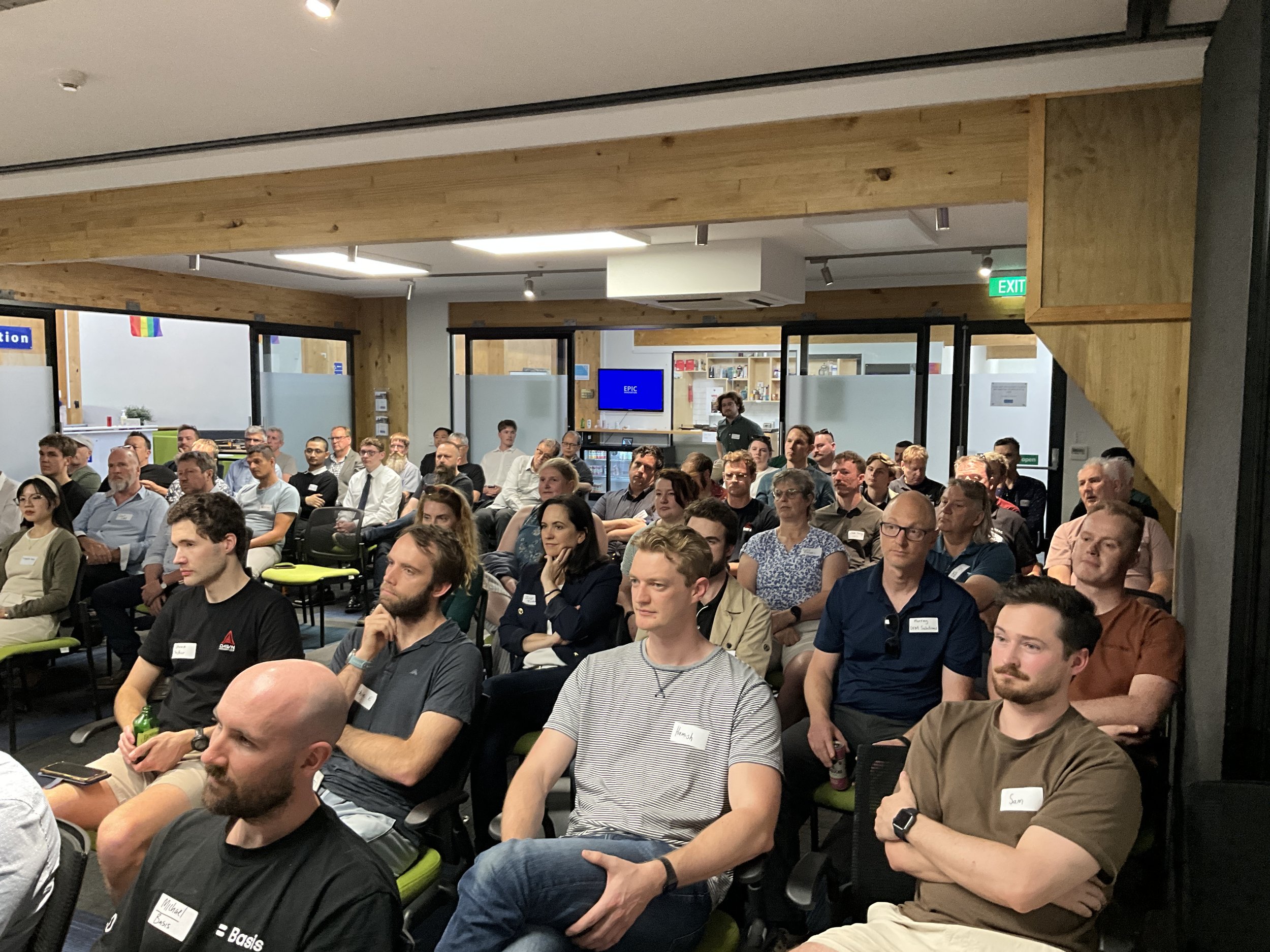
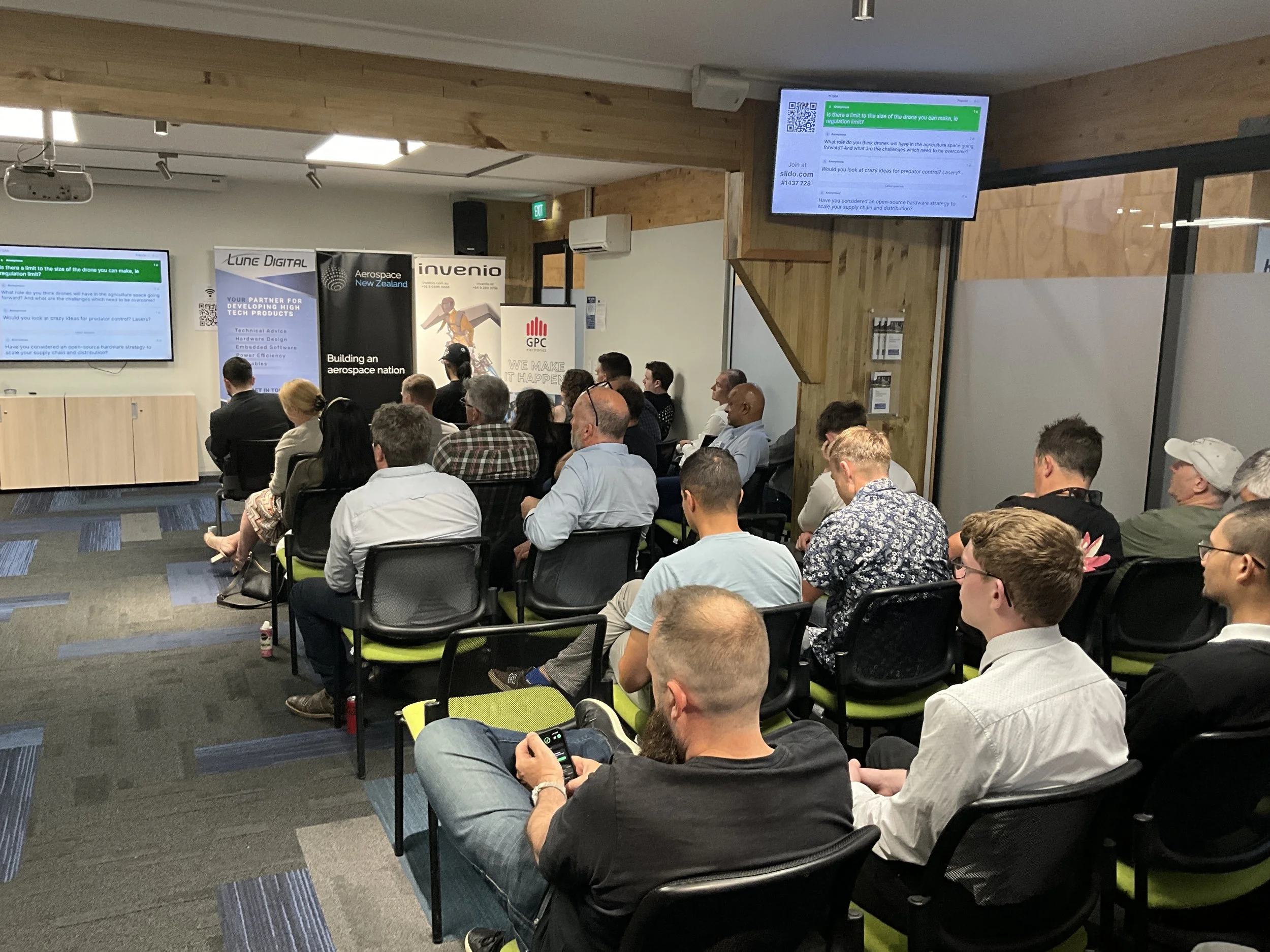
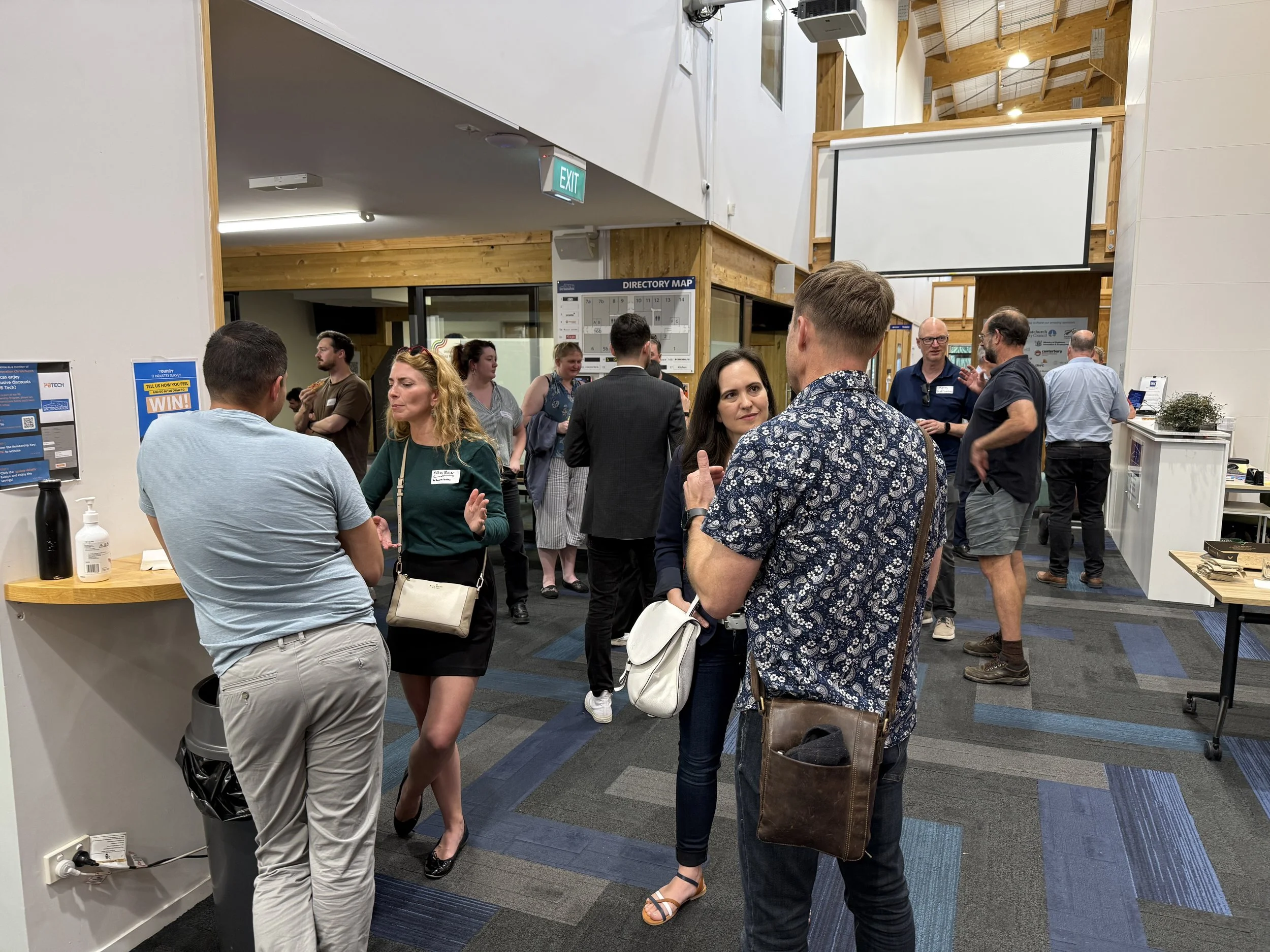
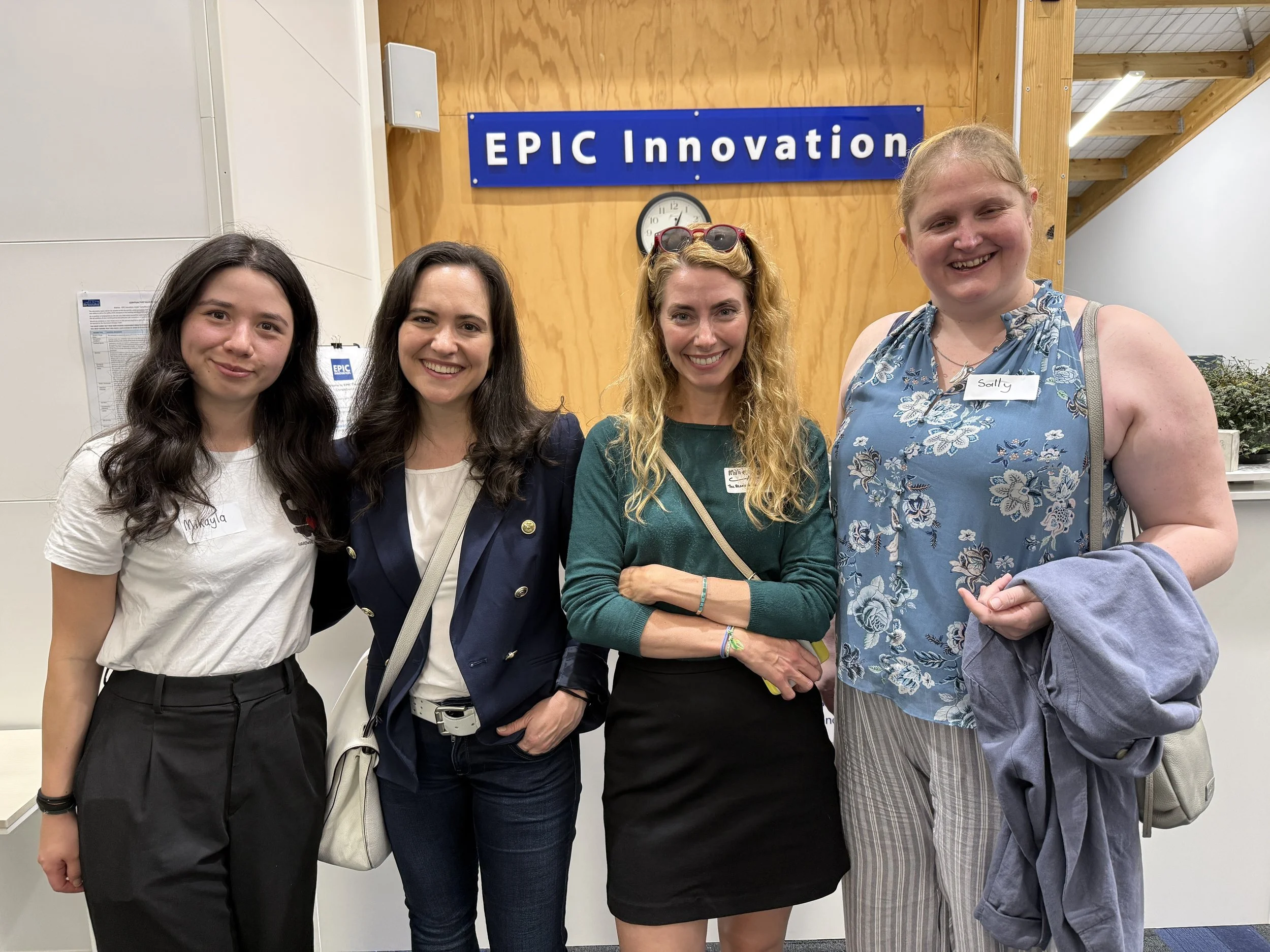
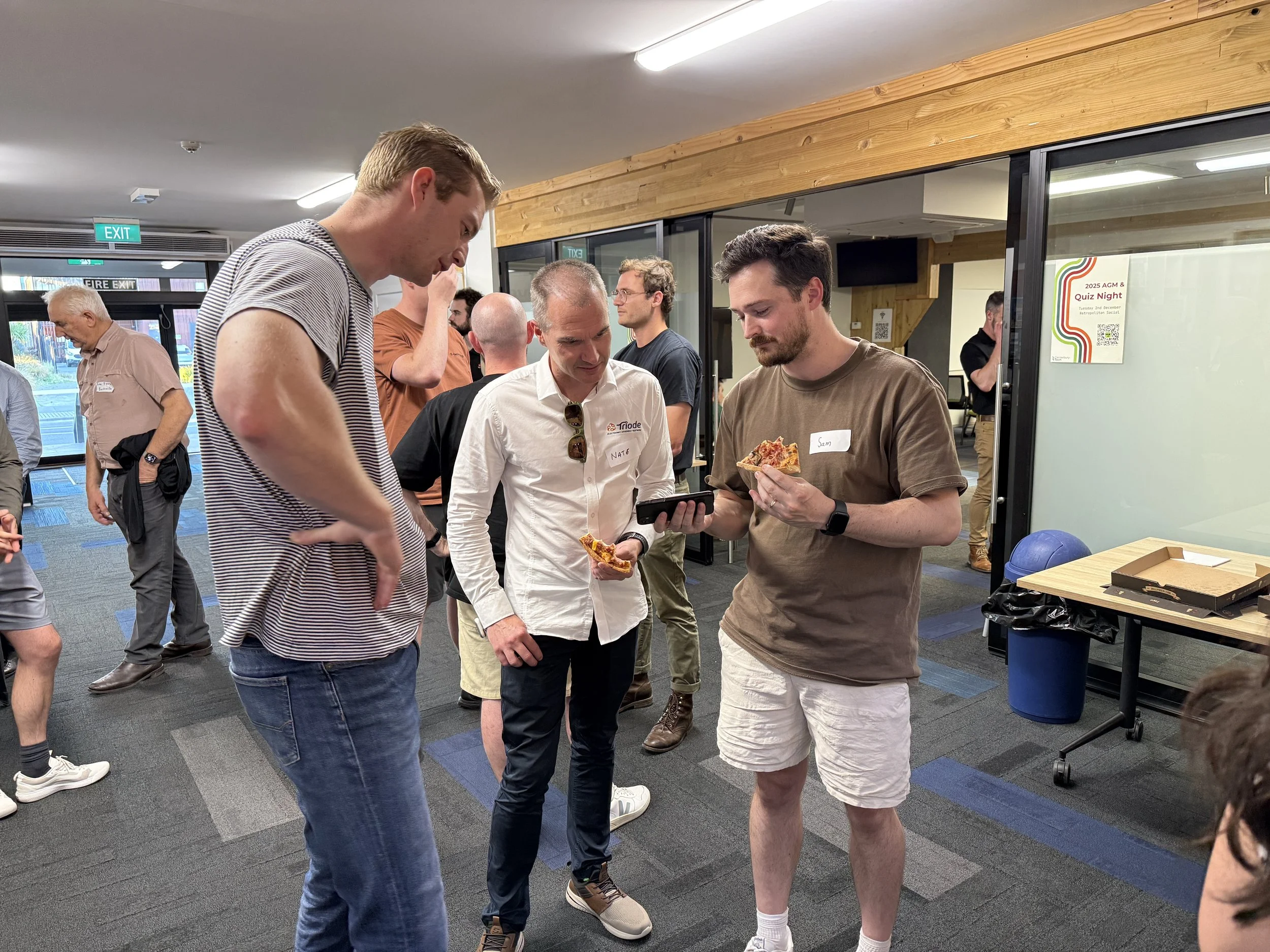
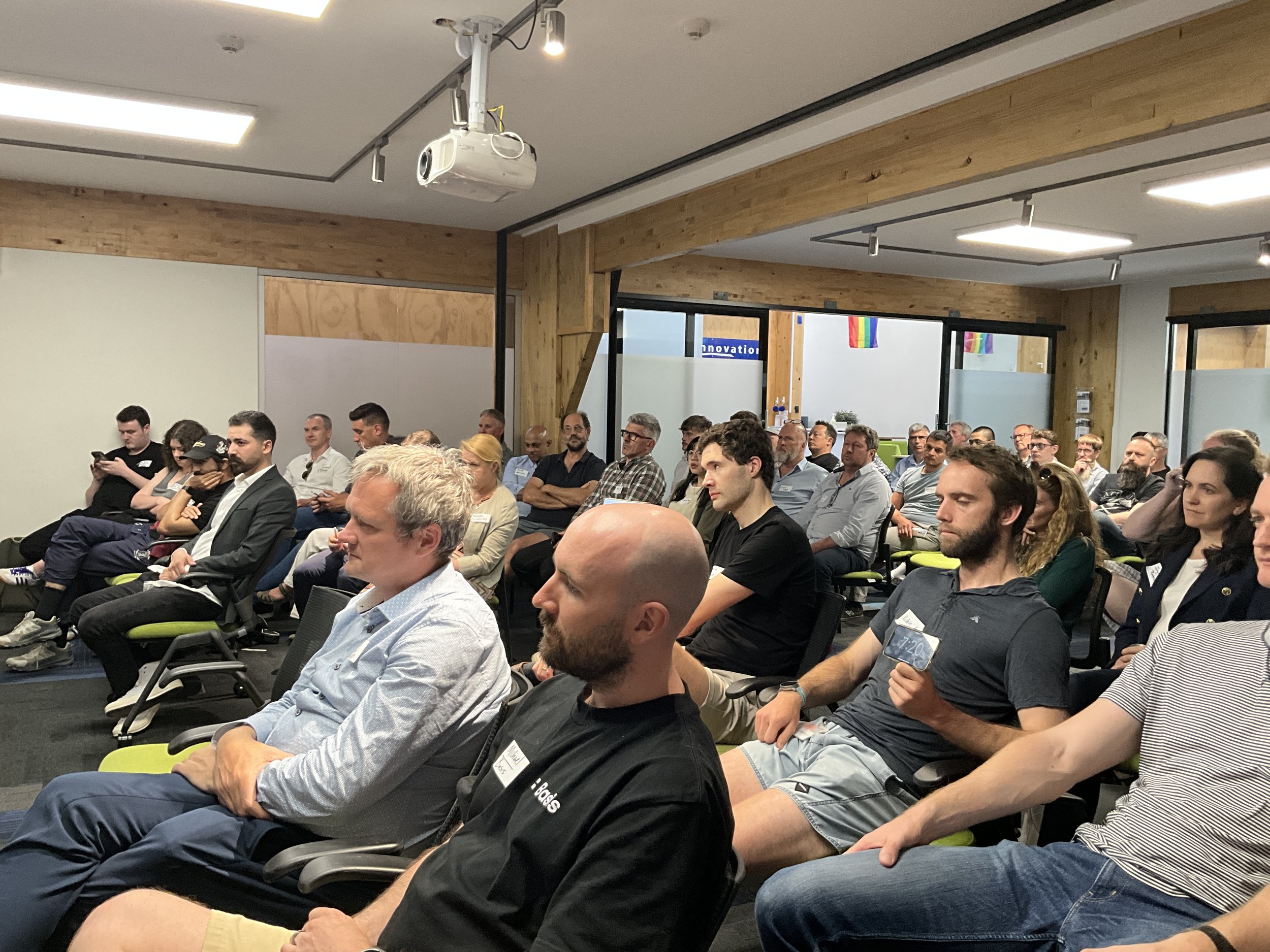
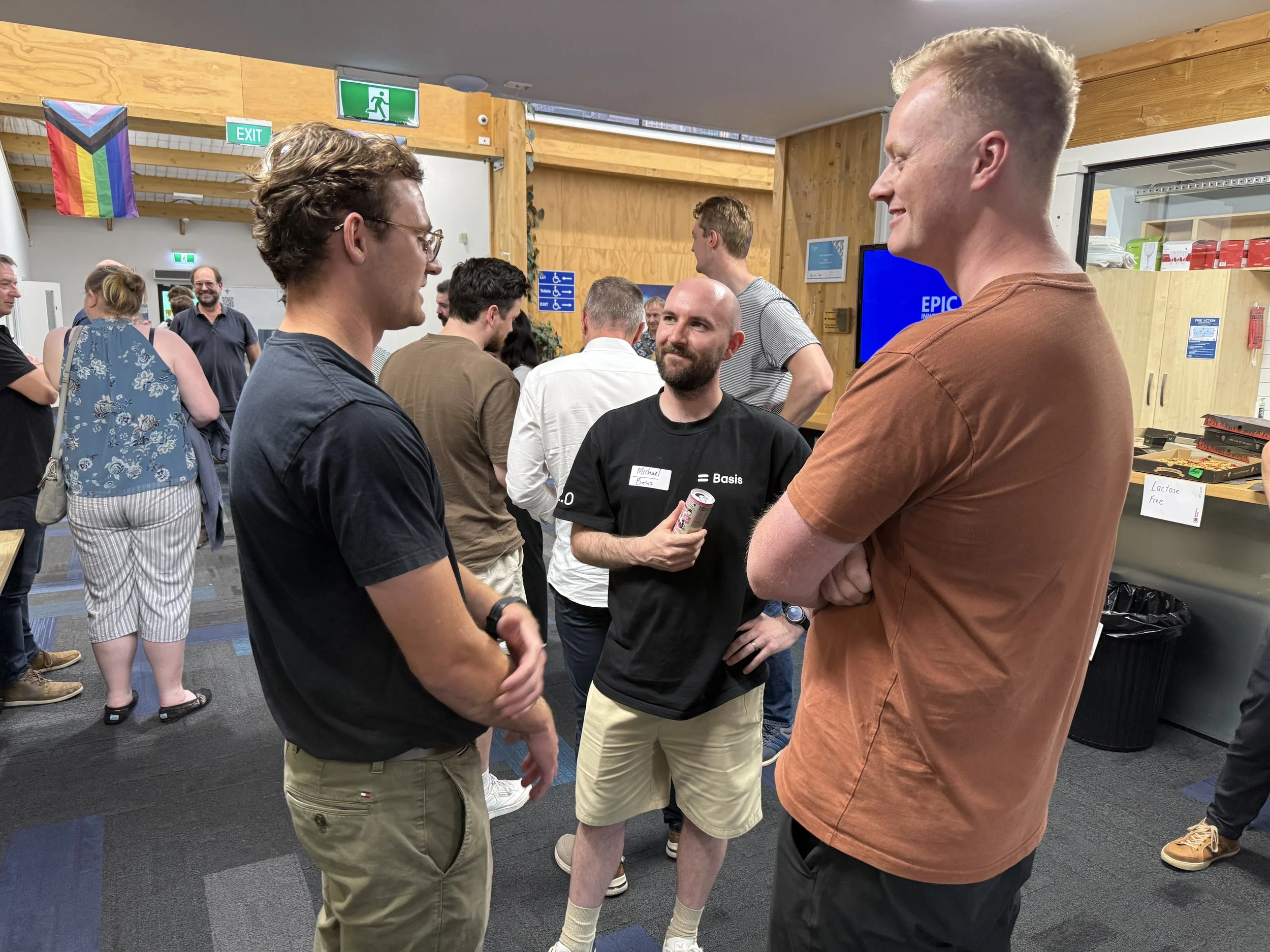
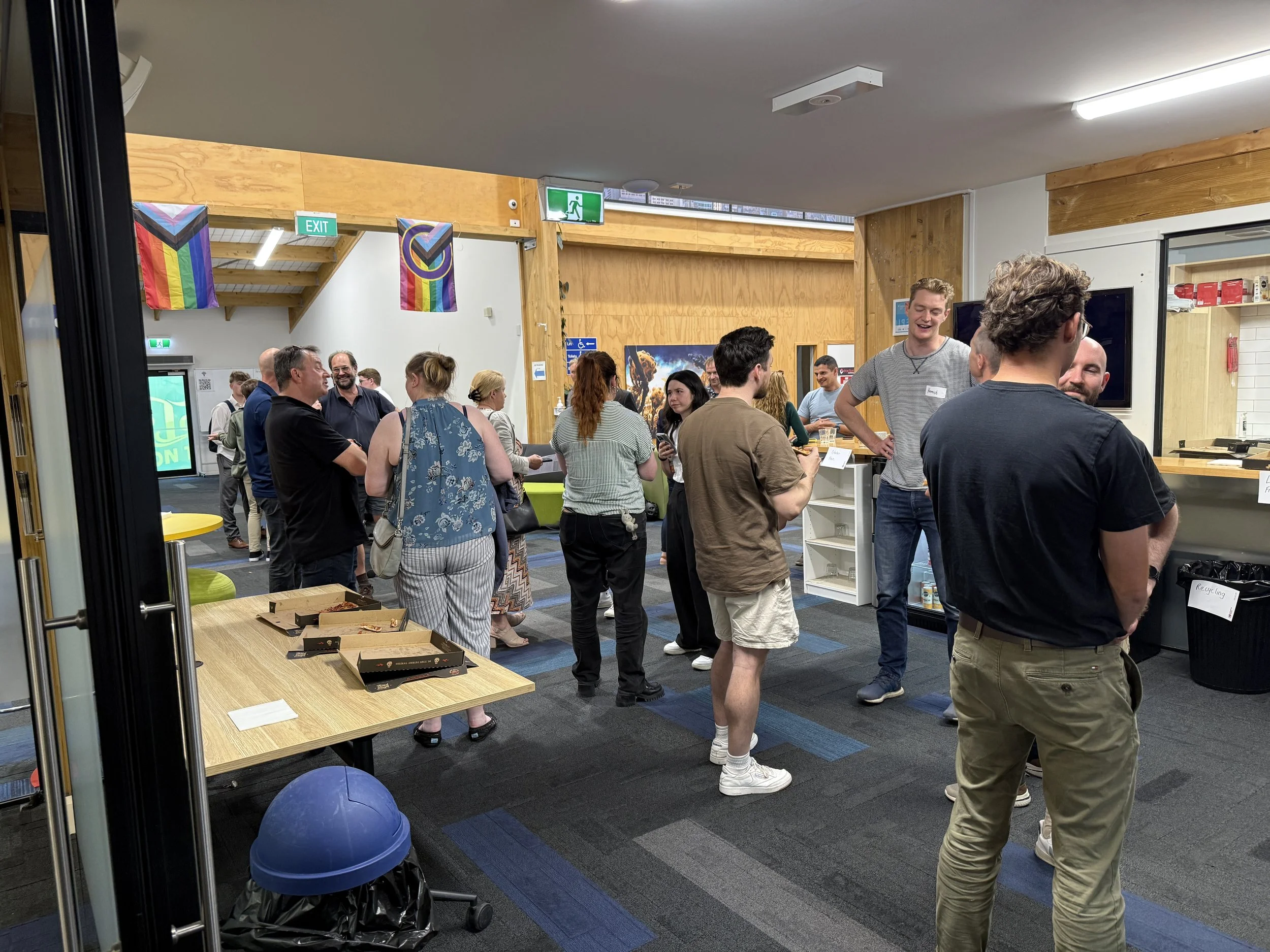
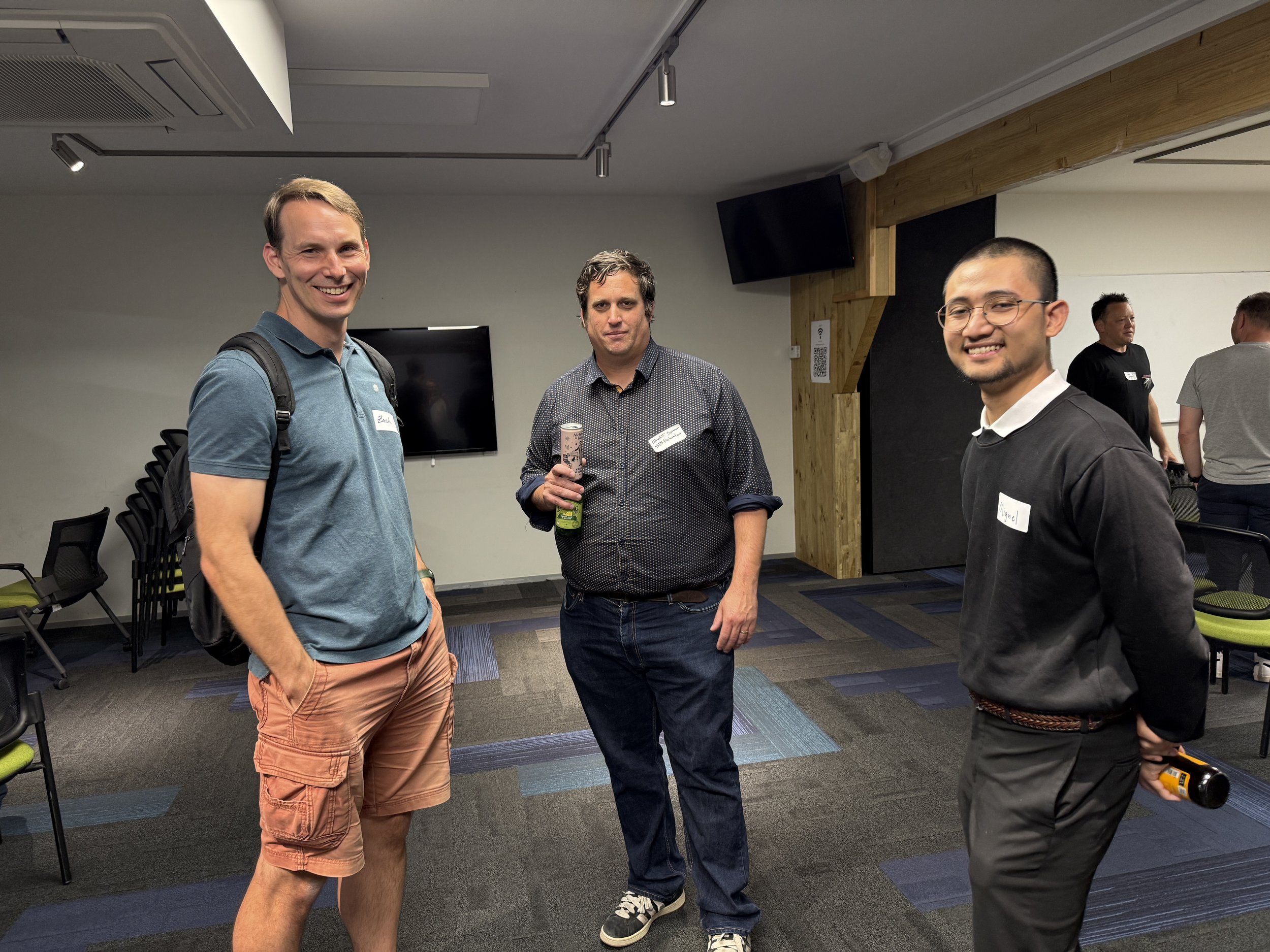
Hardware Meetup New Zealand returned to Christchurch for a packed Aerospace-focused evening, bringing together founders, engineers, researchers, and students to explore what it takes to build, test, and scale aerospace technology from Aotearoa.
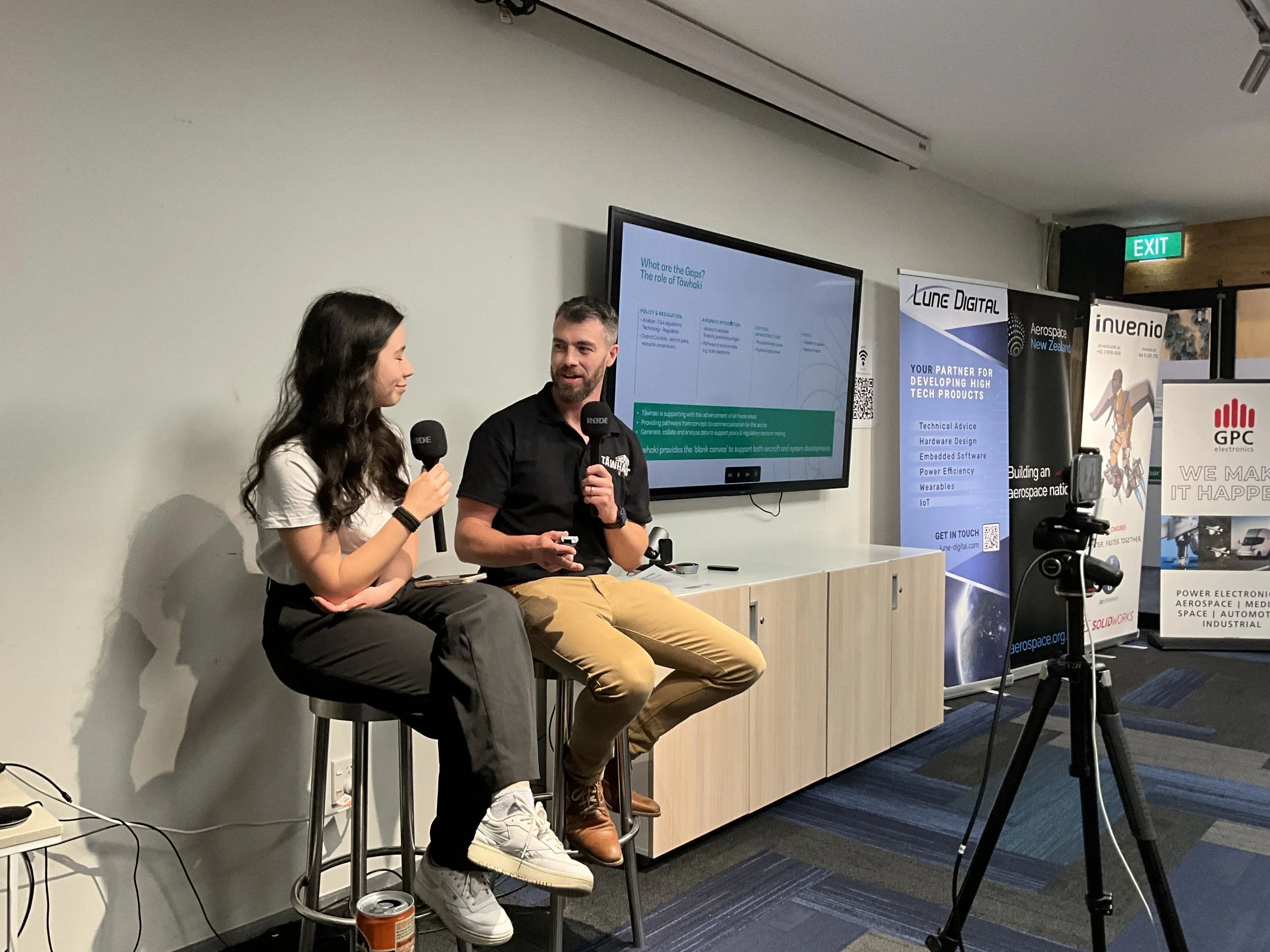
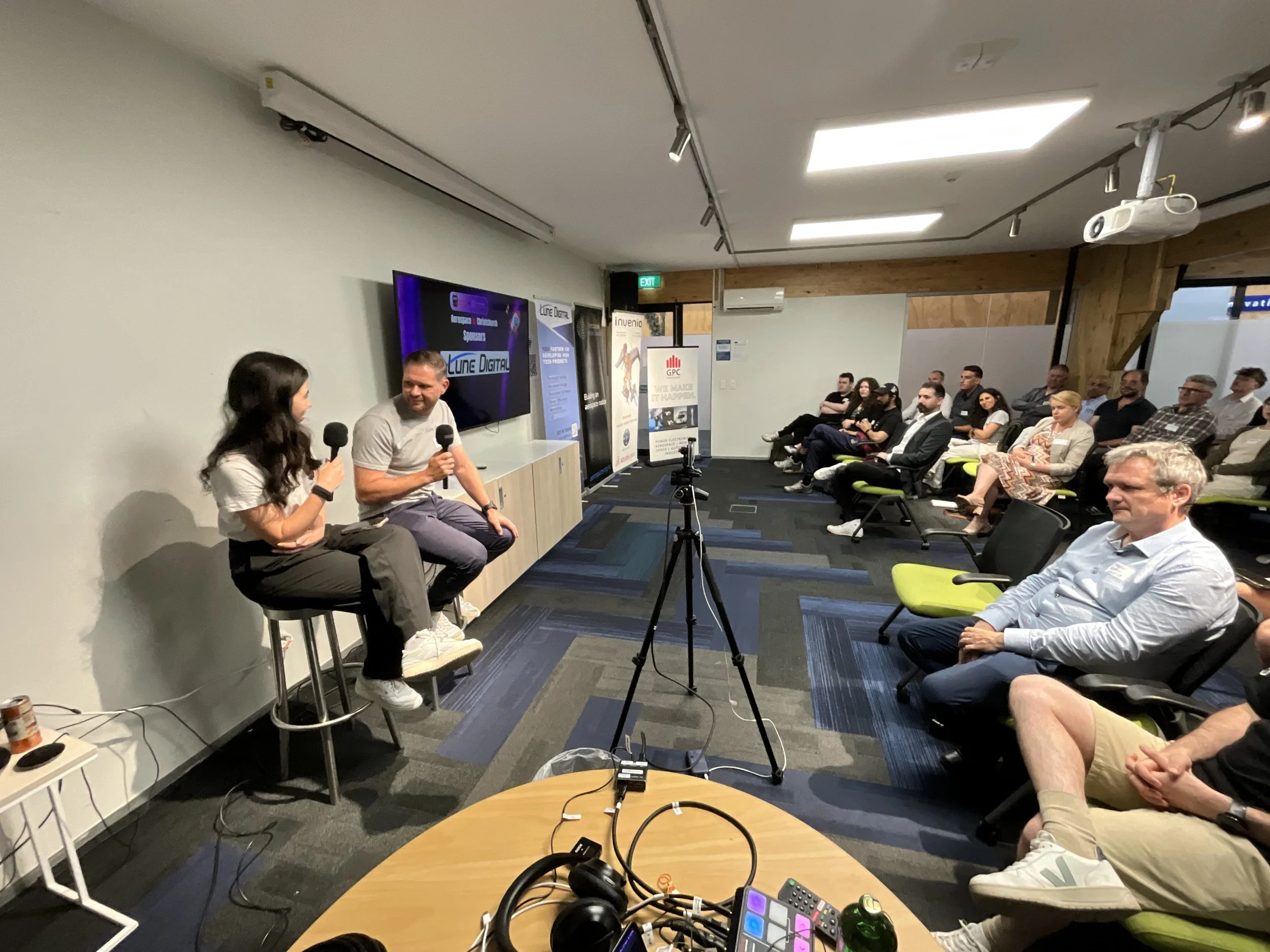
Hosted by Mikayla Stokes, the event highlighted the strength of the South Island’s aerospace ecosystem — from stratospheric aircraft and national test infrastructure to advanced robotics, autonomous systems, and next-generation manufacturing.
Opening & Community Context
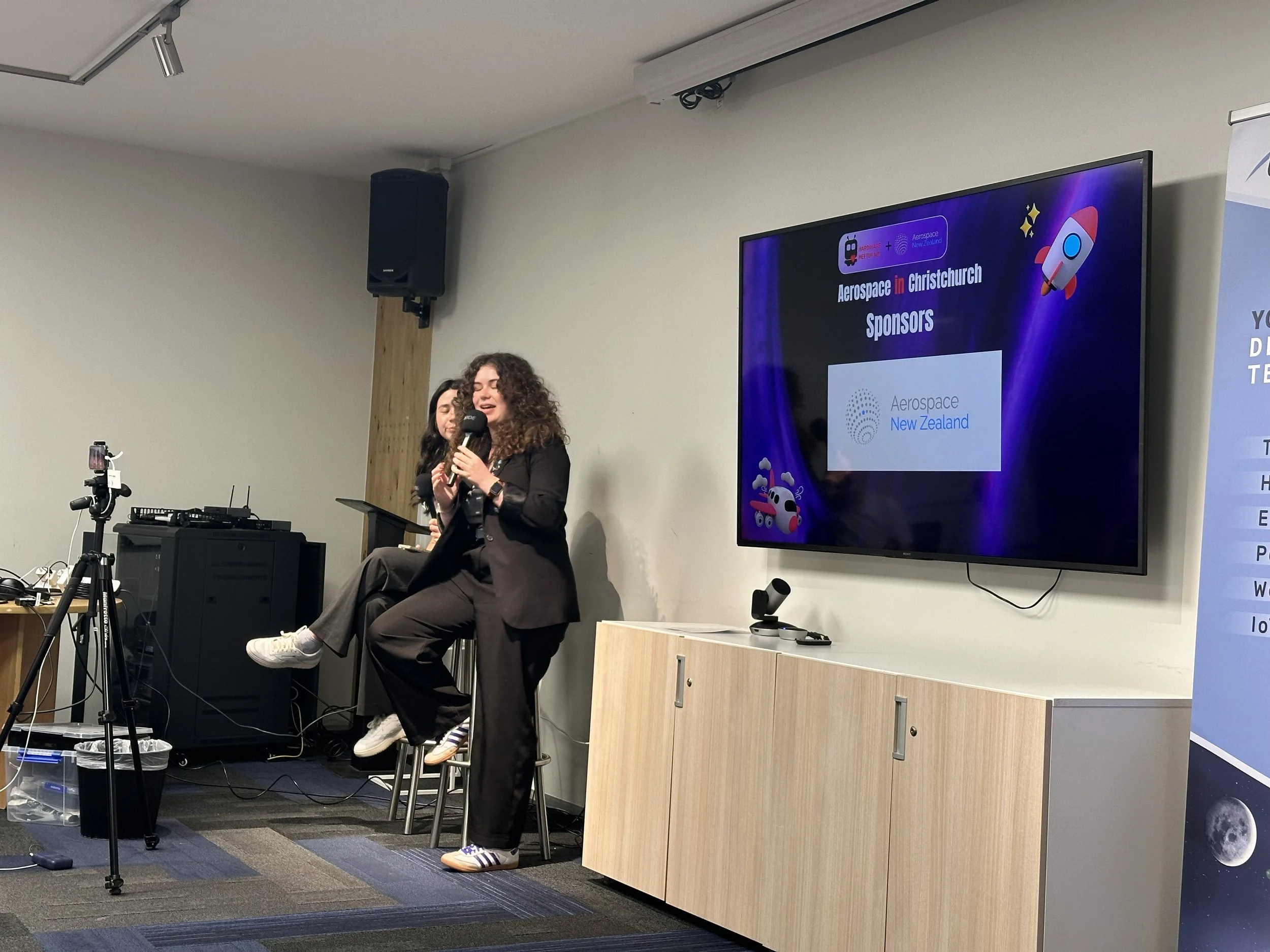
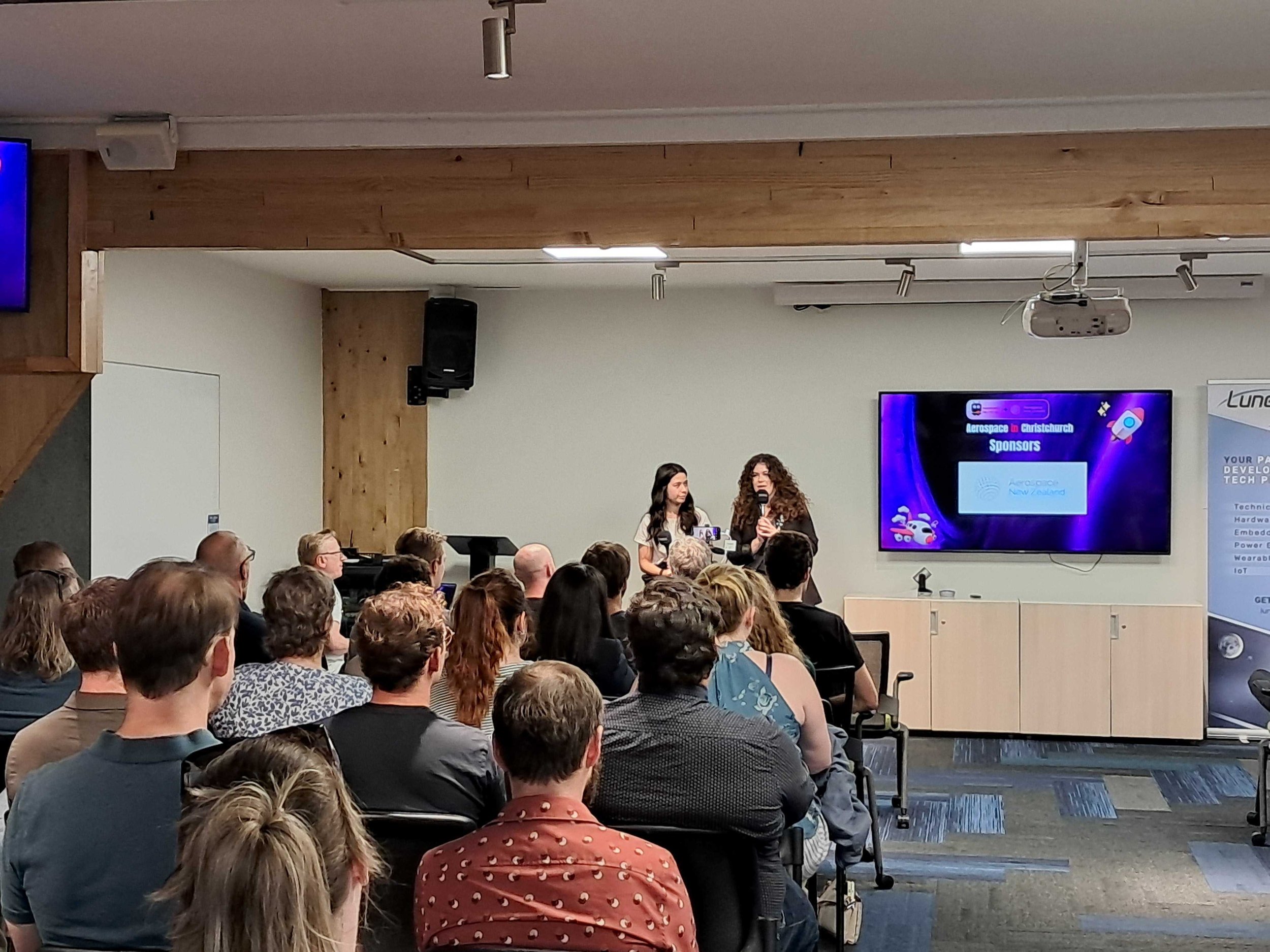
Mikayla opened the evening by welcoming both familiar faces and first-time attendees, reflecting on Hardware Meetup NZ’s mission since 2016: bringing people together to showcase the remarkable hardware companies being built across the country. Christchurch, with its deep engineering talent, research capability, and proximity to aerospace testing environments, continues to play a critical role in that story .
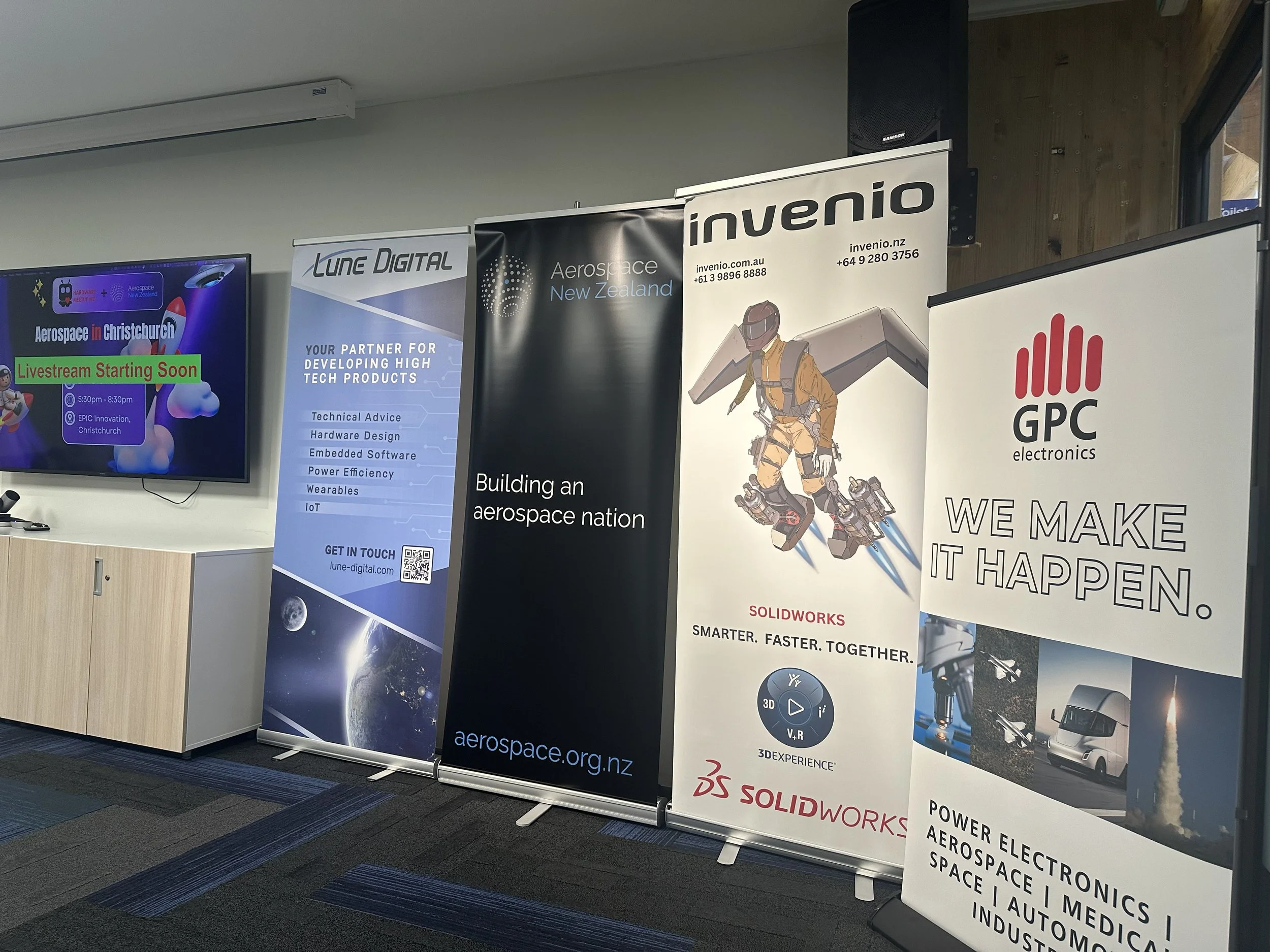
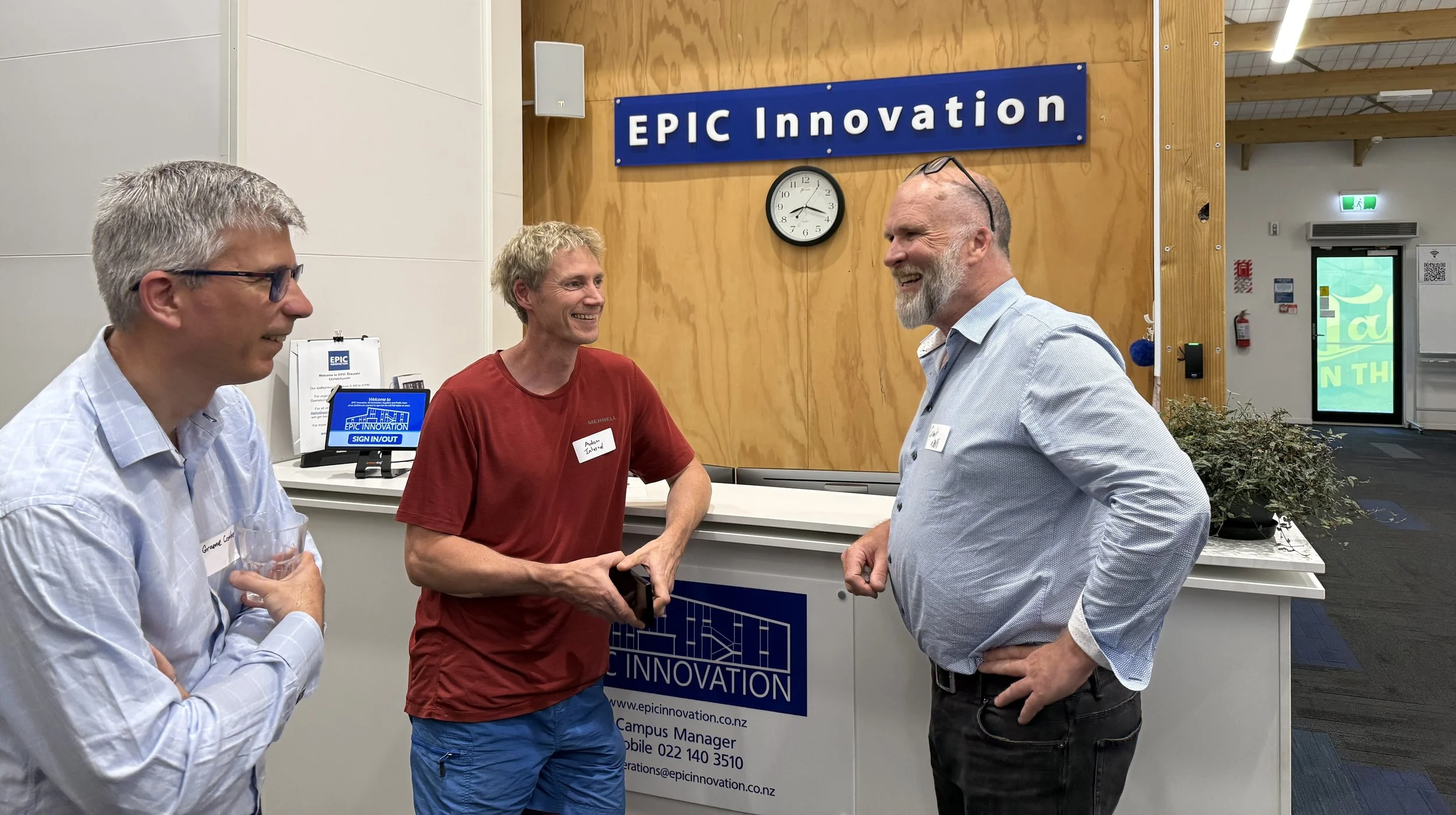
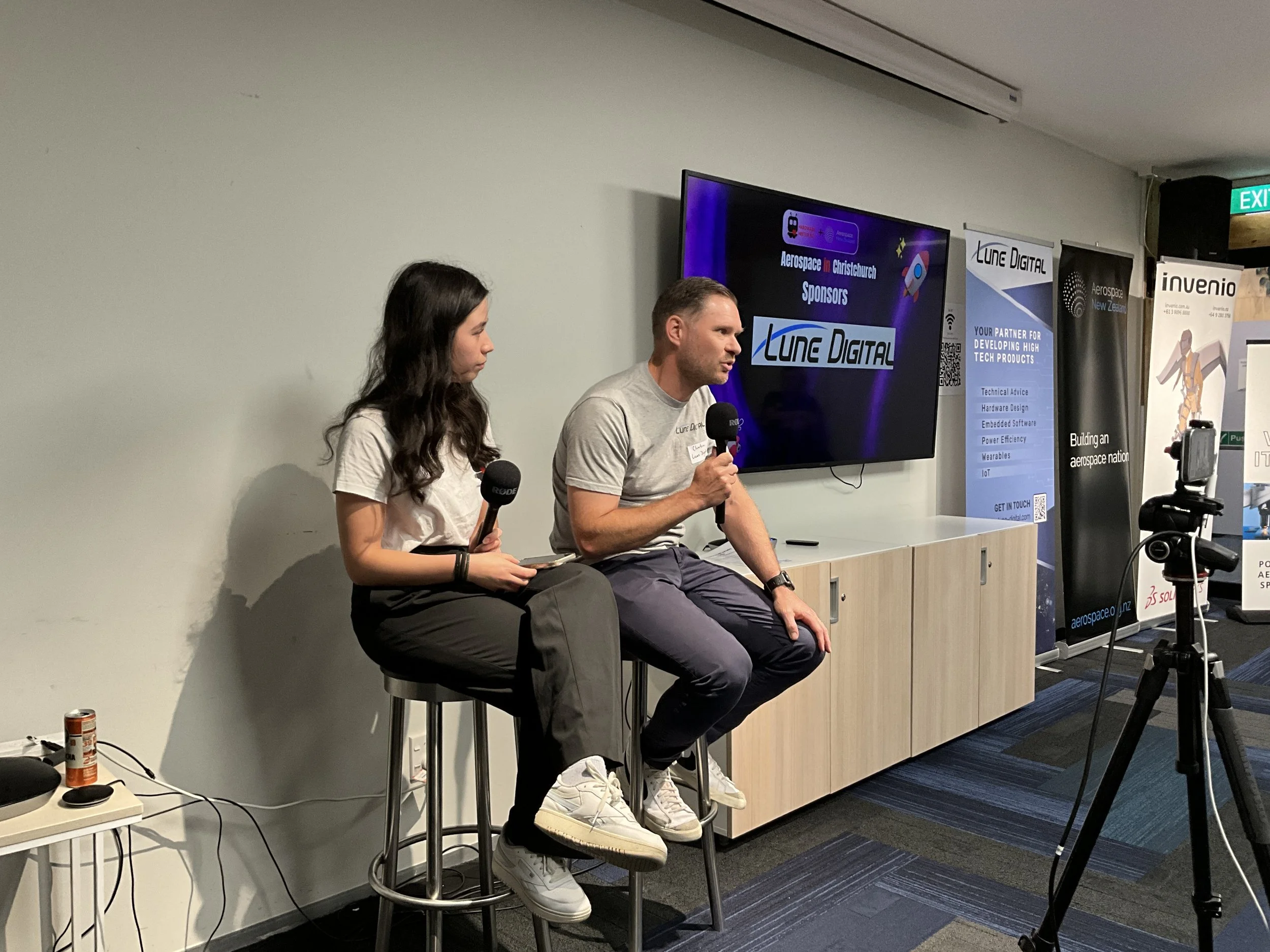
The event was supported by a strong group of ecosystem partners and sponsors including Epic Innovation, GPC Electronics, Aerospace New Zealand, Lune Digital, and Christchurch NZ, each reinforcing the importance of collaboration across design, manufacturing, regulation, and commercialisation.
Mark Rocket – Kea Aerospace
Solar-powered aircraft in the stratosphere
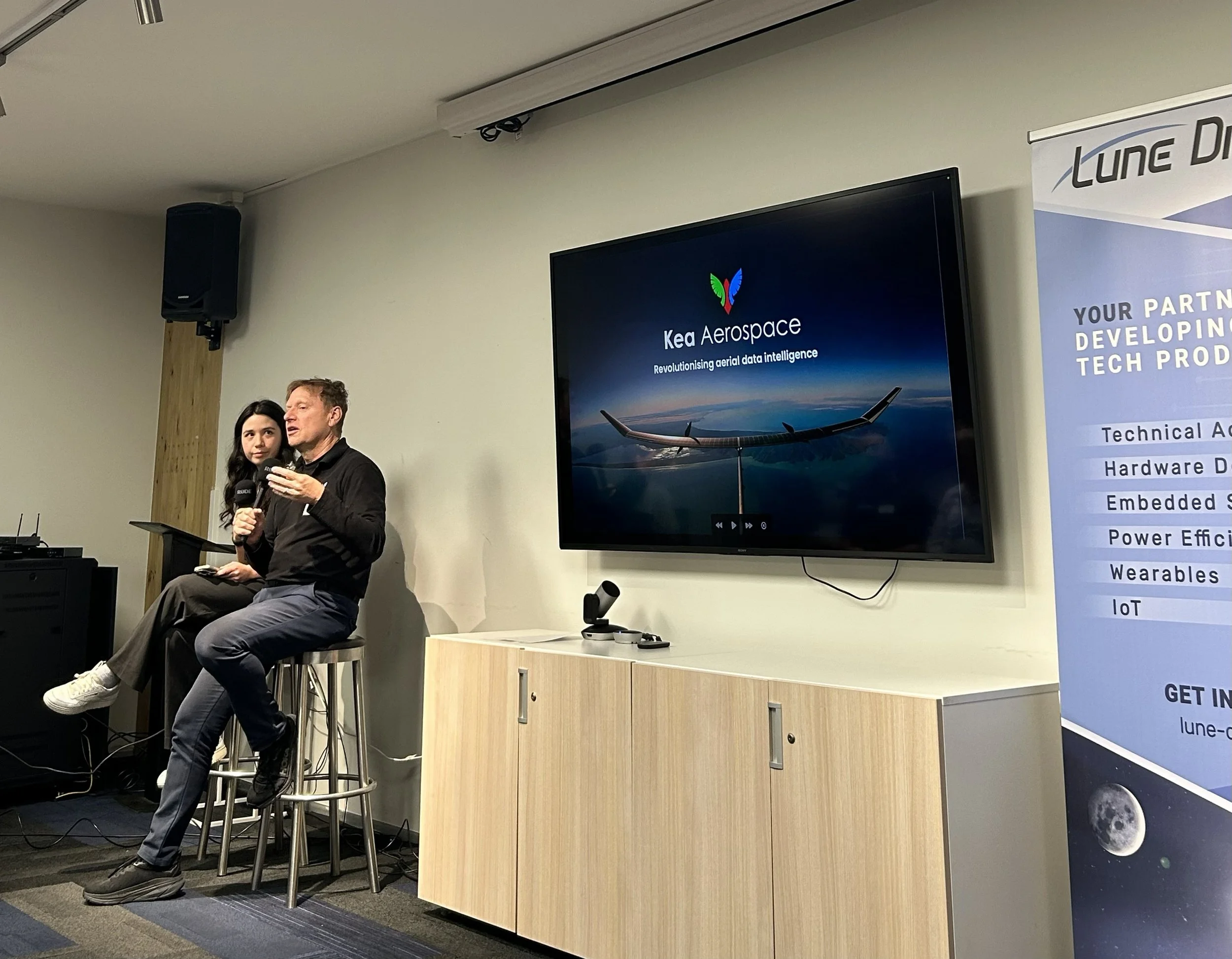
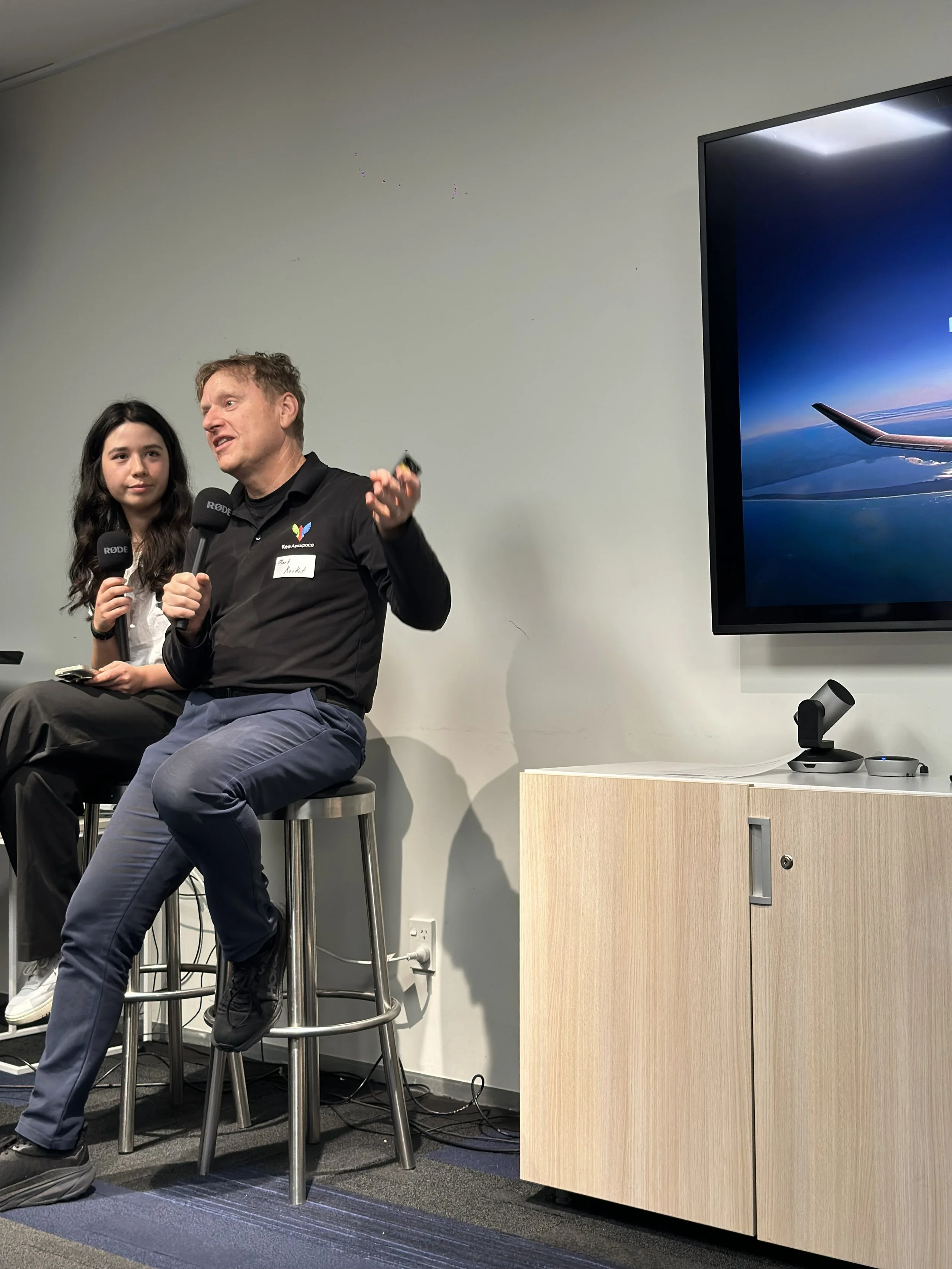
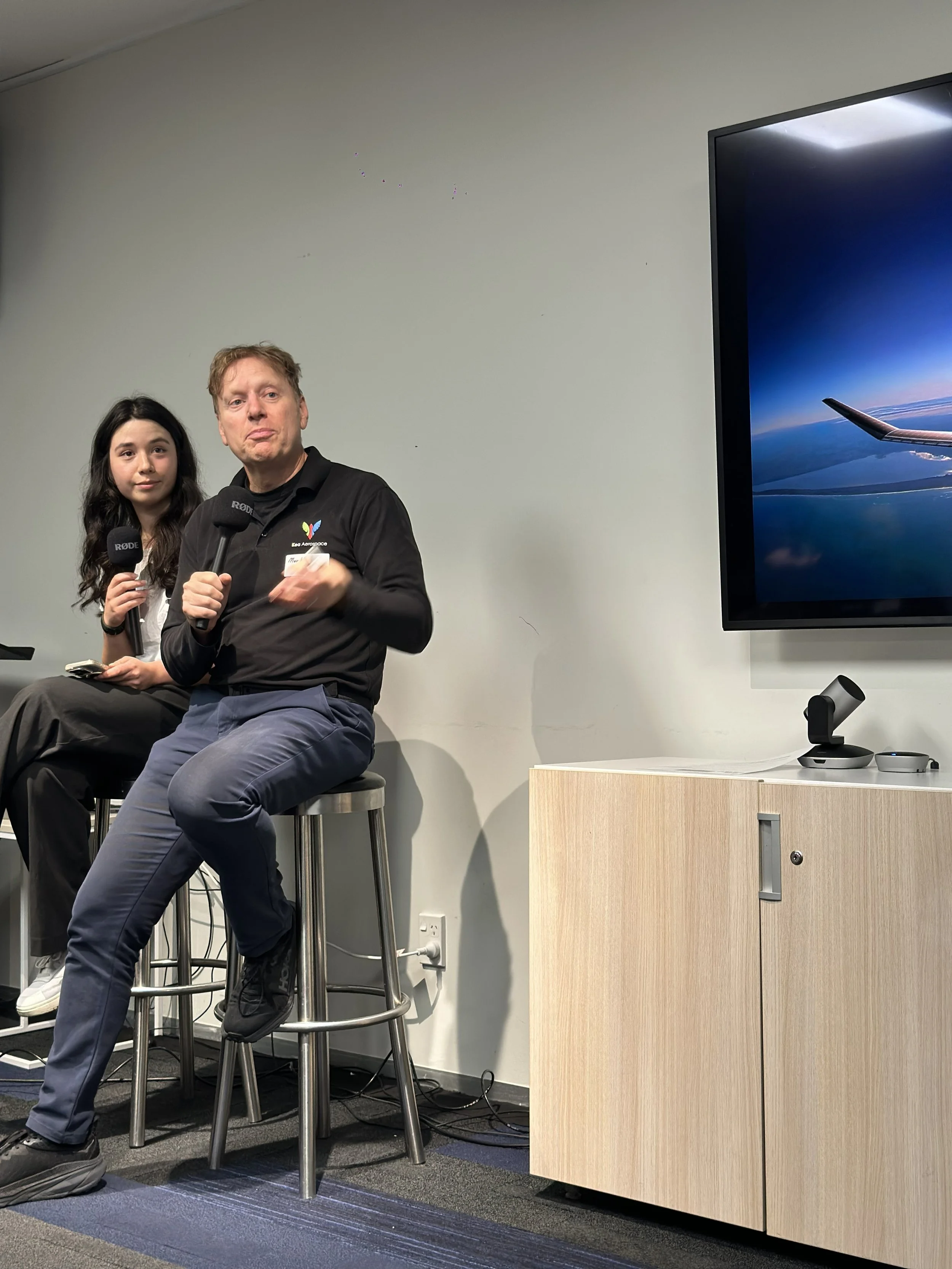
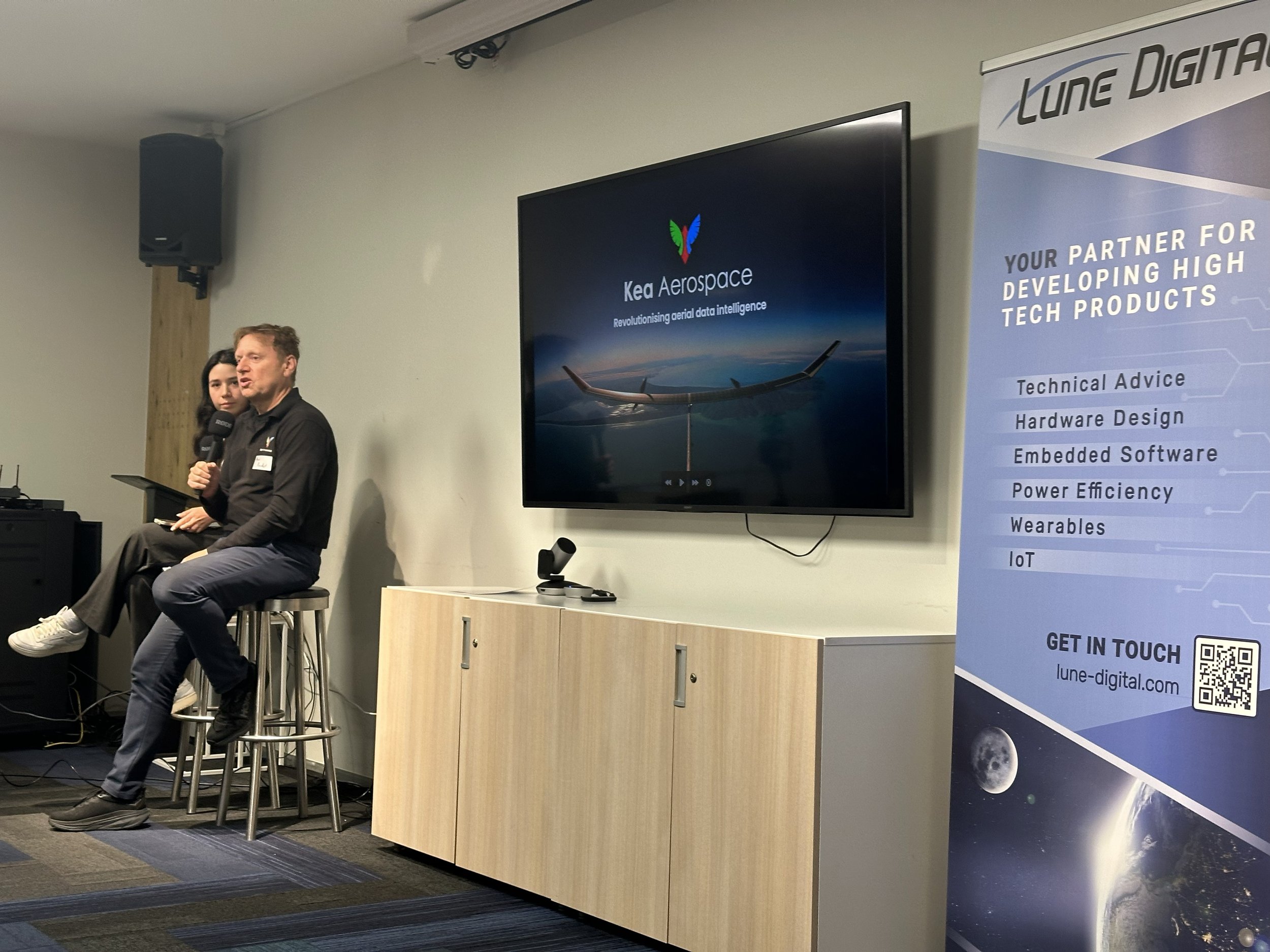
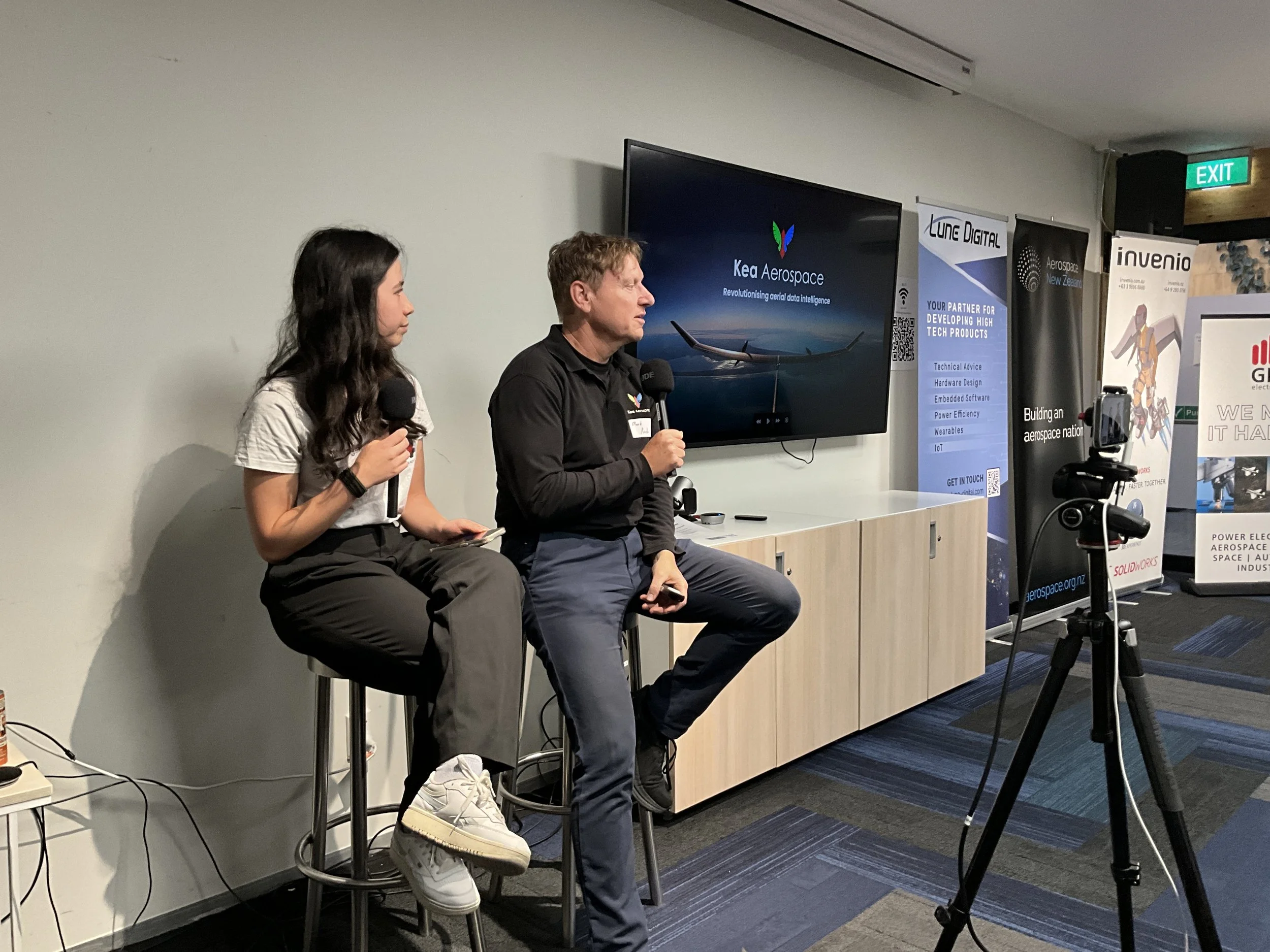
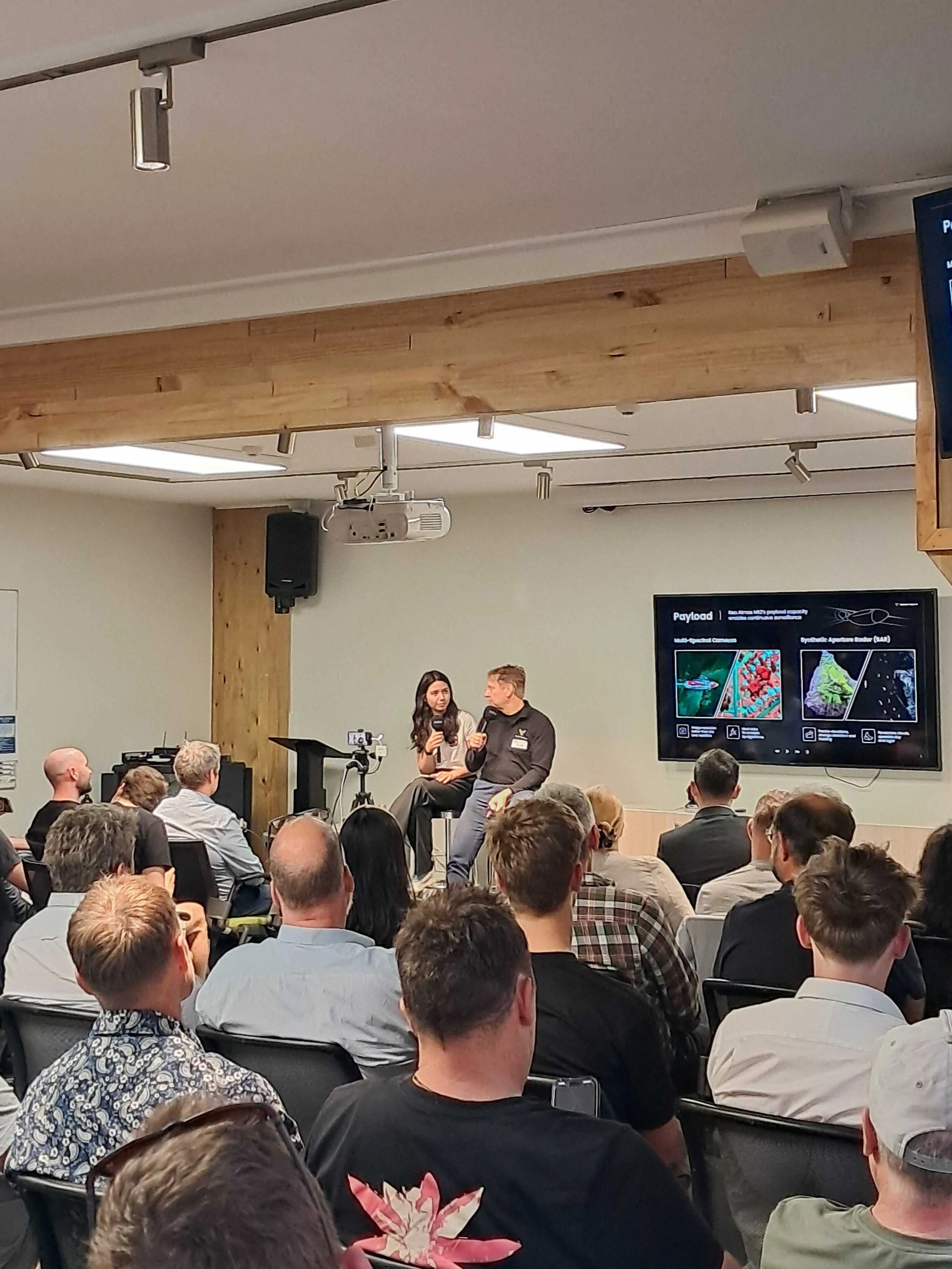
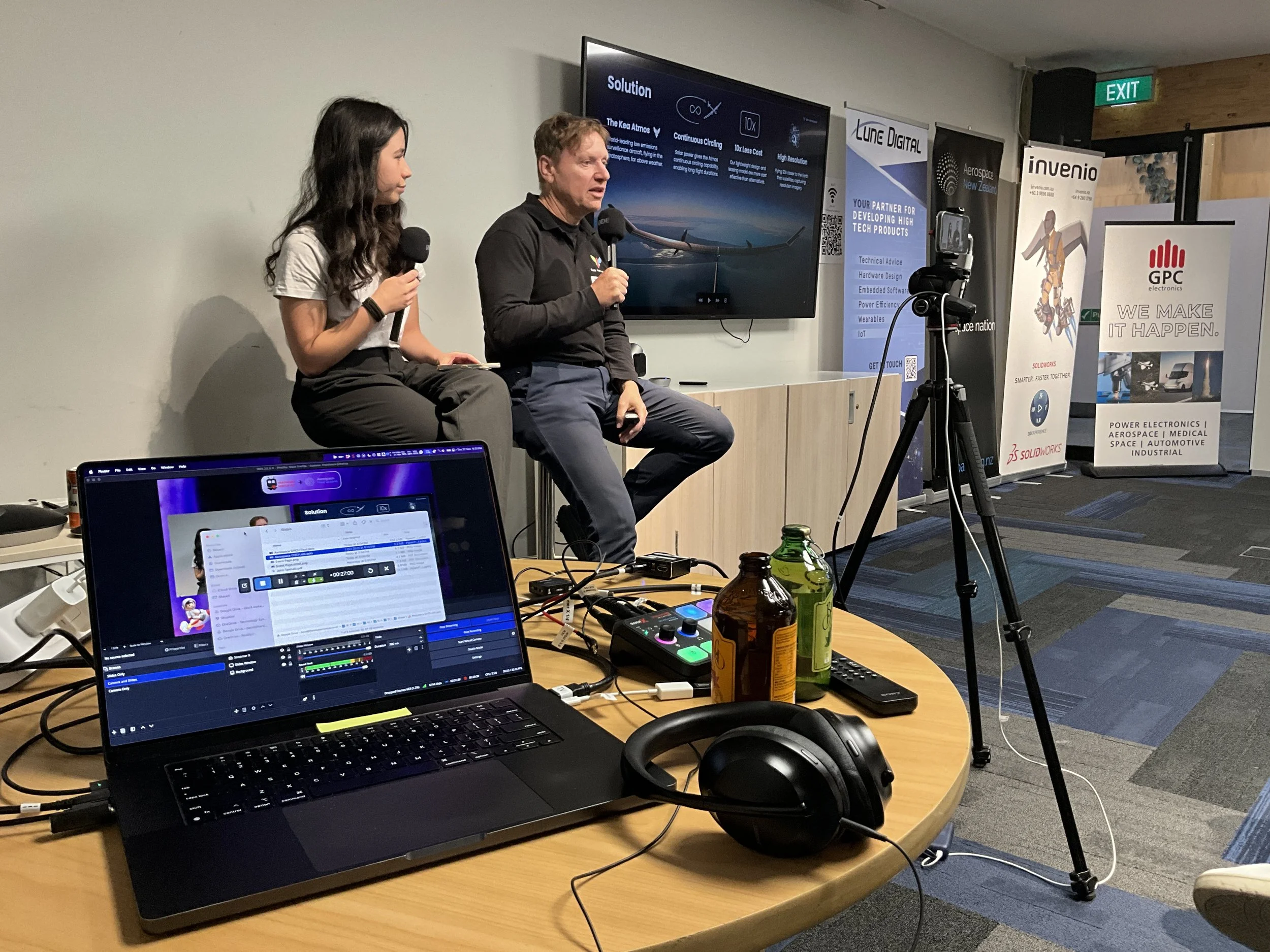
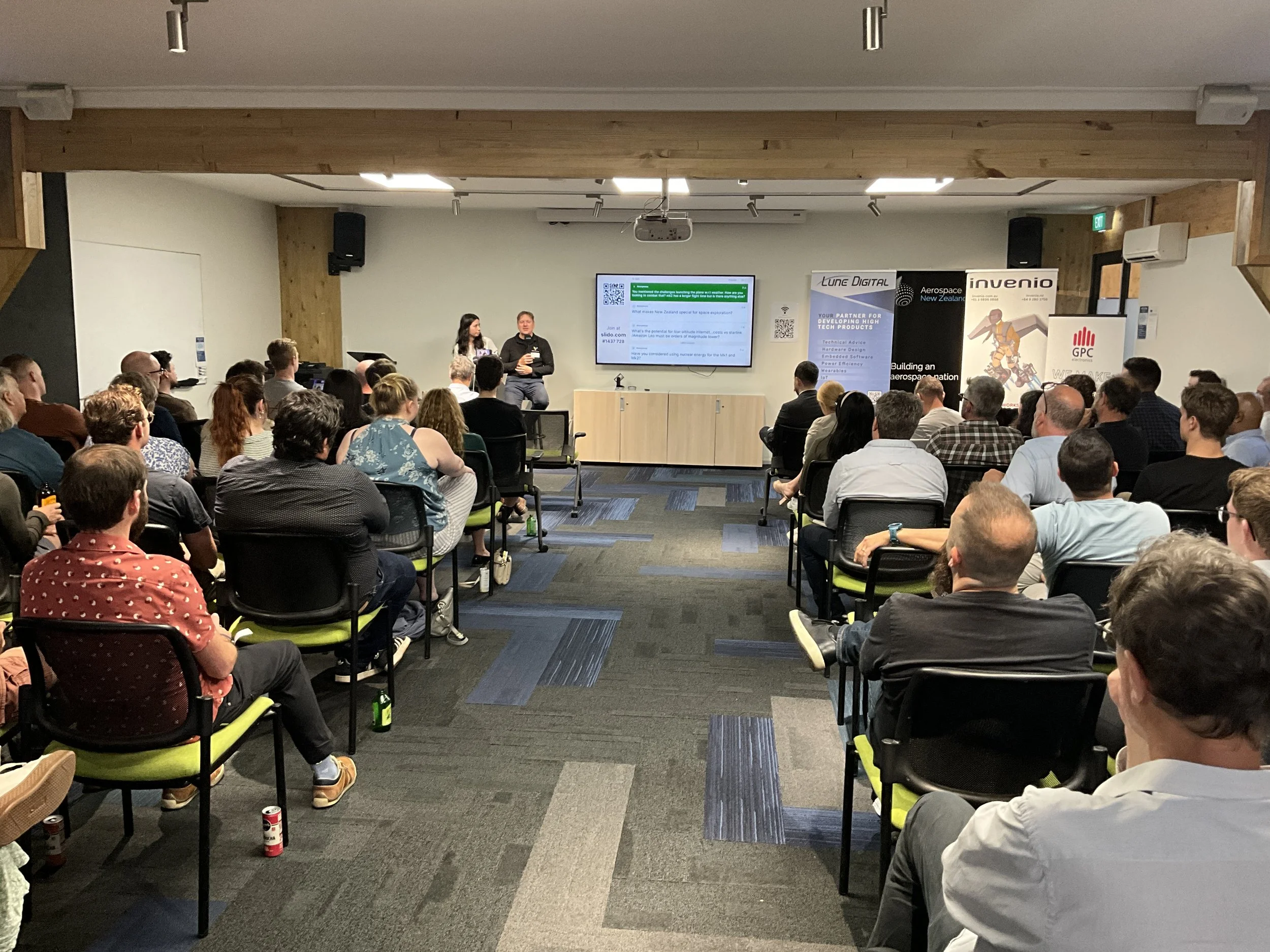
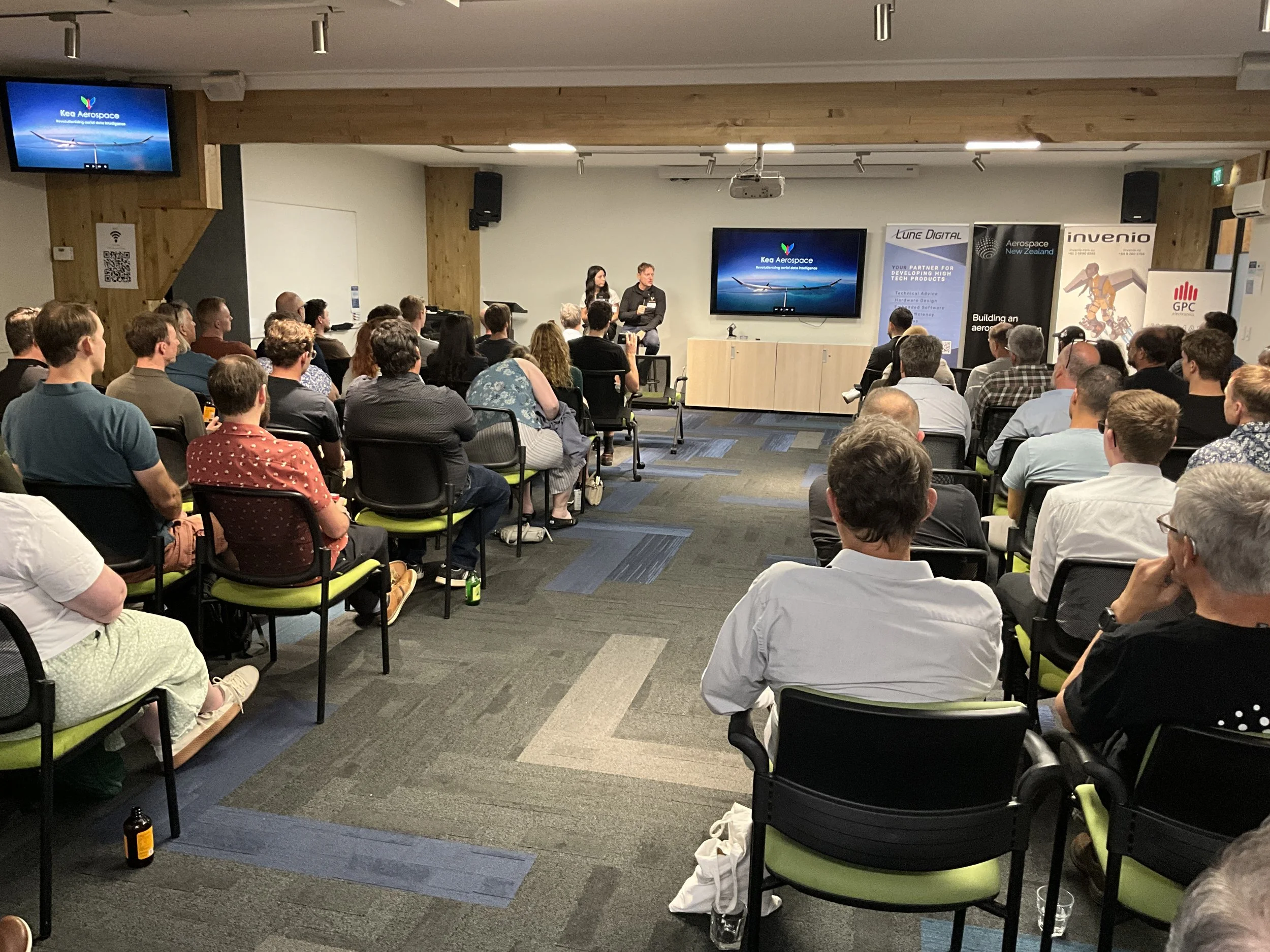
The first speaker, Mark Rocket, founder of Kea Aerospace, shared Kea’s vision for solar-powered aircraft flying in the stratosphere — a unique operating zone between satellites and conventional aircraft.
Kea’s aircraft operate at around 20 kilometres altitude, above weather systems and commercial air traffic, enabling long-duration missions with high-resolution sensing. Mark outlined how Kea’s current Mark 1 aircraft has already flown above 56,000 feet, with the next iteration designed to remain airborne for weeks or even months at a time.
Key themes from Mark’s session included:
Maritime domain awareness as an initial application, supporting the detection of illegal fishing, smuggling, and unauthorised vessels across New Zealand’s vast ocean territory
The technical challenge of flying in ultra-low-density air while optimising weight, energy efficiency, and structural integrity
Kea’s focus on affordability — building a scalable “Toyota-Tesla” model rather than a one-off aerospace “Ferrari”
Mark also shared his unconventional career journey — from musician to internet entrepreneur to early Rocket Lab investor — before ultimately founding Kea Aerospace. His message was clear: there is no single path into aerospace, but curiosity, persistence, and timing matter enormously.
During Q&A, Mark discussed Kea’s evolving business model (from aircraft leasing to data services), New Zealand’s opportunity as a global aerospace R&D testbed, and the importance of weather, regulation, and manufacturing trade-offs when building ultra-light aircraft.
John Mann – Tāwhaki Joint Venture
Enabling the future aerospace system
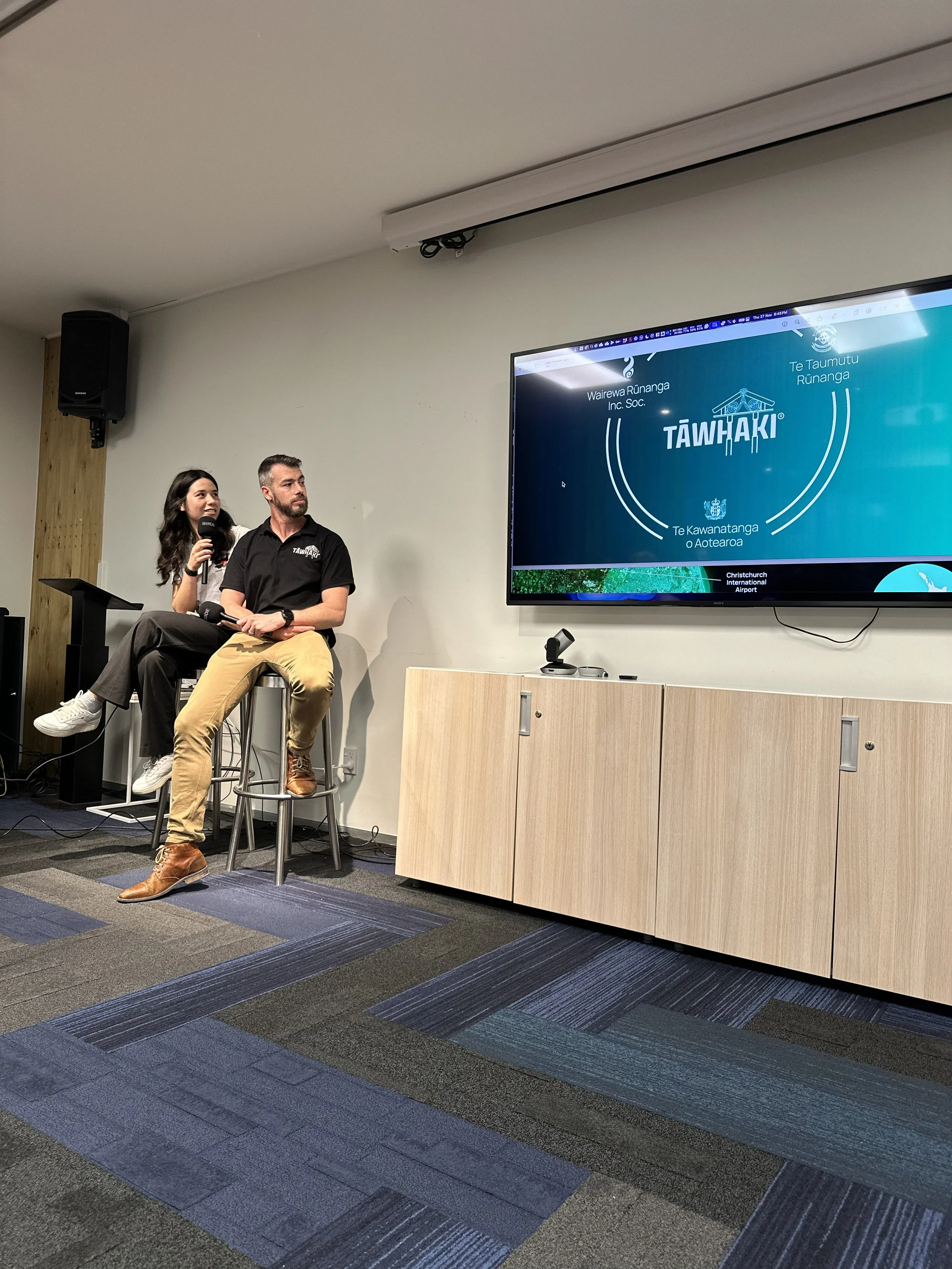
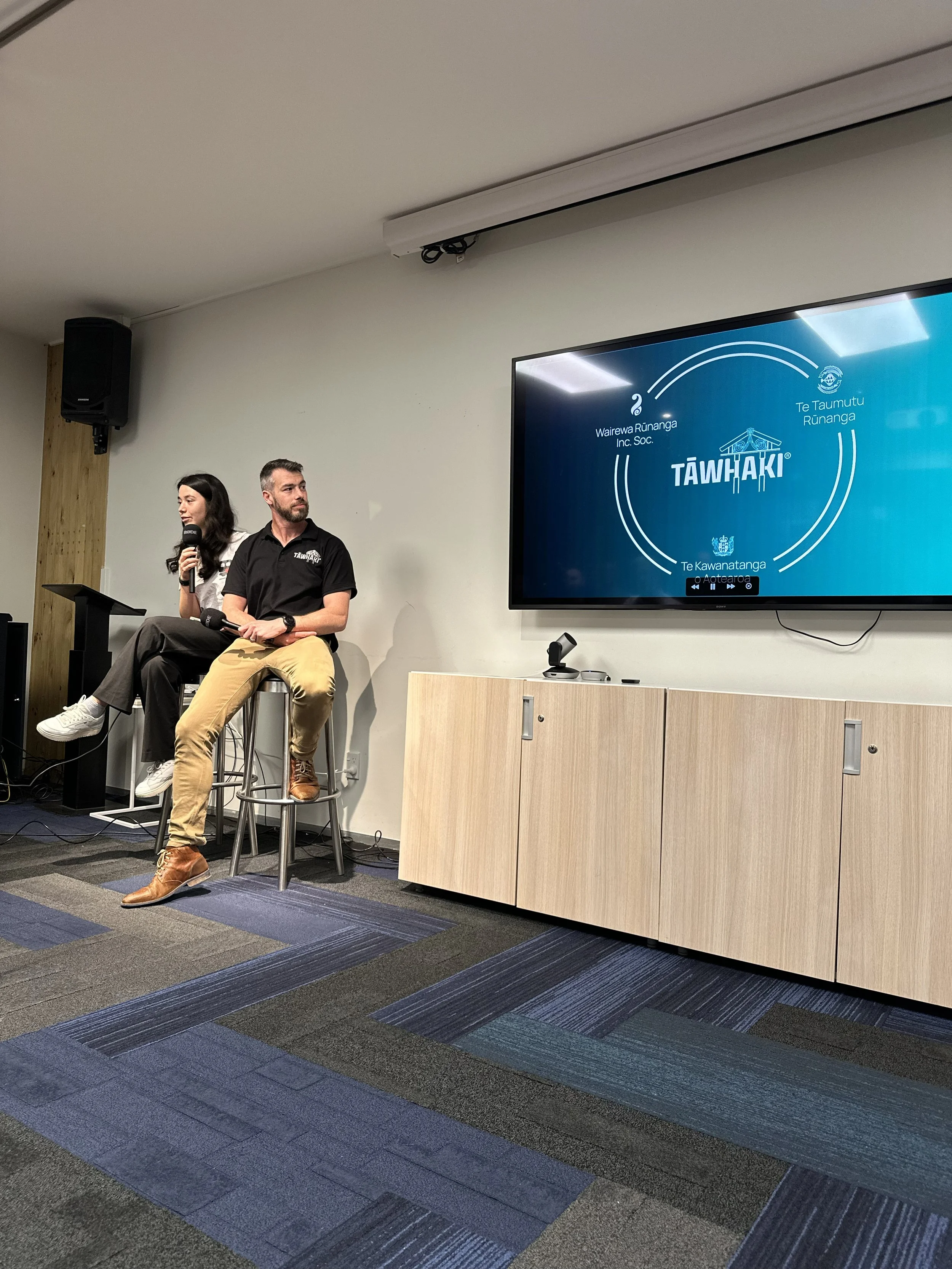
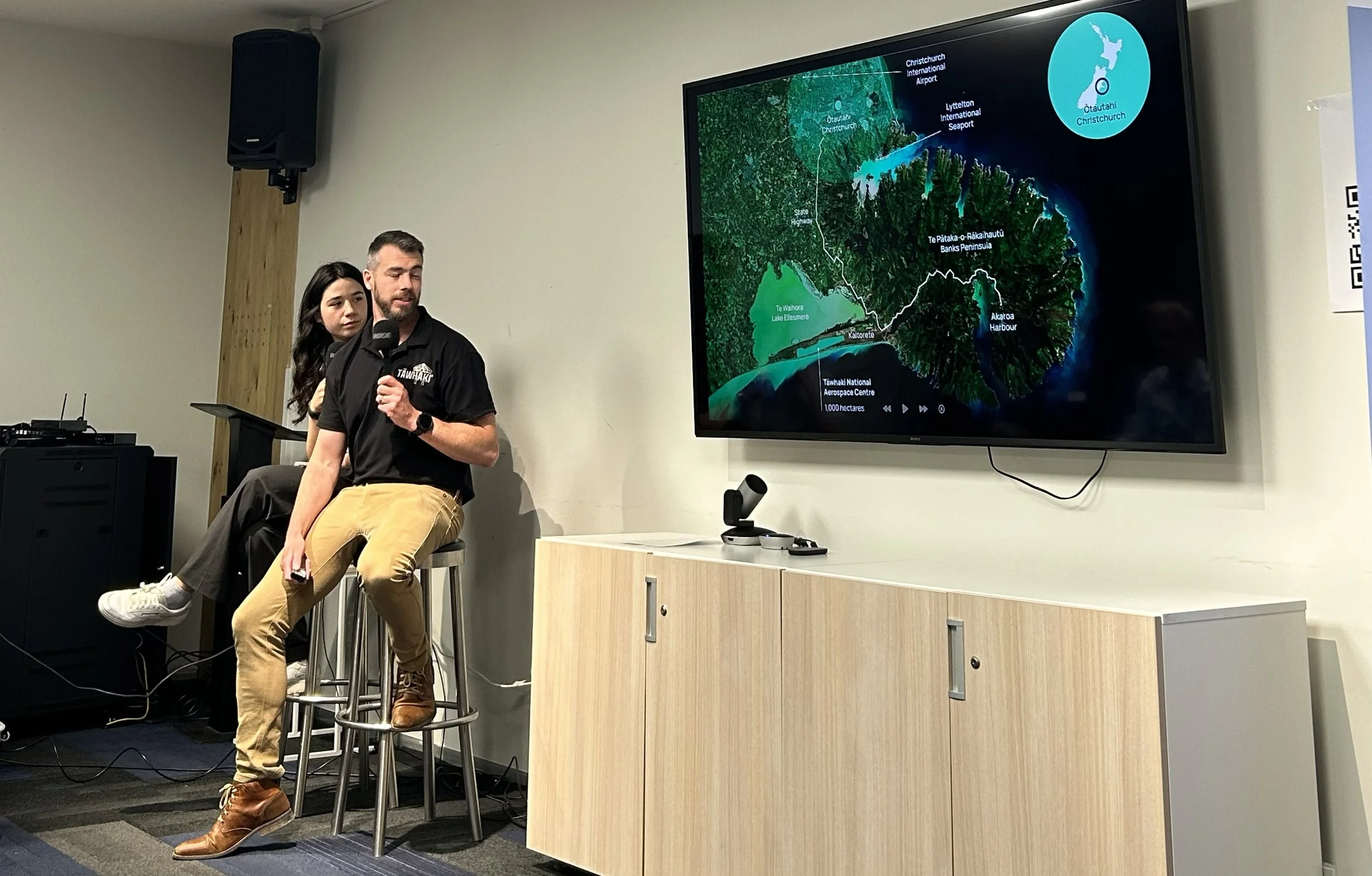
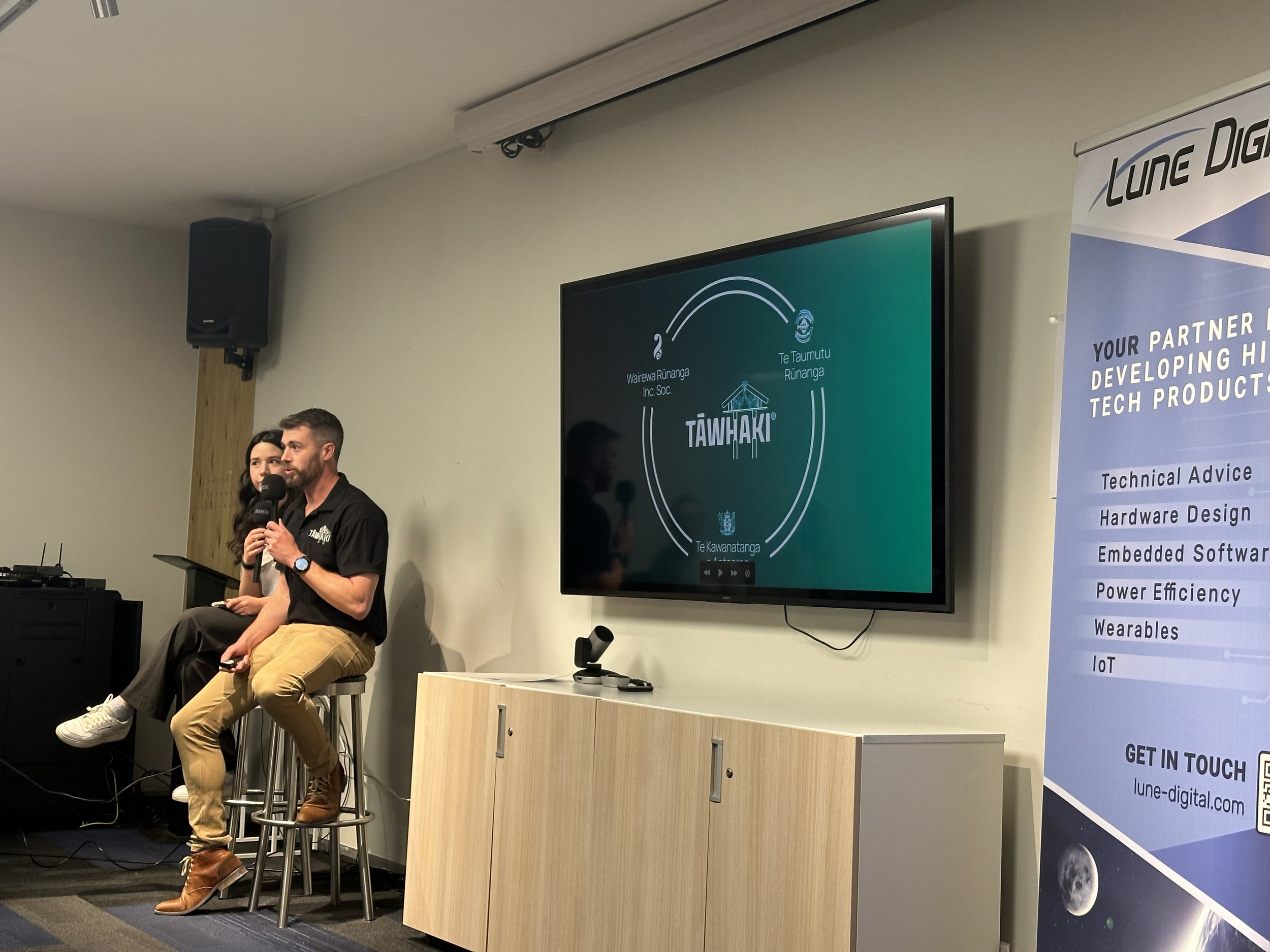
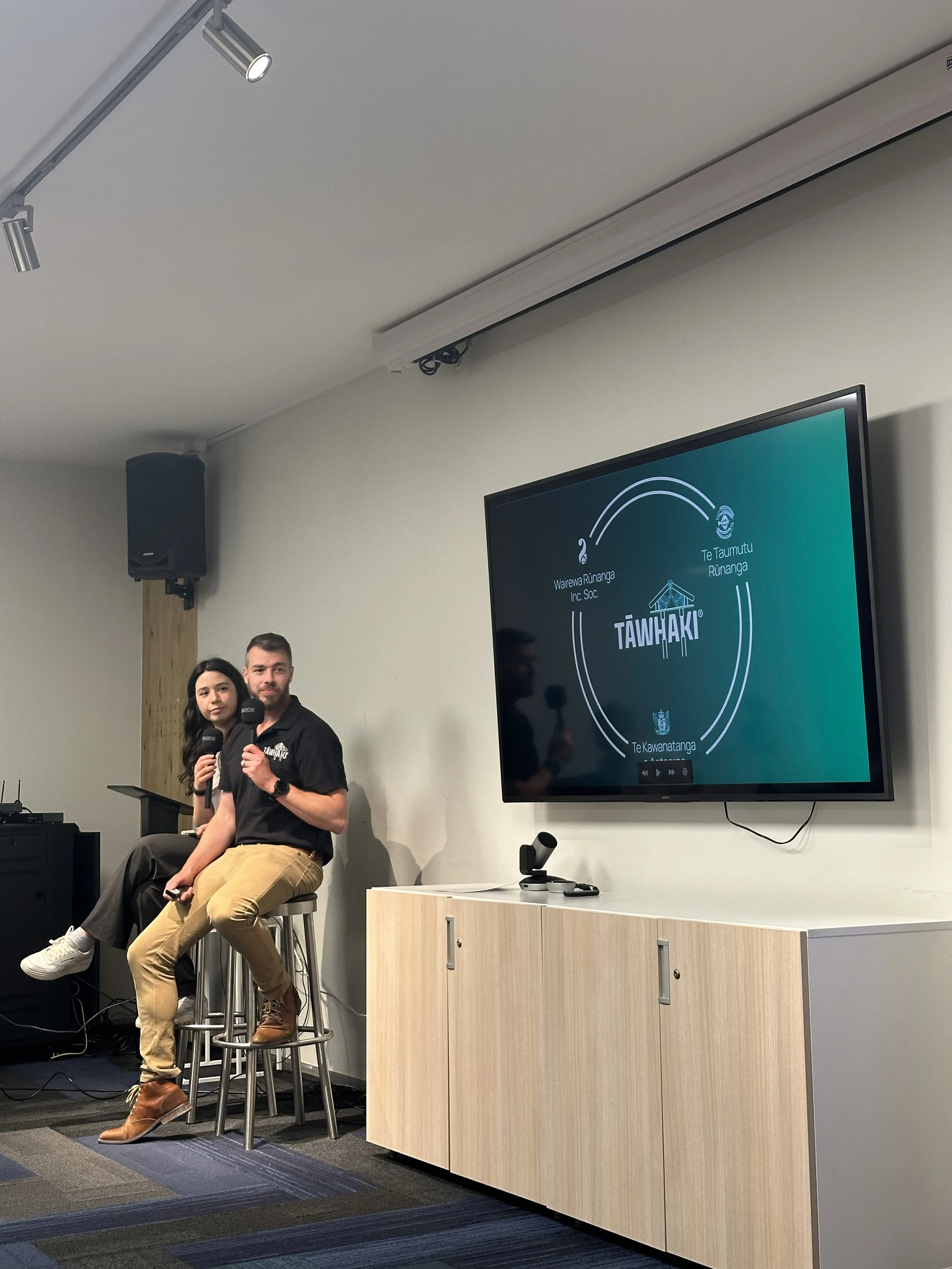
The second speaker, John Mann, represented Tāwhaki Joint Venture, a unique partnership between the Crown and local mana whenua at Kaitorete Spit. John positioned Tāwhaki not as a traditional commercial entity, but as a system enabler — advancing aerospace while simultaneously restoring whenua and reconnecting people to place.
On the aerospace side, Tāwhaki operates the Tāwhaki National Aerospace Centre, providing:
A 100-hectare test site with a kilometre-long runway
Special-use airspace is rare by international standards
Digital, radar, meteorological, and communications infrastructure
A safe environment to prototype, test, and validate future air systems
John outlined how aerospace is undergoing a fundamental shift — driven by autonomy, new propulsion systems, and unmanned operations — and how regulation, airspace integration, infrastructure, and skills must evolve together.
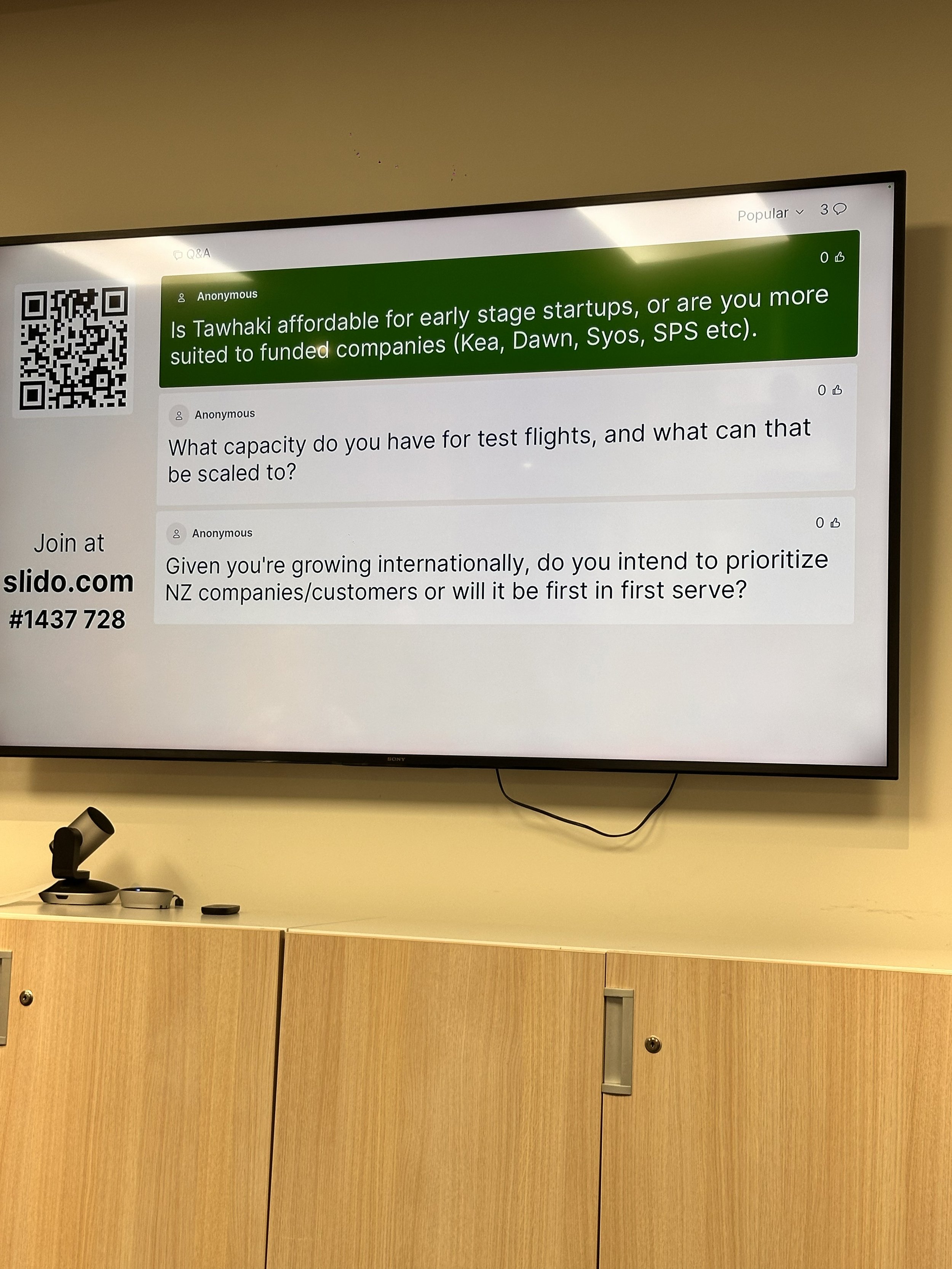
During the Q&A, the audience questions explored:
How startups can begin test flights at Tāwhaki
Affordability for early-stage companies
Capacity and scaling of test operations
Whether Tāwhaki will prioritise New Zealand operators
John emphasised Tāwhaki’s role as a facilitator, working on a case-by-case basis to support both local and international organisations while helping New Zealand build credibility as a world-class aerospace testing environment.
Scott Spooner – SPS Automation
Robotics, drones, and advanced manufacturing
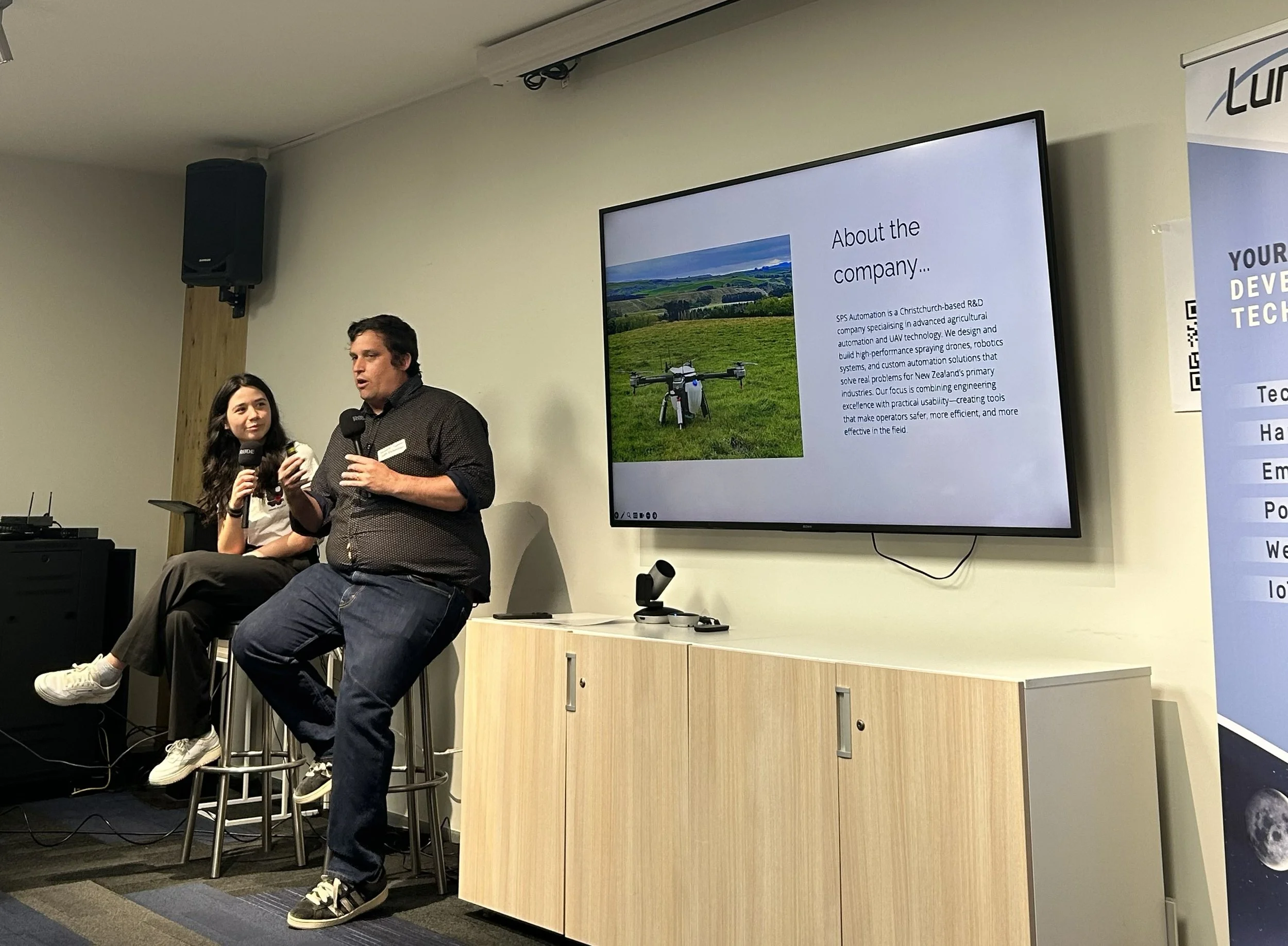
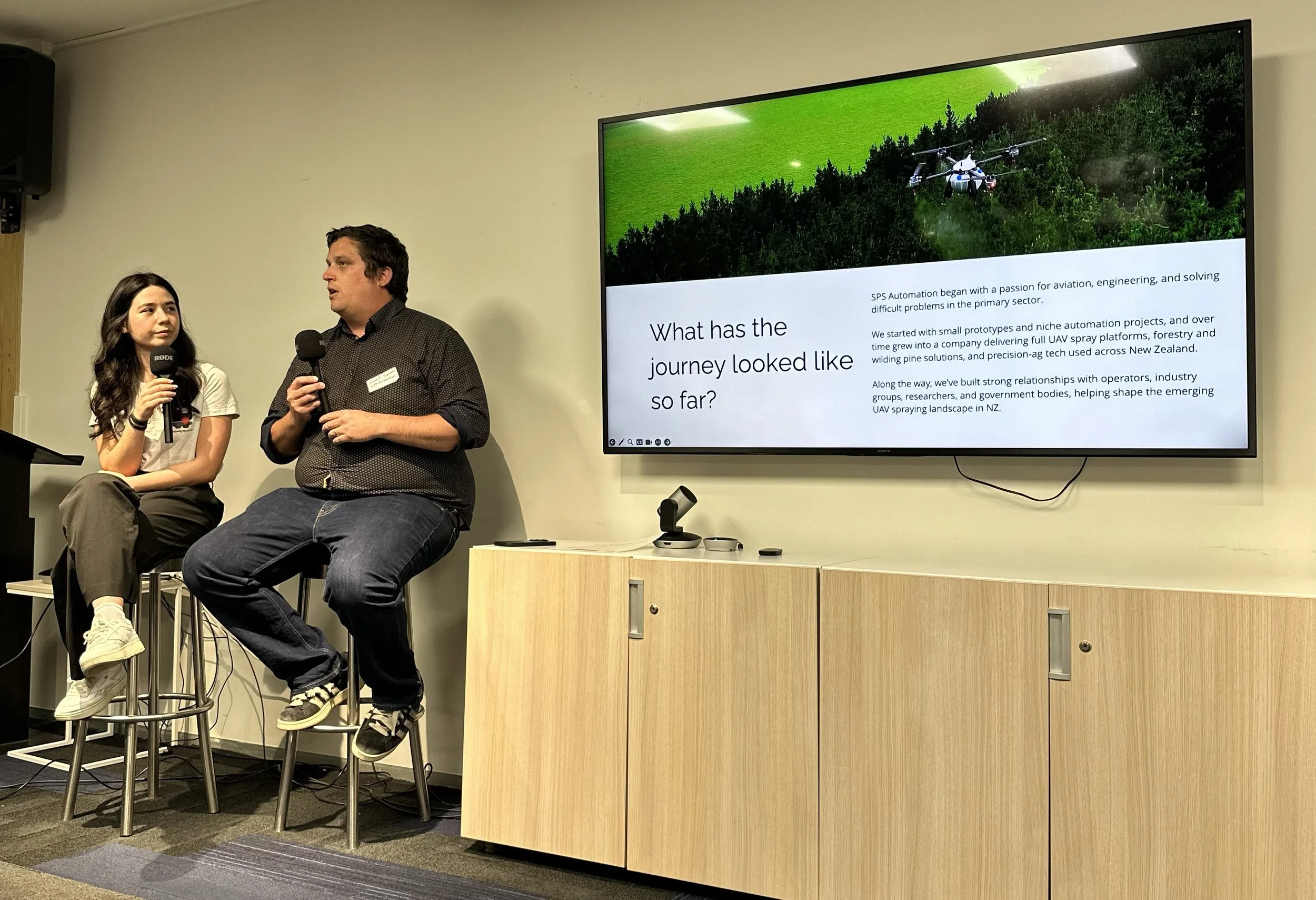
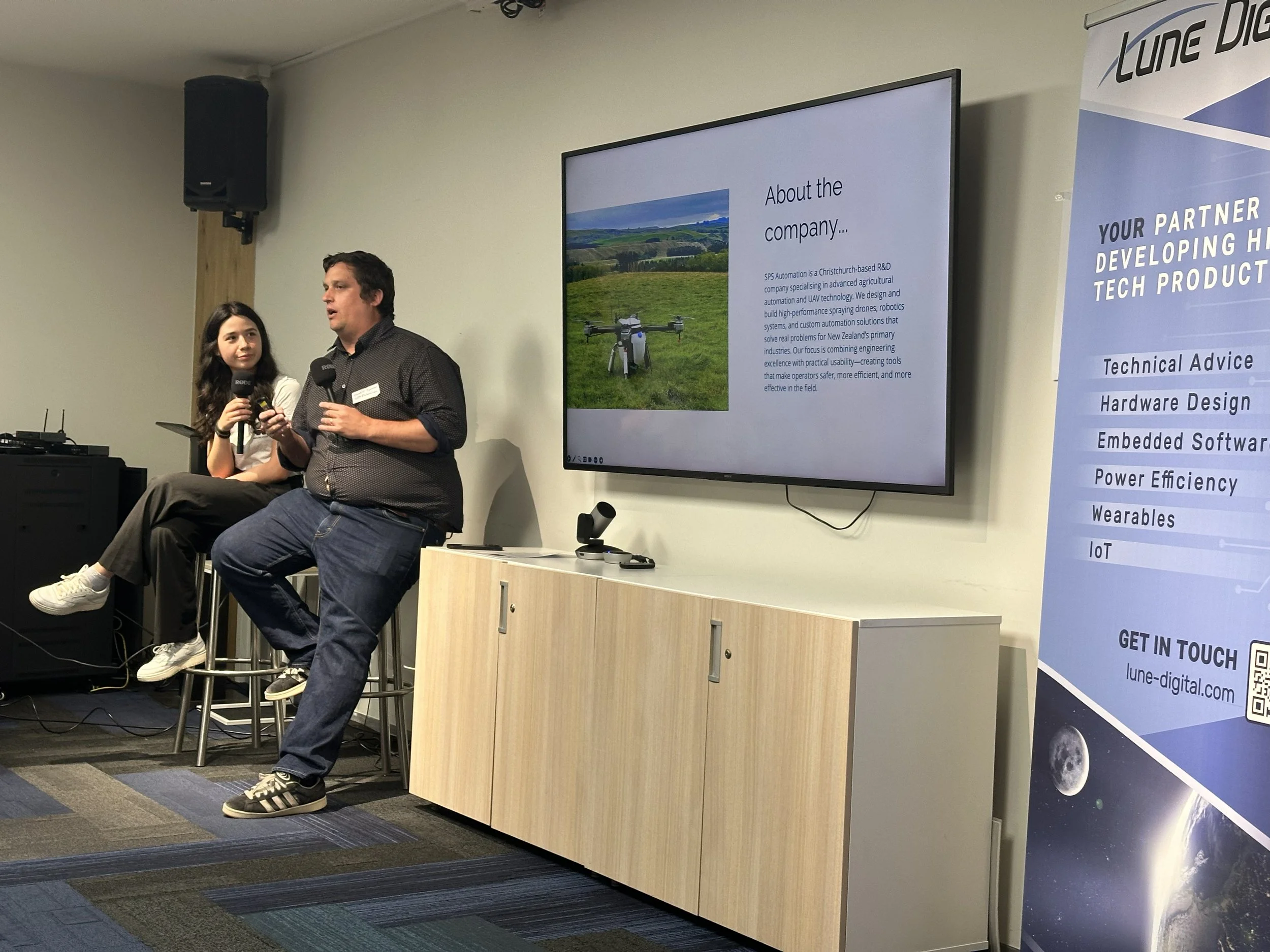
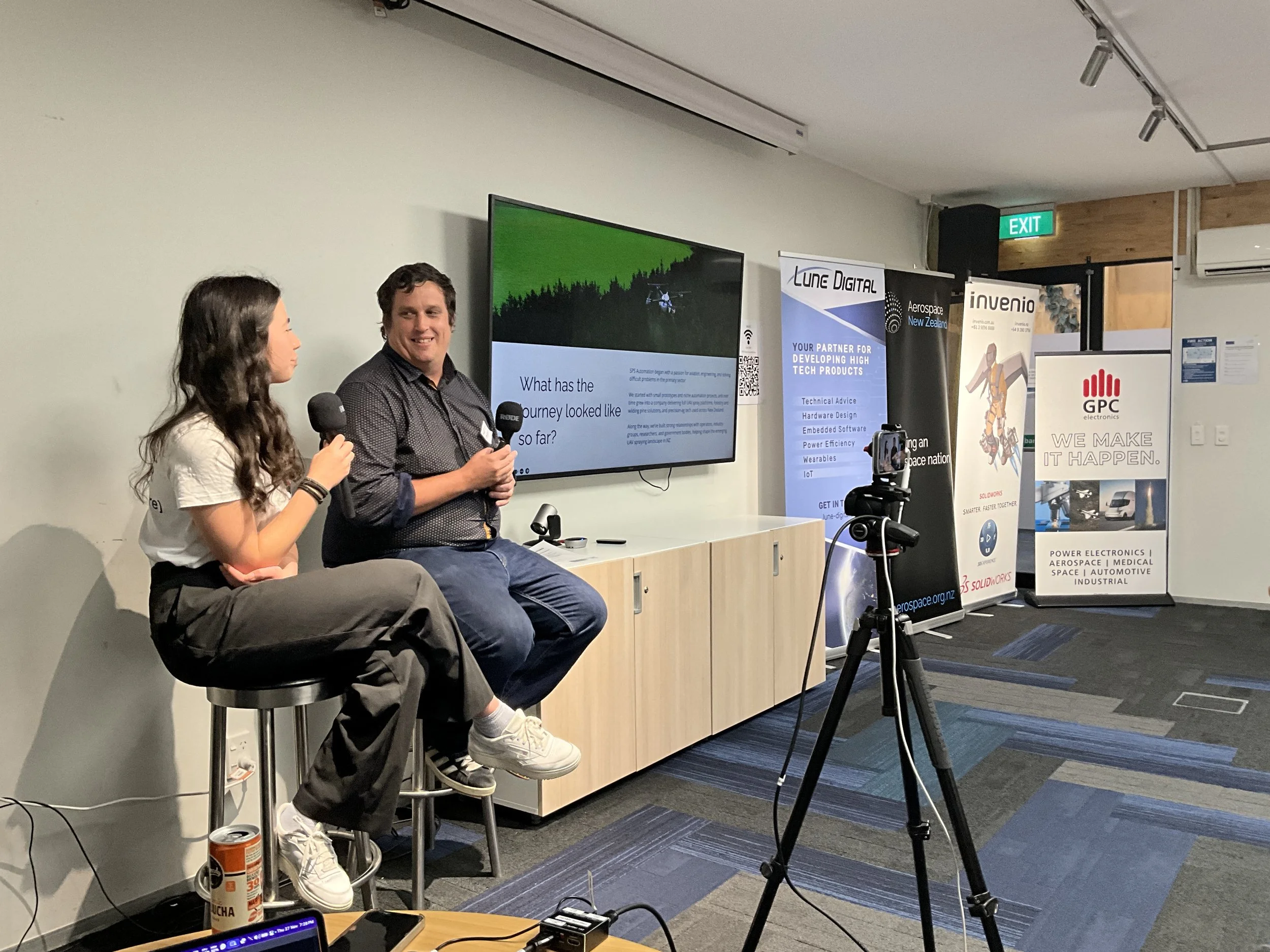
The final speaker, Scott Spooner, CEO and CTO of SPS Automation, brought an energetic deep-dive into advanced robotics, autonomous systems, and drone manufacturing. SPS designs and builds bespoke robotic systems across aerospace, agriculture, and industrial automation — all from New Zealand facilities .
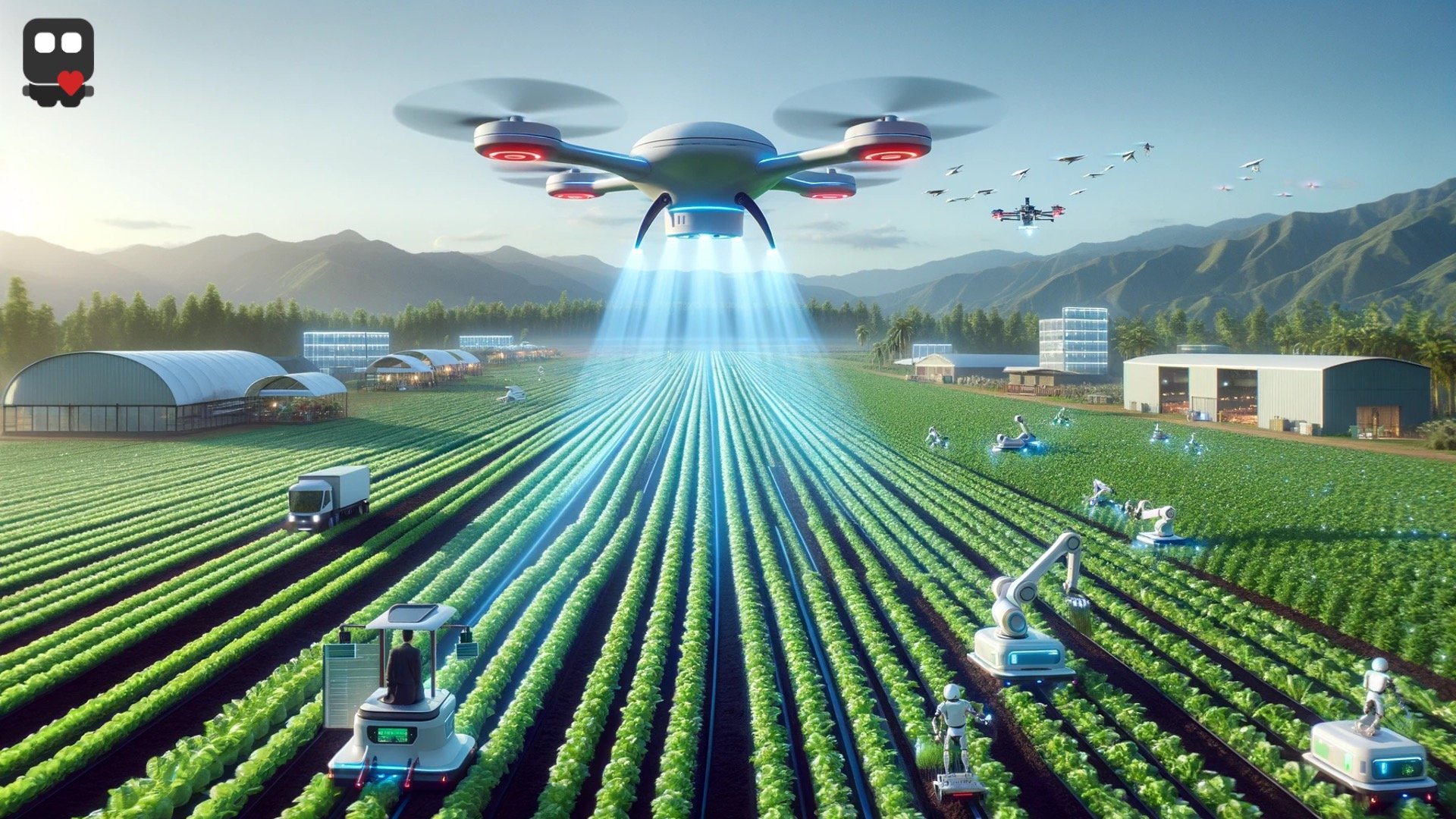
Scott shared SPS’s journey from a garage startup to a multi-site operation with R&D in Christchurch, production in Timaru, and maintenance in Auckland. A standout example was SPS’s hybrid fuel-powered agricultural drones, capable of long-range, precision spraying in terrain where helicopters and ground crews are impractical.
Key insights included:
Using contract R&D to fund product development sustainably
Designing drones around safety, autonomy, and long endurance
Keeping manufacturing local to build national capability and skills
Scott also challenged the room to invest in the future: support interns, build things locally, and help grow New Zealand’s engineering workforce.
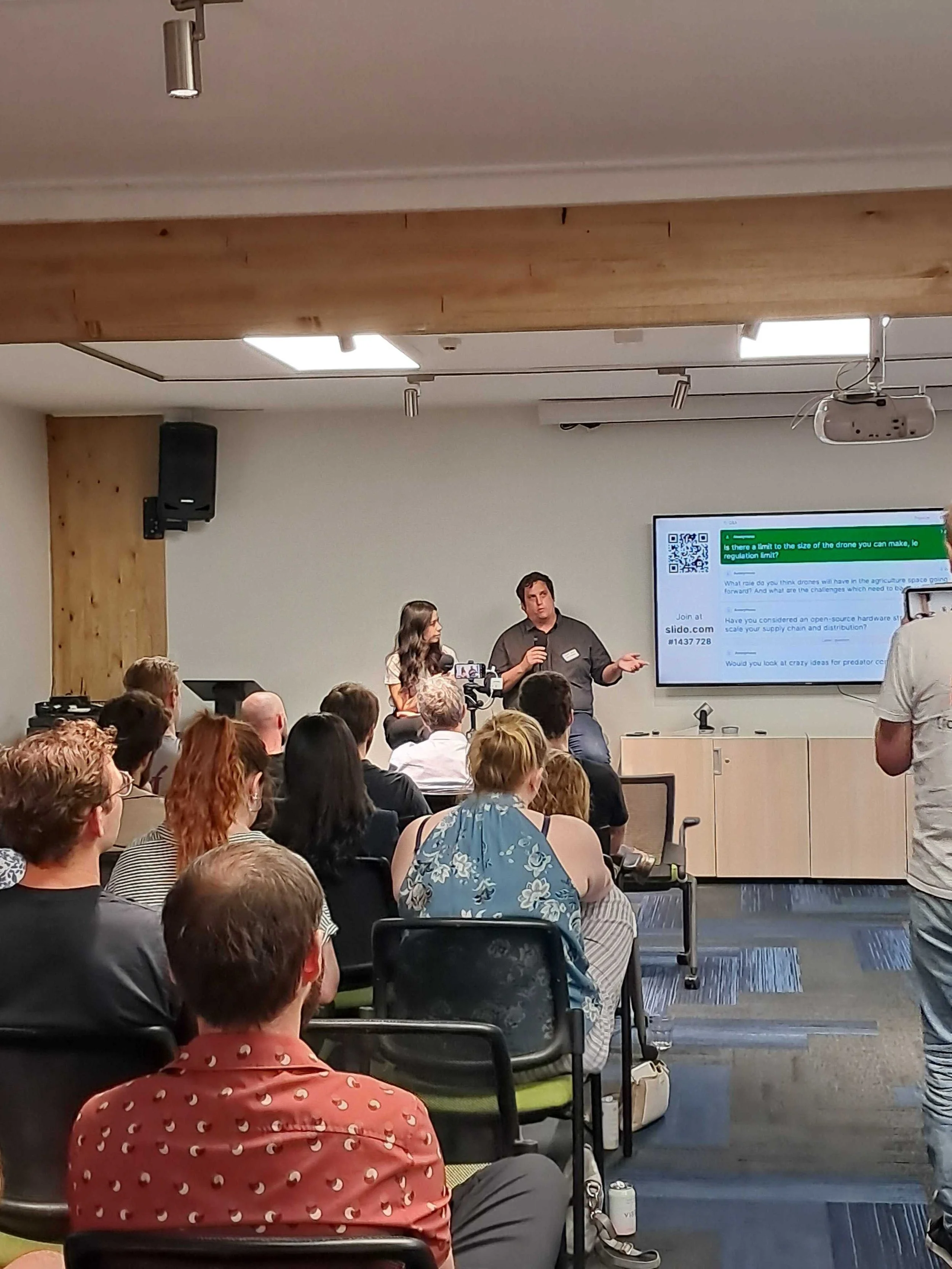
The Q&A discussion covered regulatory limits, drone applications in agriculture, future autonomy, manufacturing strategy, and even speculative ideas like laser-based weed control — underscoring both the ambition and creativity driving the sector.
Pitch Time: Talent, Ideas, and Opportunity
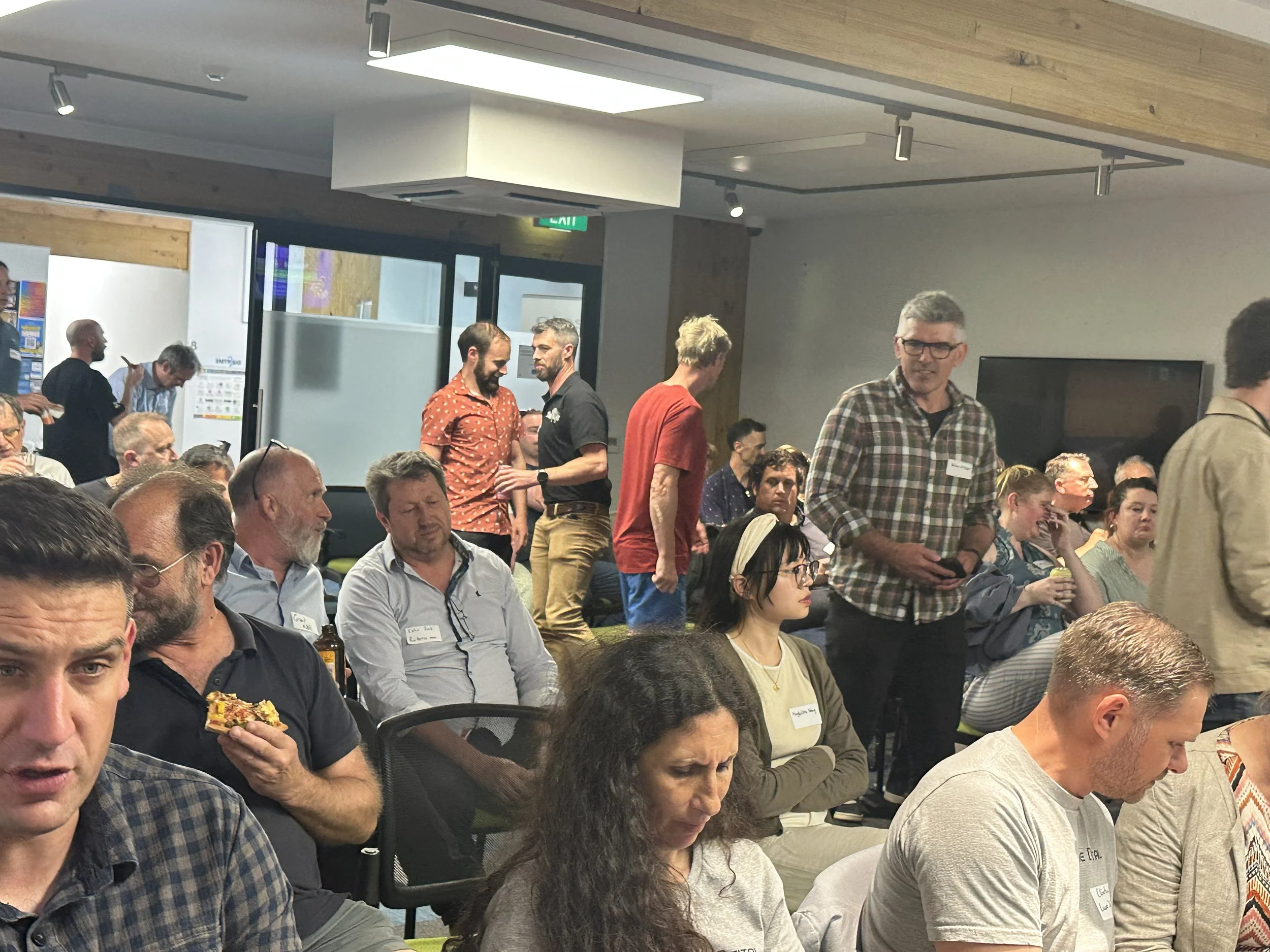
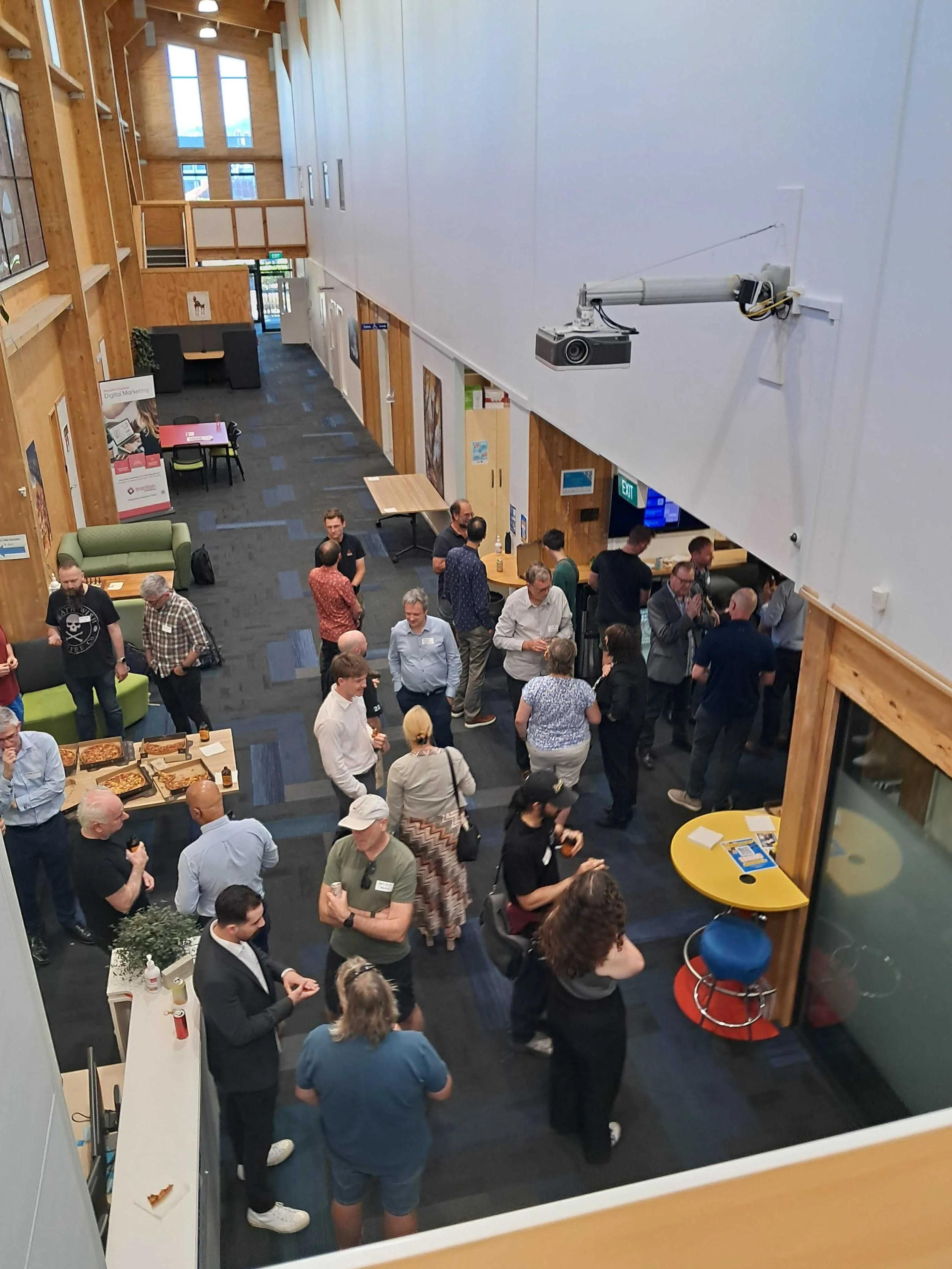
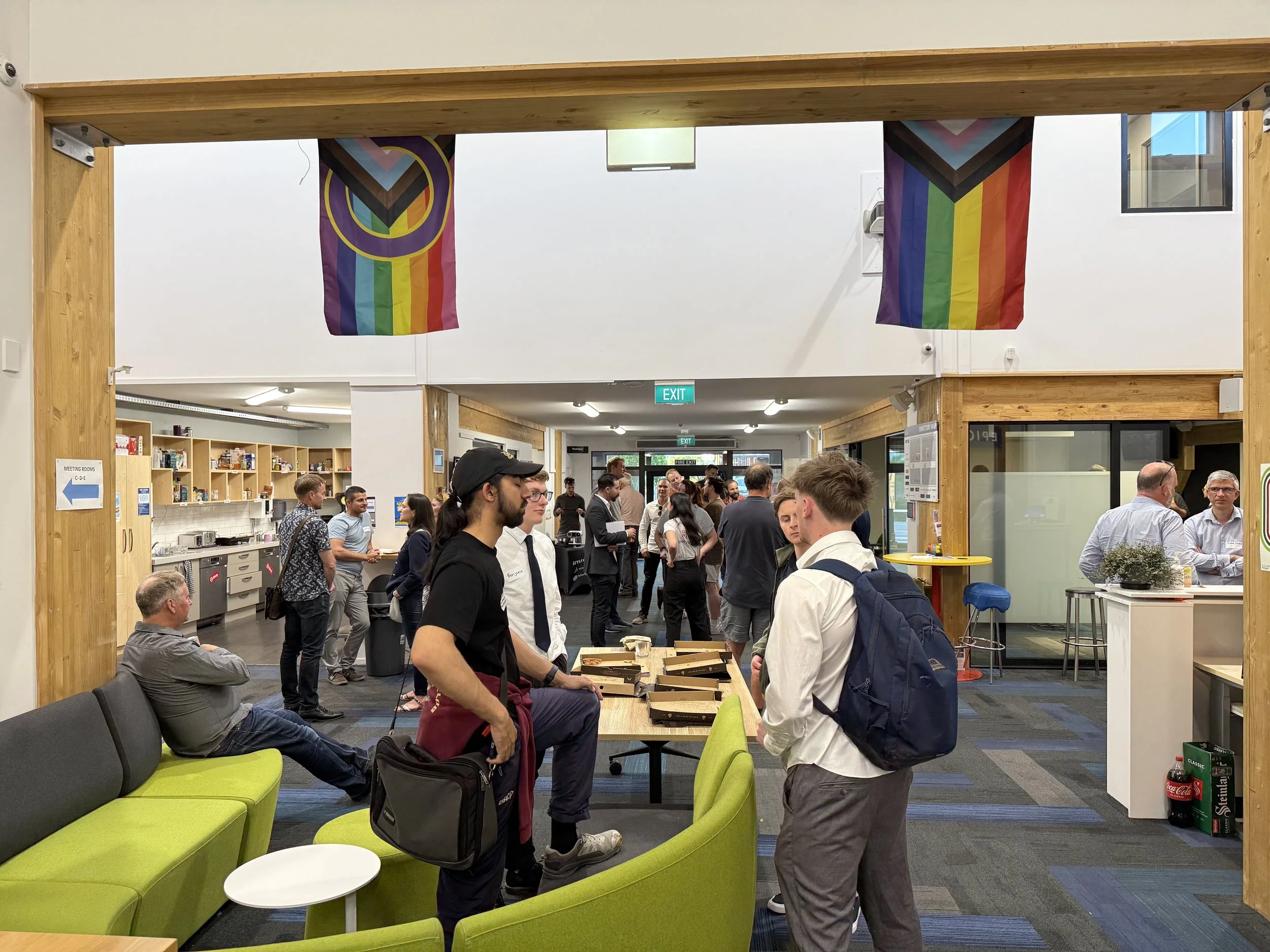
The evening wrapped with Pitch Time, giving the floor to founders, engineers, students, and specialists. Pitches ranged from manufacturing consultancy and aerospace electronics roles to graduate job-seeking, space law, rocketry clubs, automation startups, and renewable energy concepts.
The session reinforced a recurring theme of the night: the aerospace ecosystem is as much about people as technology.
Closing the Event
Mikayla closed the evening by thanking the speakers, attendees, sponsors, and Epic Innovation for hosting. With strong turnout, lively discussion, and a clear sense of momentum, the Christchurch aerospace community demonstrated that Aotearoa’s role in advanced aviation and space is only just getting started .
Final Reflection
From stratospheric aircraft and national test infrastructure to autonomous drones and advanced manufacturing, the Aerospace in Christchurch event showcased how New Zealand is building credible, globally relevant aerospace capability — grounded in collaboration, ingenuity, and place.
If this is the trajectory, Christchurch will remain a launchpad not just for aircraft, but for ideas.
Speakers

Speaker 1: Mark Rocket from Kea Aerospace
Internet and aerospace entrepreneur, Mark Rocket founded two internet companies in 1998 and sold one of those ventures to Telecom Yellow Pages in 2006. Mark was the first New Zealander to reach the Kármán line on his 2025 Blue Origin spaceflight and was the seed investor and co-Director of RocketLab from 2007 to 2011. In 2018 Mark started up Kea Aerospace to develop commercial aerospace projects and is committed to growing the New Zealand aerospace ecosystem.
Speaker 2: John Mann from Tāwhaki Joint Venture
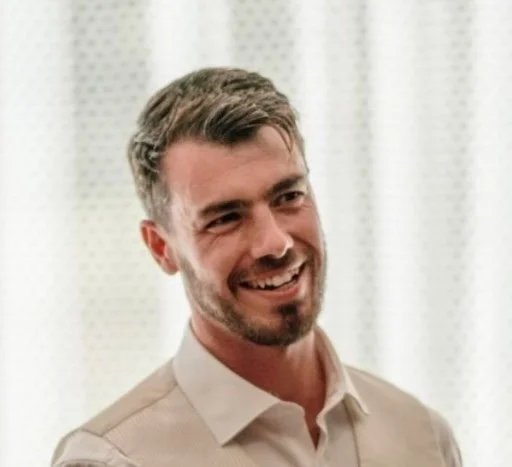
John Mann is a Project Manager at Tāwhaki Joint Venture, managing the Tawhaki National Aerospace Centre on Kaitorete, an aerospace test facility an hour South of Christchurch. He is an aerospace engineer with over a decade experience in design, test and management for industrial research and commercial R&D in both the UK and NZ.
His mission is to support the hardware tech and aerospace sectors in Aotearoa develop and grow, solving some of our key challenges and using technology to enrich people and communities.”
Speaker 3: Scott Spooner FROM SPS Automation
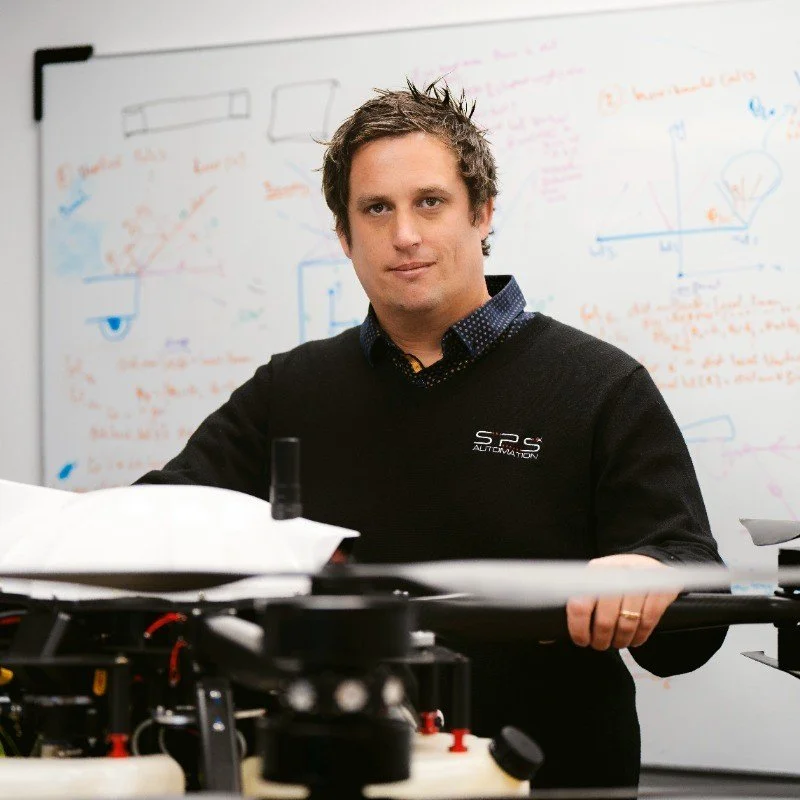
Scott Spooner is the CEO and CTO of SPS Automation, known for his lifelong passion for aerospace and hands-on innovation. Beginning his career as an industrial electrician, he later earned a Mechatronics Engineering degree from the University of Canterbury, enabling him to design advanced unmanned and automated systems from the ground up. Scott has been building and flying drones since their early conception, often experimenting with home-built technology and repurposed electronics. His leadership fosters a culture of creativity, technical excellence, and Kiwi ingenuity across the entire SPS team.

MC: Mikayla Stokes
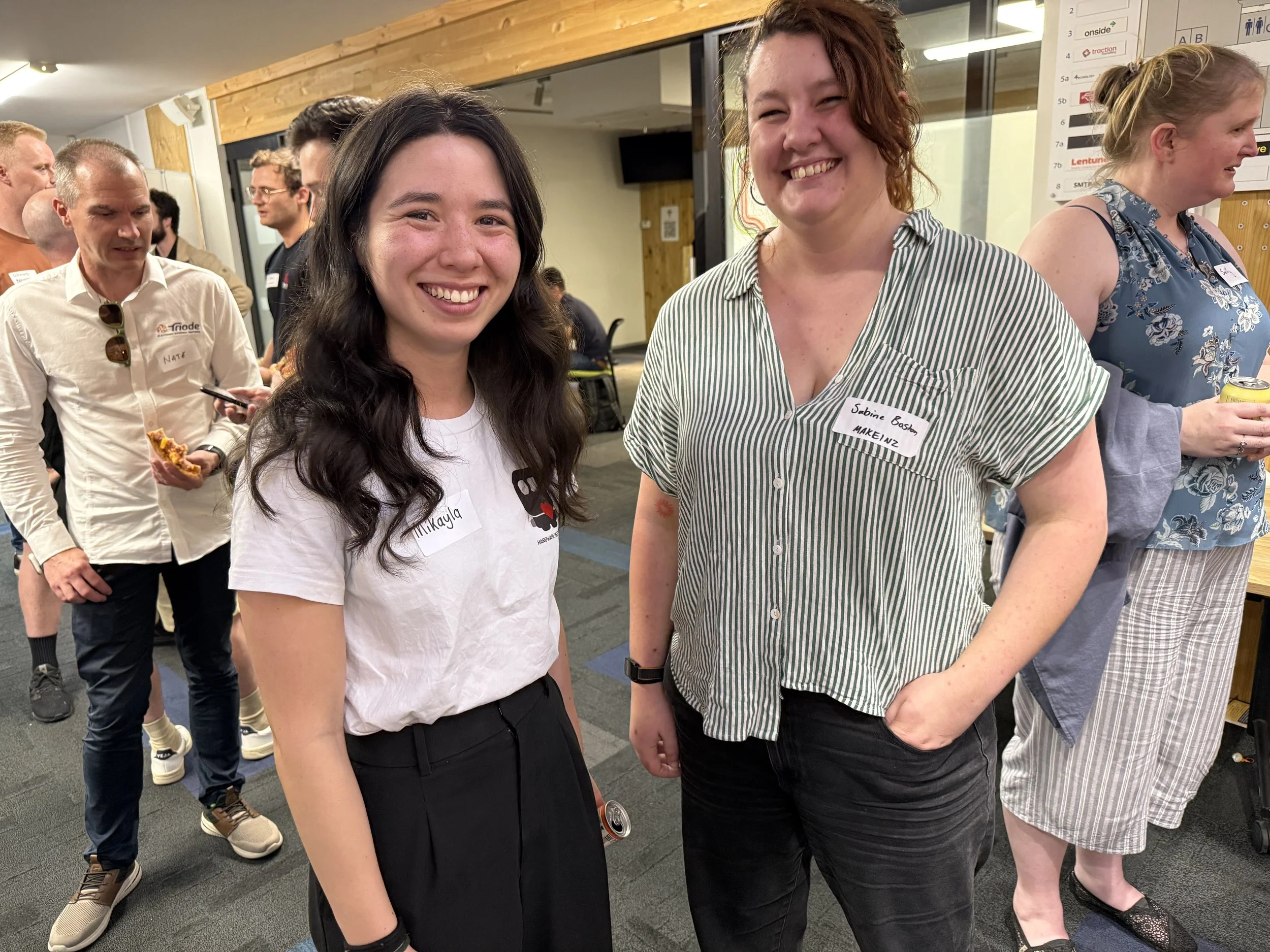
Mikayla Stokes is a mechatronics engineer at Crown Equipment making autonomous forklifts. She loves using tech to make cool wearable things like a light-up dress or 3D printed earrings. She's passionate about creating an inclusive community where any kid can pursue a future in STEM, and is the two time overall female winner of the BrightSparks inventing competition.
Event Sponsors




GPC Electronics
GPC Electronics, is Australasia's largest contract electronics manufacturers, specializing in a wide range of sectors including Industrial Controls, Power Electronics, Aerospace, Medical and Defence. GPC Electronics provides comprehensive services from design and prototyping to full-scale production and testing, leveraging advanced technologies to deliver high-quality electronic solutions globally.
Invenio
Invenio empowers manufacturing businesses with cutting-edge design-to-production solutions, including SOLIDWORKS, 3DEXPERIENCE, CATIA, and advanced technologies like AI-driven automation, CAD to ERP integration, and industrial 3D printing. We provide expert guidance to streamline workflows, reduce costs, and accelerate product development, ensuring smarter, more efficient manufacturing.
Christchurch NZ
ChristchurchNZ is Ōtautahi Christchurch’s sustainable economic development agency. We lead initiatives to grow the city’s economy for the benefit of all residents, with a focus on high-value sectors including aerospace, healthtech, cleantech and food, fibre and agritech. Through our Innovation and Business Growth team, we support the development of innovation ecosystems, facilitate investment and connect businesses with research, talent and infrastructure. ChristchurchNZ has been a catalyst for the Canterbury Aerospace Sector and leads the implementation of the Waitaha Canterbury Aerospace Strategy, which aims to position the region as a global leader in aerospace innovation by 2035.
Lune Digital
Lune Digital is an embedded systems expert specialising in high-tech, IoT and wearable solutions. For the past 10 years, Lune Digital has been assisting visionary companies with hardware design, electronics engineering, embedded software development, and technical advice. They excel in optimizing battery life, boosting power efficiency, enhancing wireless connectivity, and creating scalable, future-proof systems.
Connect With Hardware Meetup NZ
Follow us on Meetup, LinkedIn, and Instagram, and sign up to receive event updates.
Event Alignment: This is an independently run initiative and is not aligned with any one organisation.
Media Permissions: By attending this public event, you grant Hardware Meetup NZ permission to photograph, video record, and audio record the event and to use these photos, videos and recordings in our website and Social Media Channels.
RECAPS